
Chennai’s pickleball court reinforces the significance of hyperlocal infrastructure in urban sports renaissance
Chennai’s new pickleball court in Thiru Vi Ka Nagar marks another step in M. K. Stalin’s vision of building a global sports ecosystem through hyperlocal infrastructure.
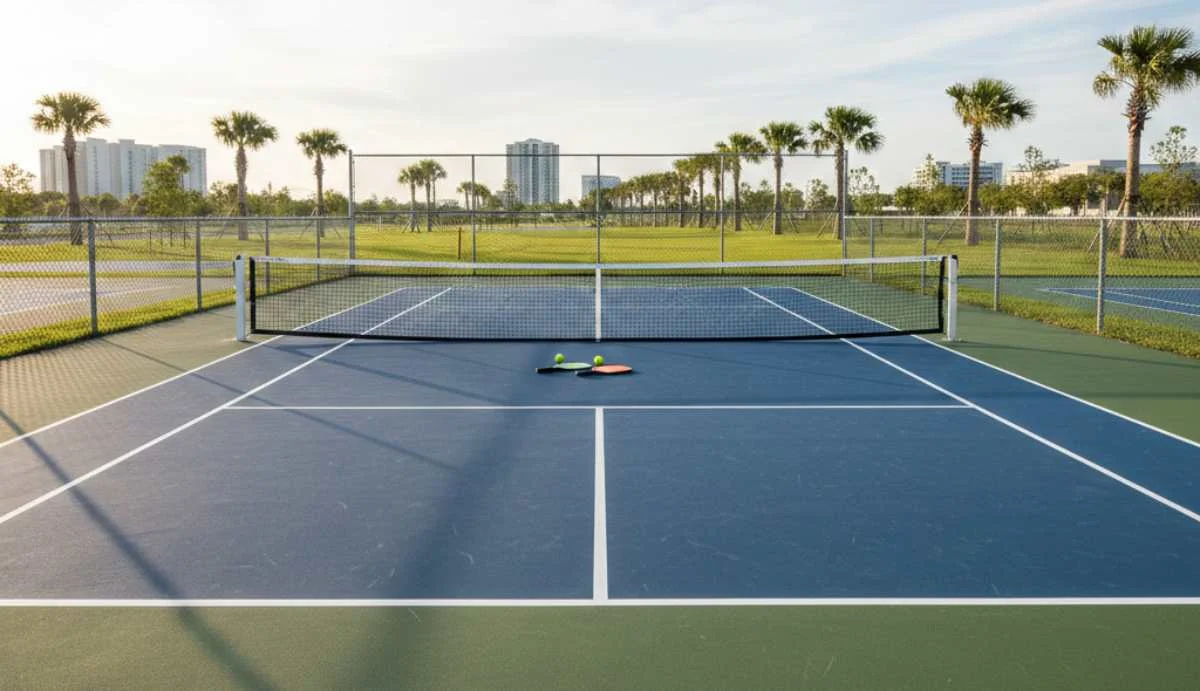
The grand vision of M. K. Stalin to transform Chennai into a global sports hub has reached another micro-milestone at the grassroots level, with the announcement of Thiru Vi Ka Nagar’s niche pickleball court receiving the civic nod from the Greater Chennai Corporation.
The GCC has formally announced the approval of the pickleball court in North Chennai’s Thiru Vi Ka Nagar, signalling that India’s fastest-growing racquet sport is gaining momentum in civic planning. The project is estimated to cost ₹1.52 crore and will include all recreational amenities, making it a strategic investment in providing local access to niche sports infrastructure.
GCC multisport urban blueprint for sports development
The pickleball court is less a standalone project and more a continuation of GCC's evolving sports playbook. This is reinforced by the recent initiative of converting a 22-acre Ennore water pond in Ernavoor into a water sports hub, following the successful creation of Madhavaram and Manali lake boating facilities earlier this year.
Building on ropeway-led tourism, GCC has also announced the ambitious ₹75 crore Marina ropeway car project, set to boost sports tourism by offering aerial views from Anna Memorial across the iconic Marina Beach. Equally notable is the ₹20 crore eco-friendly rainwater harvesting drive planned across 200 Chennai parks, aimed at improving groundwater quality while building climate-resilient playgrounds.
Micro sport macro impact
As the Detroit of India enters a rapid growth phase at an early infrastructural stage, pickleball’s low space requirements and simple rules can dramatically increase participation density while reshaping the city’s grassroots sports pyramid. This aligns closely with the Union Government’s Khelo India vision, under which 1,000 Khelo India centres are being developed to expand local sports access and reduce urban sporting inequity. As India eyes a $100 billion sports economy in the coming decade, Chennai’s hyperlocal infrastructure strengthens its position in long-term sports capital formation.
Written by

Anushka Raghav is an Editor at Sportscape Magazine, where she covers the intersection of sports business, governance, policy, technology, and infrastructure. Having written over 200 news stories and editorial features, she focuses on the ideas, institutions,…