
How PPP-Led Multi-Sport Complexes Can Reclaim Faridabad’s Stadium Spaces
Electronic Voting Machines (EVMs) have occupied key halls of Faridabad’s Sector 12 stadium due to the absence of a dedicated district warehouse, severely disrupting athletes’ training.
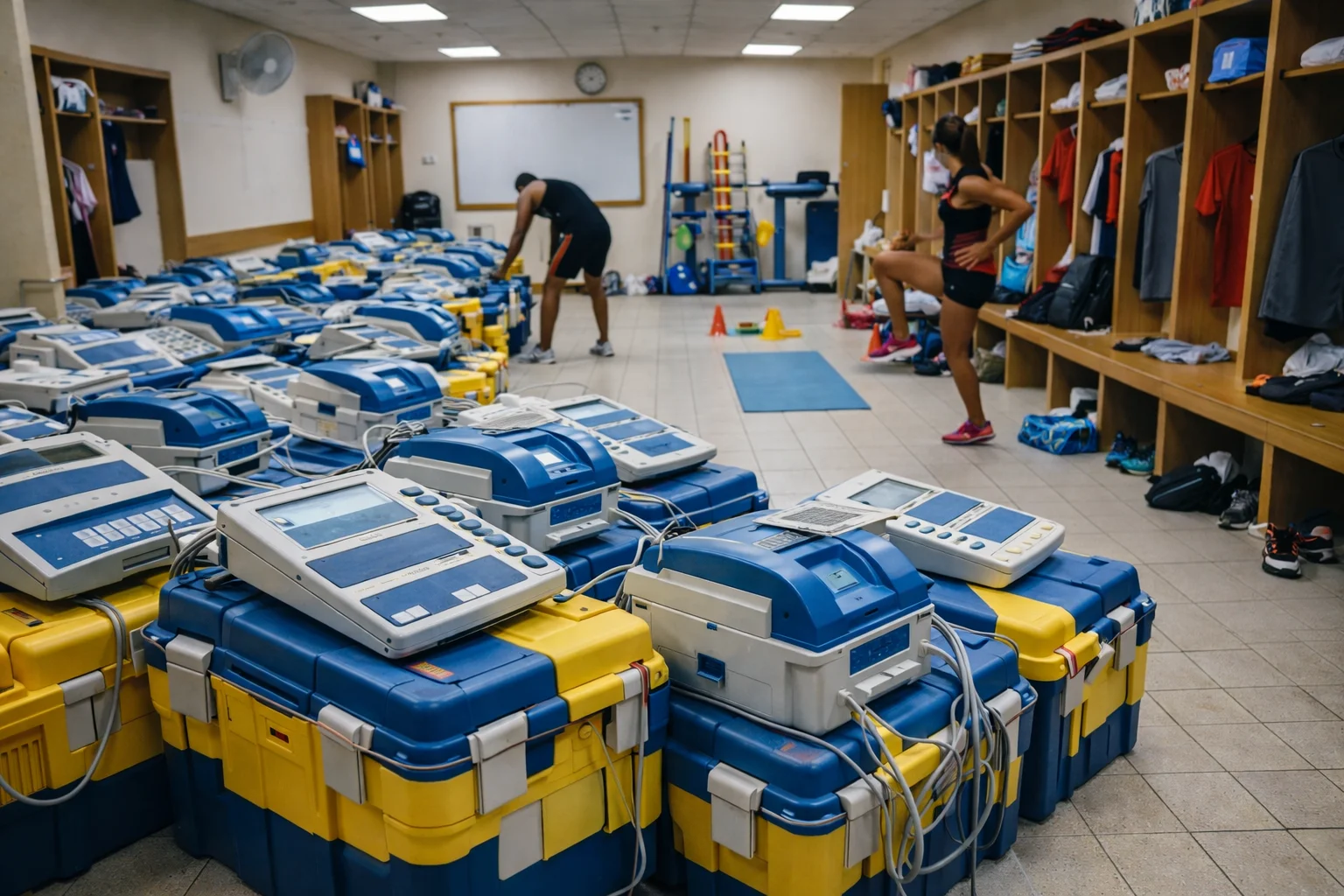
Electronic voting machines (EVMs) have taken up important spaces like key rooms and halls of the Sector 12 stadium of Faridabad since there is no specific district warehouse for keeping these EVMs with precaution, and this has immensely affected the training of athletes in various sports.
"We train for years to reach competitions, but here we don't even have a proper place to practise. Many times we are forced to wait for our turn," an athlete told The Times of India.
The 2002 constructed government-owned complex has halls overcrowded with judo, gymnastics, volleyball, etc., which has resulted in increased injuries, low morale, and logistical problems when large-scale events like Khel Mahakumbh are hosted.
Stadium details
The two big halls, one on each floor, have been locked out for almost four years, and other facilities have been taken over recently, forcing employees to move and store equipment in common areas. Deputy Commissioner Ayush Sinha stated that a special EVM warehouse is being planned, but in the meantime, it is practical to use the space, where CCTV cameras are employed, and it is supervised by the Election Commission. There are additional difficulties encountered by female athletes who usually exercise outside the premises due to the site-scarcity.
Not the first time…
This hasn’t been the first time that sports facilities have been used as storehouses for administrative purposes. EVMs were stored in the Victory Playground indoor volleyball stadium of Hyderabad, leading to 18 months of closure, disrupting the training of national players and summer camps. In 2023, initially booked in the Campal Indoor Stadium in Goa to have EVM checking conducted, the stadium changed venue after protests by athletes, noting that their election had been repeatedly disrupted, despite promises of the situation improving by leaders such as former CM Manohar Parrikar. The Commonwealth Games Village Sports Complex in Delhi was used in 2019 with poll duties, which restricted access after partial reopening.
Infrastructure alternatives
The solution to the problem lies in constructing special EVM warehouses at the district level to relieve sports facilities of their present workload, as has been the case in Maharashtra, where 14 districts have been built or rebuilt at a total cost of approximately ₹216 crore in 2023.
Embrace public-private partnerships (PPPs) to develop multi-purpose sports complexes that have secure and leased sub-spaces for temporary government requirements, similar to the Khelo India experiences, which have increased usage rates by 300% in locations such as Ghaziabad. Install modular storage systems under flyovers or idle lands used by the general population, such as those in Indore and Surat. The cost to construct these systems ranges from ₹60 lakh to ₹3.5 crore, and the municipality can earn 40%-50% of the cost through fees, thereby lowering the strain on the municipal budget.
Written by
Chetan is an Editor at Sportscape Magazine, bringing over three years of experience across sports, defence, international relations, and sports law. With more than 3,500 articles to his name covering player insights, match performances, and team analysis, he…