
Formula One to return after 13 years at the Buddh International Circuit? Why did F1 abandon India? Hidden failure beyond the tax drama
Thirteen years after the last Indian Grand Prix, the government is reportedly exploring a return to the Buddh International Circuit
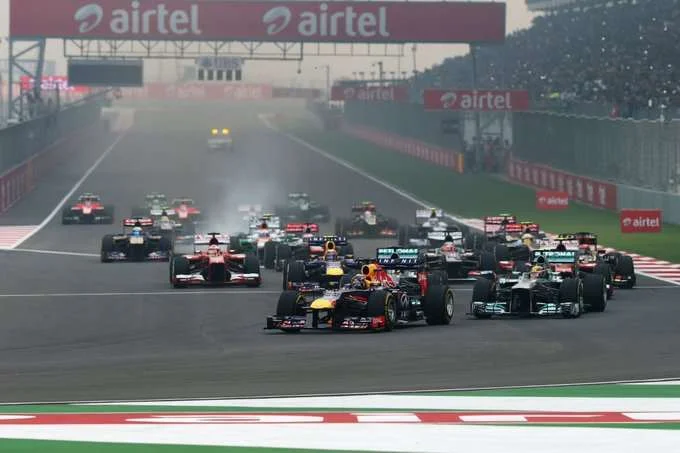
India might be back in Formula One. No, the Indian Grand Prix hasn’t magically returned, and no, an Indian driver hasn’t grabbed a seat either. India’s comeback has arrived in a uniquely domestic way. 13 years after the last race, the government is planning to bring back Formula One at the Buddh International Circuit, Greater Noida. Reportedly, the Union Sports Minister, Mansukh Mandaviya, inspected the 2011-inaugurated venue. Although the Indian Grand Prix was organized thrice between 2011 and 2013 at this venue, it was dominated by only 1 driver, Germany's Sebastian Vettel.
🚨 India is planning to bring Formula 1 racing back to the Buddh International Circuit. pic.twitter.com/P8sW9LgVod
— Indian Tech & Infra (@IndianTechGuide) February 3, 2026
The Buddh International Circuit is part of the 2,500-acre Jaypee Greens Sports City. Formula One racing’s governing body, the FIA, announced the inclusion of the Indian Grand Prix. Estimated at a cost of about ₹20 billion ($400 million) to build, the circuit’s length is 5,125 km and is spread over an area of 874 acres. The design is created by Hermann Tilke. Apart from the Buddh International Circuit, he designed Sepang International Circuit, Bahrain International Circuit, Shanghai International Circuit, and many others.
Tax Disputes
With 95,000 spectators, nearing the capacity of 110,000, it was a successful debut in the first edition. But the organizers withdrew primarily due to complex taxation disputes. The first signs of a dispute arose in 2009. In a letter to the promoters, JPSK Sports, the Indian Ministry of Youth Affairs and Sports denied JPSK Sports permission to remit $36.5 million in licensing fees to Formula One administration headquarters in London. Fees worth $51.3 million, meant to be paid by Jaypee Sports to Formula One World Championship Limited (FOWC), were still pending as of Liberty Media's acquisition of the Formula One Group in 2016. While it suggests that the governmental and taxation policies were the real problem, many underlying infrastructural reasons kept piling up, which led to its downfall.
Infrastructural shortcomings
The Buddh International Circuit was known for the elevation changes and the rollercoaster feeling. With 14 meters of elevation in the first three corners, it was a challenge. The sequence of corners from turns 10 to 12 was one of the most notable sections. It had banking and multiple apexes. It showcased the ultimate cornering ability of a Formula One car. The name of this section? Currybolica. A reference to the Parabolica of Monza. But the construction wasn’t easy, and it was foreshadowing the future of the circuit. Multiple delays in buying the land, and later the start of the construction delayed the Grand Prix. The financial crisis also played a part in this.
Before race day, only 40,000 tickets were sold. High ticket prices, a predictable outcome, and poor public transport were all part of that. No government funding, the currency collapsing, and all sorts of bureaucratic obstacles made it nearly impossible to host a Grand Prix. But there was a little cloud above it.
Last-minute construction issues, power outages, and the paint still drying made it look rushed. Some of the infrastructure wasn’t completed, and a colony of bats was still living there. An embarrassing moment occurred on the first-ever practice session of the first Indian Grand Prix when a stray dog caused a brief interruption. The dog ran on the track, causing a red flag for about 5 minutes. It was even chased by a safety car.
Written by
Chetan is an Editor at Sportscape Magazine, bringing over three years of experience across sports, defence, international relations, and sports law. With more than 3,500 articles to his name covering player insights, match performances, and team analysis, he…