
Green is the New Goalpost: Why India’s Sporting Future Must Be Built on Sustainable Turf?
India’s sports infrastructure is at a turning point. As stadiums and training centres expand nationwide, sustainable turf solutions are emerging as the key to reducing environmental impact, cutting long-term costs, and building a greener, future-ready sporting ecosystem
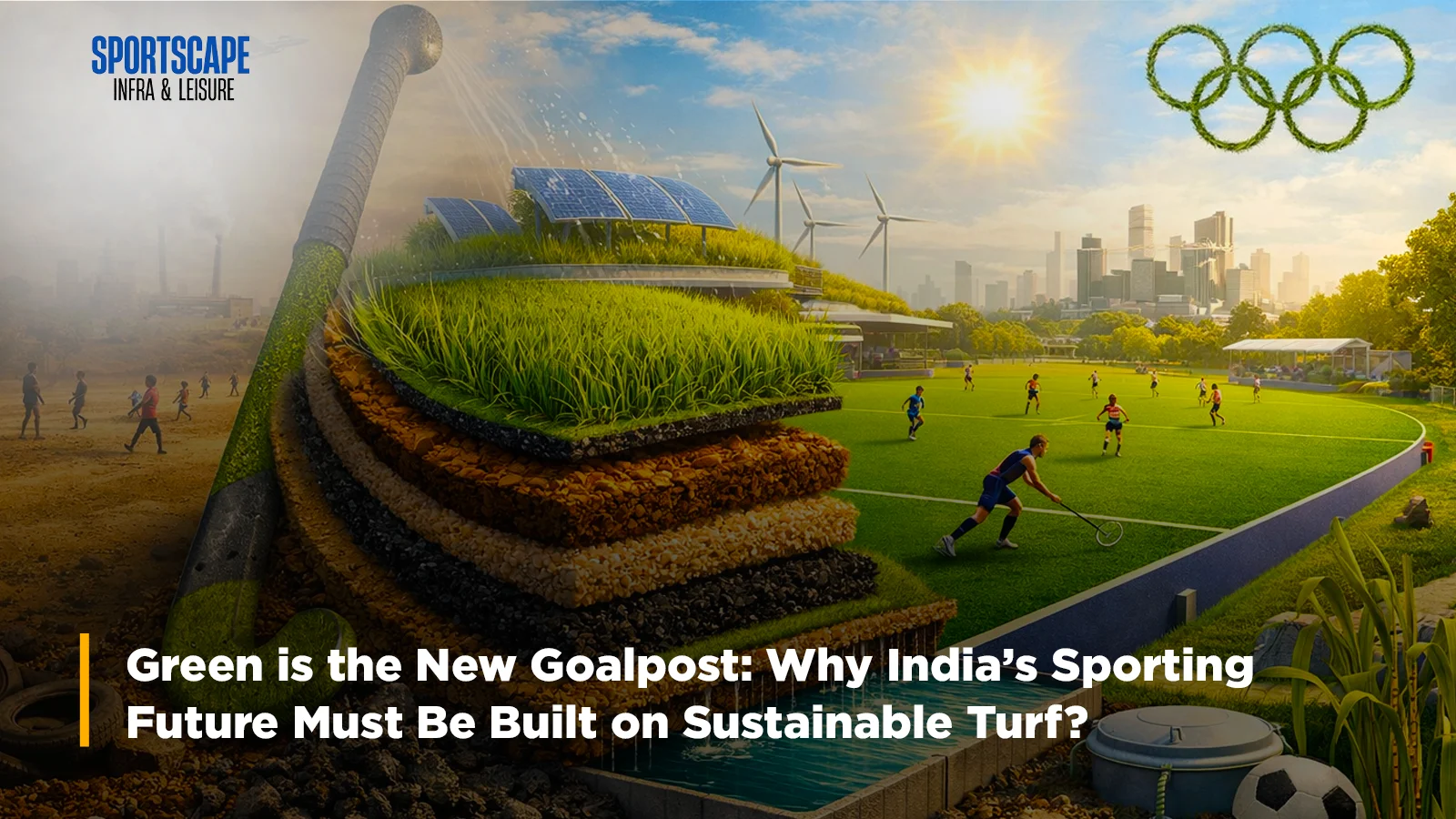
"No More Negotiations, Time for Action." That wasn’t just a catchy line floating through global climate discussions; it was the spirit that echoed through COP30, where sustainability stopped being a side conversation and became the main event. From energy to infrastructure to urban planning, the message was loud and clear: build smarter, or don’t build at all. Now, let’s bring that conversation home. To the dusty maidans, overcrowded grounds, and overworked playing fields of India. India is at a crossroads as it becomes a rising global power, prompting everyone to ask the same question: Can India afford old-school playing fields anymore?
Adoption of artificial surfaces for India: Boon or burden?
For generations, the maidan has been the soul of Indian sport. Free, open, democratic. But today, it’s also one of the most under-acknowledged contributors to urban air pollution. According to multiple environmental studies, resuspended road and soil dust contribute between 8% and 25% of PM2.5 pollution in Indian cities. Open, unpaved grounds, especially dry sports fields, are a major source of this dust, particularly during summer and winter months. And now even history is asking us to pause and switch to more “artificial” and sustainable ways.
Games like Hockey, historically, were developed on natural grass turf and Indian players were unbeatable. While grass, on which hockey had been played internationally for nearly a century, allowed skilled Indian and Pakistani players to trap the ball, dribble and pass, artificial turf suits the physicality of European and Australian hockey players based on raw power rather than technical skill.
As the artificial turf came into the forefront, hockey has become much faster, more exciting and consequently more popular. The main reason for having artificial turf is that there is no need to maintain it while natural grass has to be maintained frequently. Precise ball control; an artificial turf hockey surface gives you all the room you need to make fast passes with precise ball control.
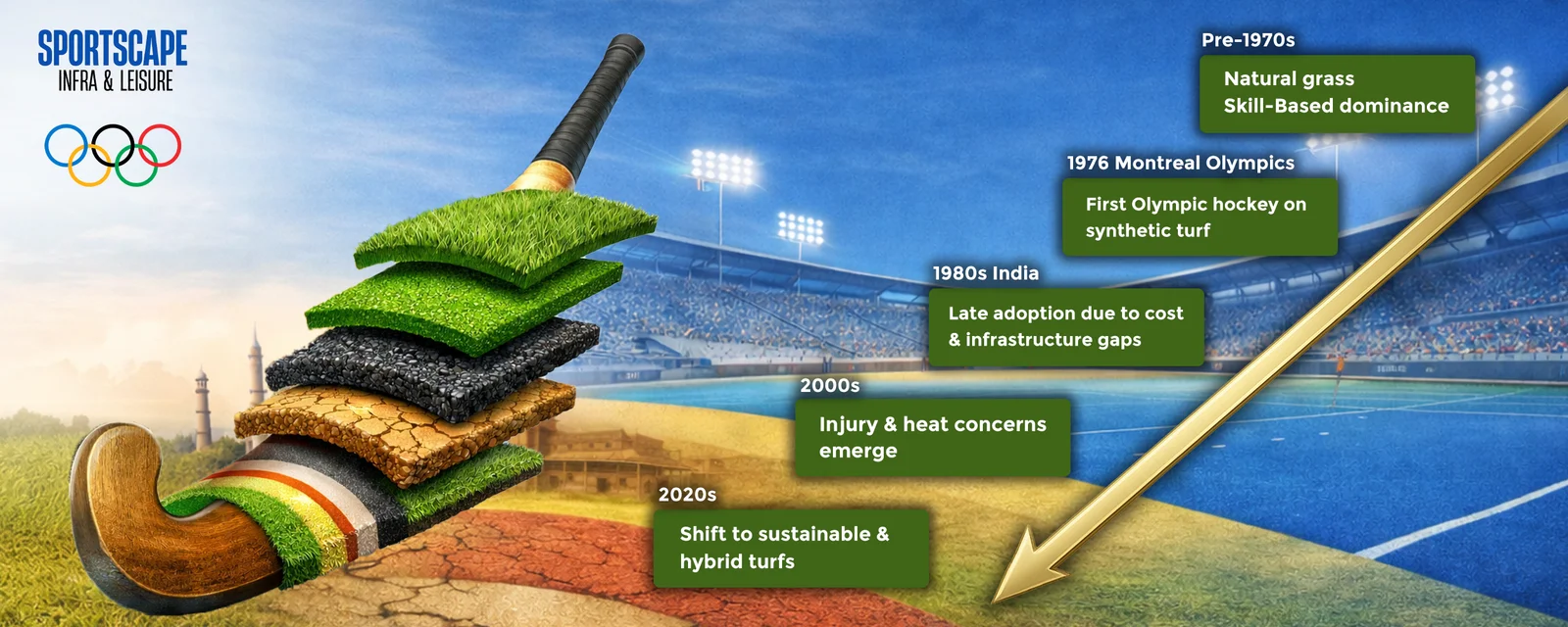
In the early 1970s, “synthetic grass” fields began to be used for hockey, with the first Olympic Games on this surface being held at Montreal by the International Hockey Federation (FIH), putting Indian players at a disadvantage as they were not used to playing on turf. Though it was not the sole reason and a conspiracy by the Western nations to pull the Indian and Pakistanis down, as was made out by hockey officials for many years, former India captain Zafar Iqbal says that the decision changed the face of Indian hockey.
“Introduction of the turf brought about a drastic change in the way the game was played, and India and Pakistan were left as we could not install the turf early due to lack of funds,” Zafar said earlier. “The federation too made only half-hearted efforts to get the turf, and India could install its first synthetic surface only in the early 80s.”
To everyone’s surprise even after three decades later, the perception related to the turfs did not change and this opinion was just limited to hockey now.
India's central defender, Dipak Mondal, recalled in 2009 that the national team had experience of playing on an artificial turf and it wasn’t appreciated.
"Players might get hurt. We played a match in North Korea on artificial turf in 2004. I came into the team after an operation on my right knee. After the match, I felt pain in my knee again," he said.
The torchbearer of Indian football, Bhaichung Bhutia, recounted his experience in England, where he played on artificial turf. "The movement of the ball is different from the natural grass surfaces so the players will face problems."
East Bengal coach Subhash Bhowmick is worried about injuries. "It is a foolish thing to do. The players will be exposed to more injuries."
Why Artificial Turf Wasn’t the Silver Bullet
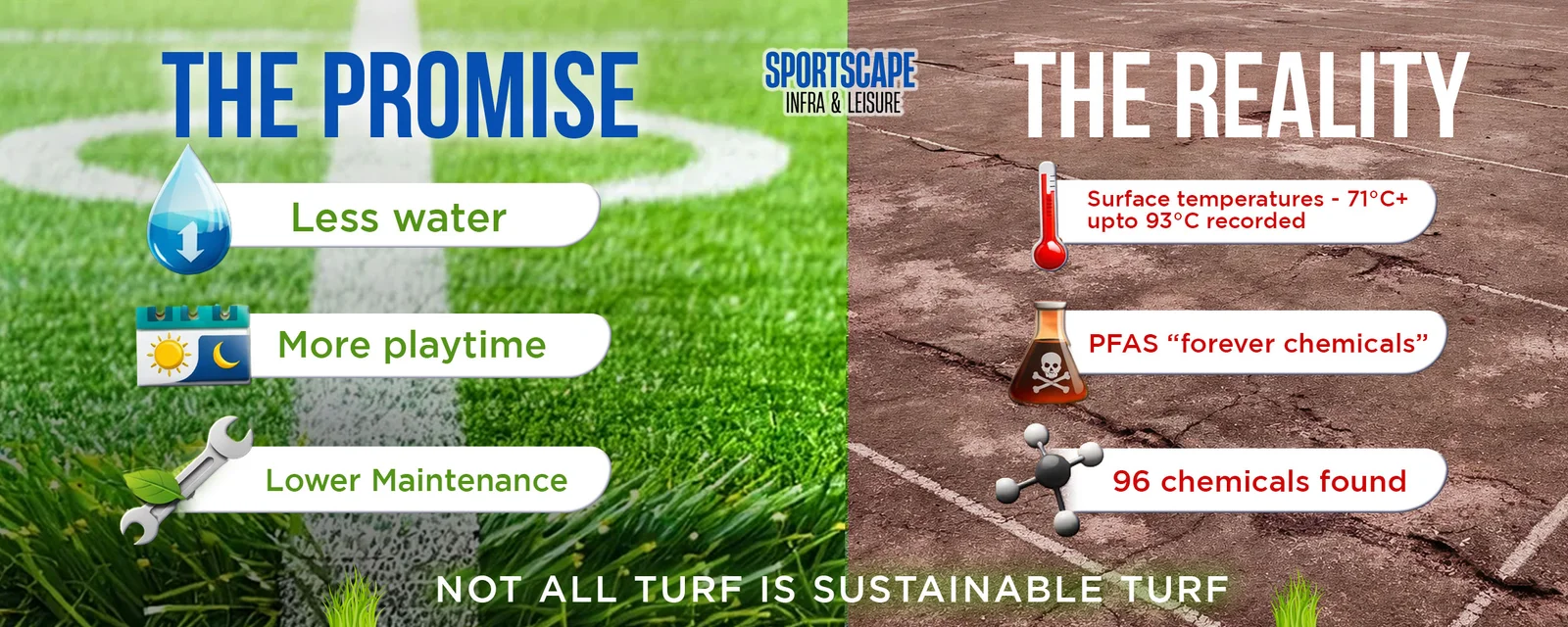
When artificial turf entered India, it felt like a miracle solution. Less water. Less maintenance. More playtime. But scratch beneath the surface, literally, and the problems emerge. As usage increased and research deepened, the limitations became difficult to ignore. Most early-generation artificial turfs were made using crumb rubber infill sourced from recycled tyres and coated with polyfluoroalkyl substances, commonly known as PFAS. These so-called “forever chemicals” are now under global scrutiny because they can transfer through skin contact and slowly leach into soil and groundwater. Studies by the European Chemicals Agency and the US Environmental Protection Agency have raised concerns about their long-term environmental persistence and potential health risks.
Outdoor artificial turf has its own problems. It can become moldy over time and accumulate animal or bird feces, leading to related harms and requiring ongoing disinfection. This type of turf can also reach dangerous temperatures of over 71.111°C in the summer sun, while natural grass rarely exceeds 37.778°C. Kids have complained of skin burns and extreme heat penetrating their athletic shoes. The highest temperature measured during research was 93.33° C.
Chemical analysis of artificial turf conducted at Yale University found 96 chemicals, 20 percent of them probable carcinogens. In addition, artificial turf contains highly toxic PFAS or “forever chemicals” linked to lower childhood immunity, endocrine disruption and cancer. Children are especially vulnerable to inhalation, ingestion and dermal absorption, as they are lower to the ground and breathe more quickly. In response to growing evidence, several countries are taking action.
The Netherlands plans to phase out artificial turf from 2030. The EU has proposed banning rubber crumb from sports pitches by 2031. Meanwhile, in Australia’s New South Wales, 181 synthetic fields have also raised concerns about environmental and health impacts.
In a country where grounds double up as community spaces, barefoot play zones, and school facilities, this is not a small risk; it’s a systemic one. Which brings us to the next evolution.
New technology and sustainability in turf make sense for India (Now More Than Ever)
India is at a sporting inflection point. Participation is rising. Urban land is shrinking. Climate stress is increasing. And the numbers tell a clear story.
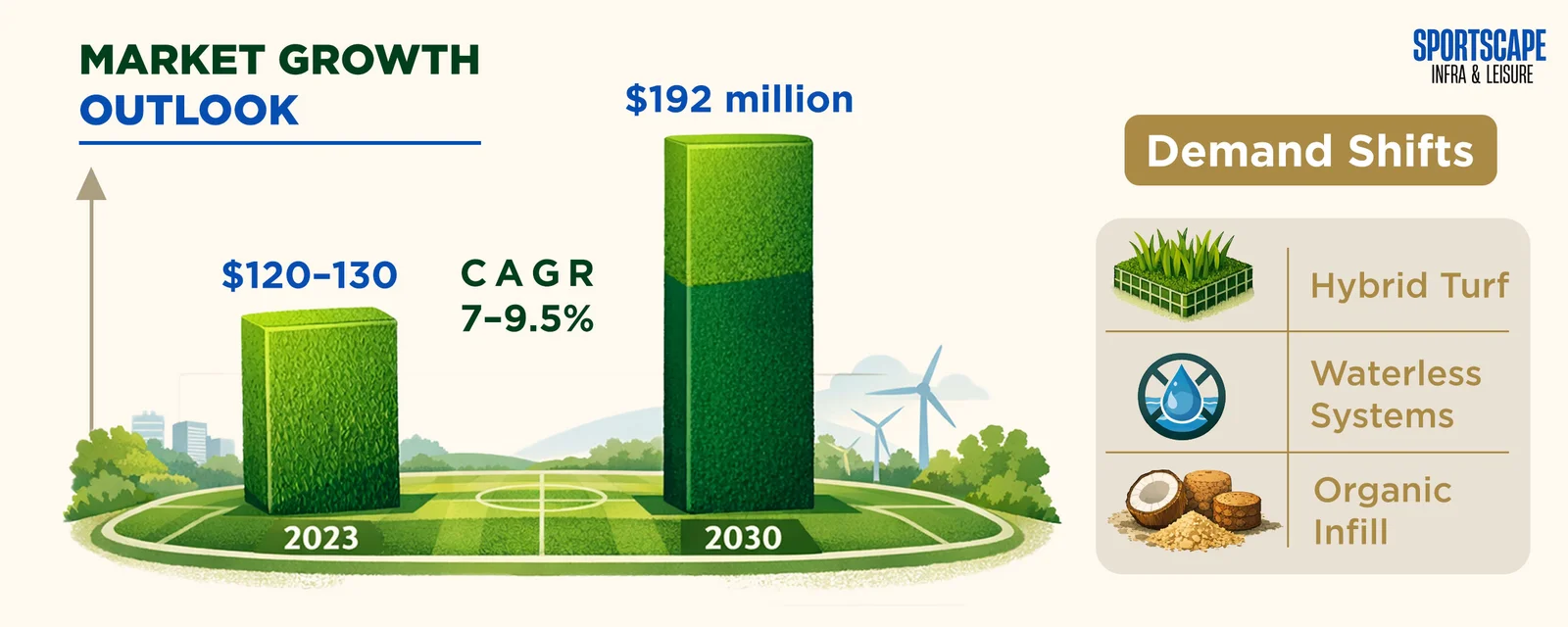
India’s artificial turf market highlights this shift in consumption patterns. Valued at around $120–130 million in 2023, the market is projected to grow to nearly $192 million by the end of the decade, driven by steady annual growth. More telling than the headline numbers is the change in demand: hybrid turfs, waterless synthetic surfaces, and eco-friendly infills made from materials like cork, coconut husk, and sand are increasingly replacing traditional turf systems.
Water scarcity is one of the strongest forces pushing this change. India is already one of the most water-stressed countries in the world, with more than 600 million people facing high to extreme water stress. A single natural hockey field can require close to 6,000 litres of water per day during intensive maintenance cycles. Football and cricket grounds demand similar attention, particularly in peak summer months. Sustainable turf systems can reduce water usage by up to 90%, and in some cases eliminate irrigation. Many installations now integrate rainwater harvesting, turning sports grounds into micro-reservoirs rather than water drains.
Beyond water, there is the question of usage. Traditional grass fields can only handle limited playing hours before soil compaction and surface degradation set in, increasing dust levels and injury risk. Sustainable turf can be used two to three times more frequently, allowing continuous play throughout the year. This not only reduces pressure on land but also minimises soil disturbance, which directly cuts down particulate pollution. Globally, the case for sustainable turf is growing stronger.
These next-generation turfs are produced using 100% green energy, dramatically lowering their carbon footprint before they ever reach the field. New design elements such as advanced PU backing improve durability and CO₂ balance, ensuring longer product life and reduced material replacement over time. These surfaces have also taken the lead by eliminating PFAS chemicals entirely from production, addressing long-standing administrative and athlete-centric concerns.
For example, hockey turfs used at the Tokyo Olympics with these technologies required 39% less water than those used in Rio 2016, and newer systems like Poligras Paris GT zero with Turf Glide technology reduce surface friction, requiring even less water while also lowering injury risk for athletes.
The Hockey 5s World Cup held in Oman in January 2024 offered a glimpse into the future. The tournament used next-generation sustainable turf designed for high-intensity play with minimal water use and reduced surface heat. Players praised the consistency of ball movement and the lower impact on joints, while organisers highlighted the faster installation and lower environmental footprint. For a format aimed at expanding hockey into new markets, sustainability proved to be a competitive advantage rather than a constraint. Back home, this evolution aligns perfectly with India’s urban policy framework.
India following the model religiously
According to reports, FIH president Tayyab Ikram said that the hockey body has been working with the FIFA Innovation team to create ‘non-water solution pitches’ or ‘sand-dressed’ synthetic turfs to gradually phase out wet astro turfs, which are currently being used in all top-tier competitions.
“FIFA has transitioned away from water-based pitches. Football matches are largely played on dry surfaces which are not dependent on water. FIFA’s innovation team has encouraged non-water solution pitches. FIH also wants to reduce its water dependency. We have joined hands with FIFA to guide us in developing sand-dressed, non-irrigated pitches which can be used in future competitions. FIH wants to move away from water-based synthetic turfs and look for common surfaces, as used by FIFA, for an environment-friendly approach,” Ikram said.
Back home, this evolution aligns perfectly with India’s urban policy framework. The Smart Cities Mission, AMRUT, and Khelo India all emphasise efficient land use, youth engagement, and low-maintenance public infrastructure. The Sports Authority of India (SAI) has approved the installation of the Poligras Paris GT Zero hockey turf, the world's first carbon-zero, water-efficient dry hockey turf, at the SAI Centre in Bengaluru to upgrade training facilities for national teams. This sustainable, sugar-cane-based turf simulates a wet field without requiring water, reflecting a push for eco-friendly, high-performance infrastructure.
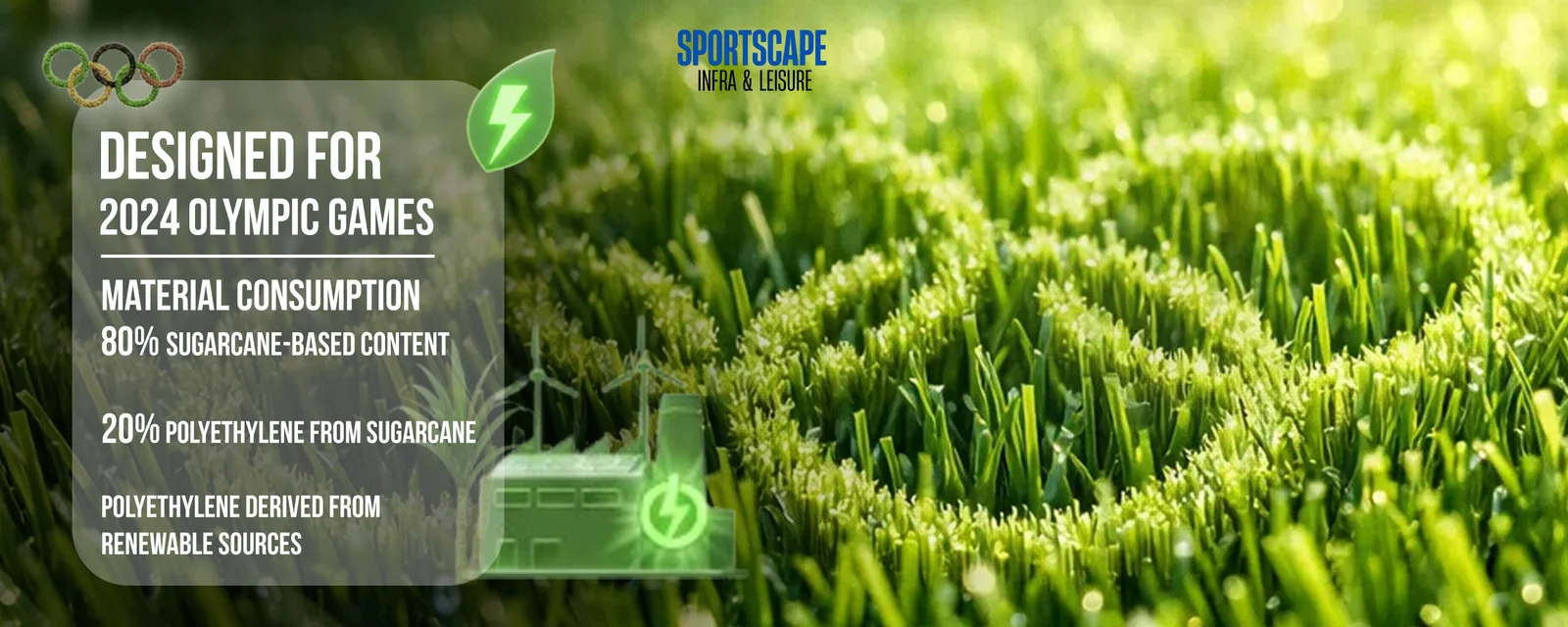
These turfs are designed for the 2024 Olympic Games, using 80% sugarcane and green electricity, providing a sustainable, fast, and flat surface. For the 2023 Men’s FIH Hockey World Cup that was held in Bhubaneswar and Rourkela, and were installed at both stadiums, as well as for the training turfs. This turf is another green technology (GT) advance for hockey. Poligras Platinum was developed for the Rio Olympic Games and is one of hockey’s most popular turfs. The GT variation features 20% polyethylene made from sugar cane rather than fossil fuels.
These turfs zero goes further with Turf Glide technology, which reduces surface friction and requires even less water to maintain safe playability. These artificial turf systems contain up to 80% renewable content, using plant-based infill, bio-polymers, and EnviroLoc+ backing. Recognized under the aggressive testing programs, these products reduce dependence on fossil fuels while supporting agricultural supply chains such as local soybean and sugarcane farmers.
Chennai also has quietly emerged as a pioneer in adopting sustainable turf solutions, particularly for football and hockey training facilities, as well as school and university grounds. Despite its humid coastal climate, these surfaces have shown better durability, lower maintenance costs, and significantly higher booking rates. Similar trends are beginning to appear in parts of Karnataka, Telangana, Maharashtra, and Gujarat, driven largely by private academies and public–private partnerships.
The Big Finish: India’s Green Sporting Future
Dr. Gaurav Bhardwaj, Director, Sports & Joint Replacement Surgeon at PSRI Hospital, Delhi, observed that the post-pandemic era has seen a rise in fitness awareness with many gravitating to turfs to engage in sports.
“In the post-Covid era, one of the most encouraging trends we’ve witnessed is the significant rise in participation in draft sports and recreational physical activities. The pandemic served as a wake-up call for many, highlighting the importance of physical fitness and overall well-being. As a result, an increasing number of people are now seeking alternatives to traditional gym workouts, and finding them in the form of dynamic, engaging sports,” said Dr. Bhardwaj.
All of this feeds into a much larger national ambition. India’s push to host the 2036 Olympic Games and the 2030 Commonwealth Games demands infrastructure that is scalable, climate-resilient, and globally compliant. New stadiums, training centres, and community sports hubs are being planned across the country, and sustainability is increasingly written into their design briefs. In this context, sustainable turf is no longer a premium feature reserved for elite venues. It is becoming a baseline requirement. Also, the business opportunity is equally significant.
The dusty maidan will always hold a special place in India’s sporting memory. But memories alone cannot power the future. If India wants healthier athletes, cleaner cities, and world-class infrastructure, the ground beneath our feet must change. Sustainable turf is not a compromise between tradition and progress. It is the evolution of both.
The goalpost has moved. And this time, it is firmly rooted in green and sustainable.
Written by