
More Tennis courts for Panjab University after it approves construction of synthetic surfaces in sports complex, taking the total number to four
Panjab University, Chandigarh, has approved two new synthetic tennis courts, taking its total to four, alongside existing grass courts at the coaching centre.
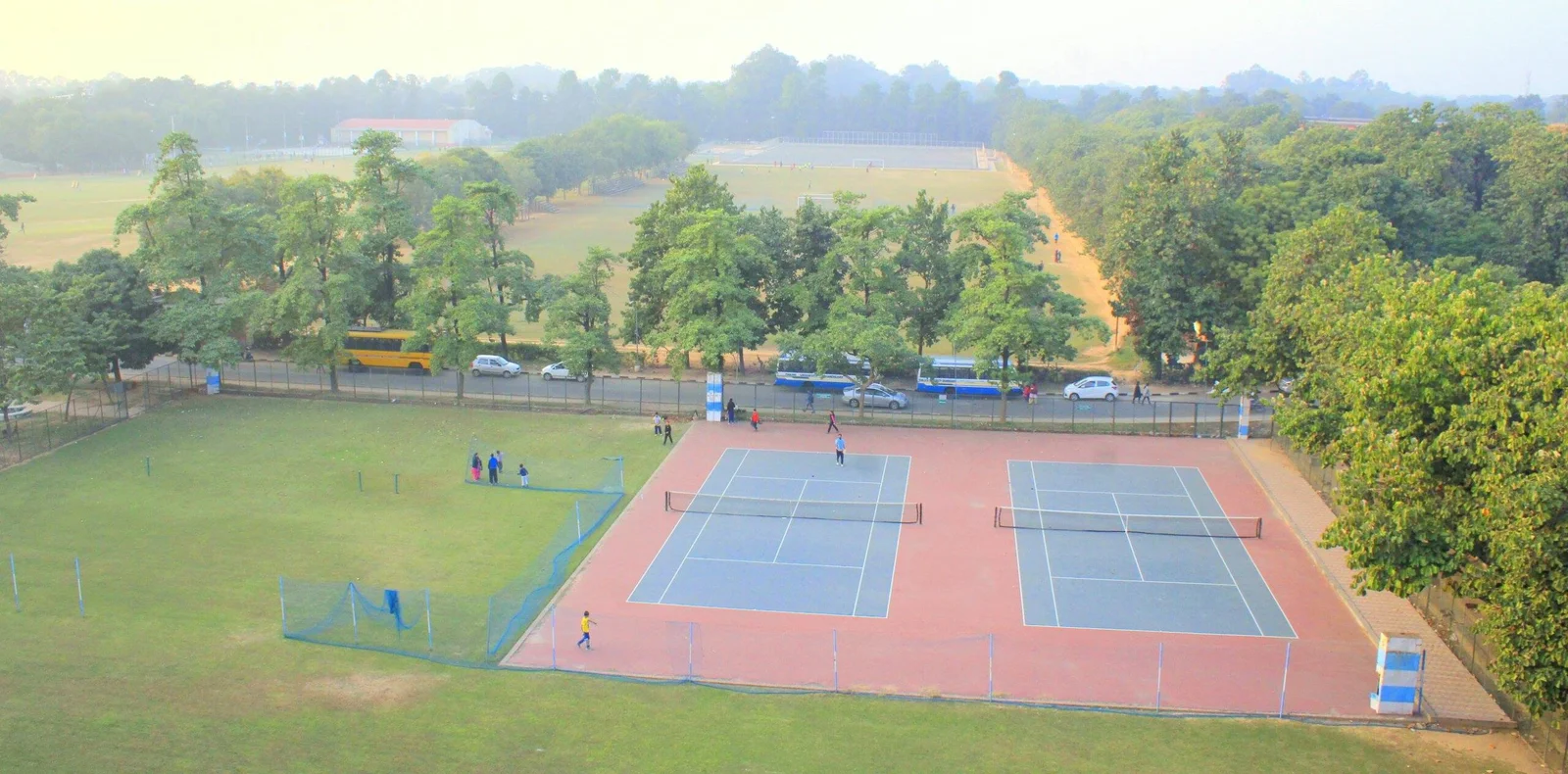
Chandigarh’s Panjab University has approved two additional synthetic tennis courts at its coaching centre, bringing the total number of tennis courts to four alongside existing grass training courts. The tender and futher details are not yet publicly disclosed, but the construction is expected to start soon. The significance of this upgrade is to support recent achievements, such as the women's team gold at the North Zone Inter-University Tennis Tournament, and the semifinal appearance in the All-India level. This makeover will enable the university to bid to host major championships.
Existing Sports infrastructure.
The university maintains an international standard swimming pool, diving pool, athletic track, air-conditioned gymnasium hall used to organize badminton and convertible sports, two floodlit basketball courts, four volleyball courts, hockey and football grounds, kabaddi courts, a shooting range, and weightlifting/judo/wrestling areas.
These facilities serve more than 20 disciplines and the inter-university events, but expansions are underway in response to increasing training requirements.
Previous Projects
In 2025, Panjab University was going to have a second multipurpose indoor hall (₹4.5 crore) by converting outdoor basketball/volleyball arenas into multiple indoor sports (prefabricated structures) after the existing Gymnasium Hall. Previous attempts included eyeing of Khelo India University Games hosting that have indoor boxing arena and women's gymnasium upgrades.
Previous Grants
Panjab University received a total of ₹62 crore in 2025 in the forms of equity, faculty, and research as specified under PM-USHA (2023 launch), while colleges in Chandigarh received a total of ₹25 crore. The Panjab University has been directly or indirectly financed by the schemes of the state and under Khelo India through synthetic surfaces and halls, but individual allocations are conditional upon more countrywide schemes, such as the ₹3,000 crore committed by the Prime Minister in 2023 over the next 5 years.
Written by
Chetan is an Editor at Sportscape Magazine, bringing over three years of experience across sports, defence, international relations, and sports law. With more than 3,500 articles to his name covering player insights, match performances, and team analysis, he…