
From Self-Funded Fighter to International Medalist: Sohail Khan, 22-time Gold medalist on Kudo, Combat Sports, and India’s Fight for Sporting Recognition
An unfiltered conversation on discipline, funding struggles, global exposure, and what India must fix to build world-class combat athletes.
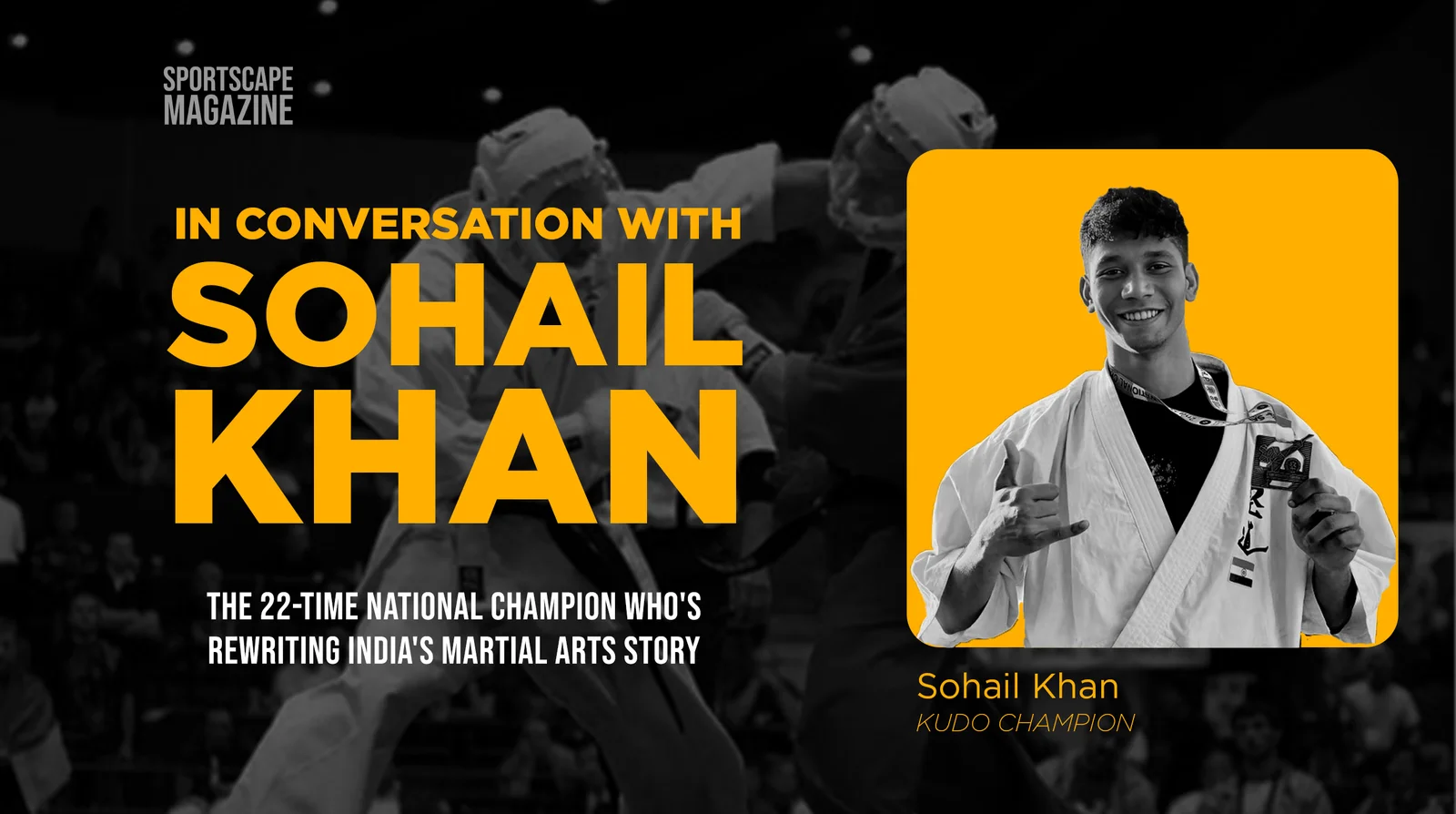
In a country where mainstream sports dominate headlines, disciplines like Kudo; a dynamic full-contact martial art blending karate, judo, and jiu-jitsu, are steadily carving their own space. With its emphasis on real combat strategy, discipline, and adaptability, Kudo represents the evolving face of modern martial arts in India, offering immense potential for athletes willing to step beyond conventional paths.
At the forefront of this rise is Sohail Khan, popularly known as the “Golden Boy of Madhya Pradesh,” a name earned through sheer consistency and dominance on the national stage. With over 22 consecutive national gold medals and a historic silver at the 2025 Kudo World Cup in Bulgaria, Sohail’s journey reflects grit, resilience, and an unwavering commitment to excellence in a sport still fighting for recognition.
From self-funded international appearances to competing against the world’s best, his story goes far beyond medals; it highlights the realities, challenges, and untapped opportunities within India’s combat sports ecosystem.
Dive into this candid conversation as Sohail opens up about his journey, the rise of Kudo, and what it truly takes to represent India on the global stage.
Sportscape: You went from being suspended in school to becoming a 22-time national gold medalist and international Kudo medalist. What sparked your journey into martial arts?
Sohail: I was a very notorious kid in school and was once suspended for several months. That phase was difficult, especially seeing how it affected my parents. It became a turning point for me.
Around the same time, I saw a student perform a combat demonstration during a school event, taking on multiple opponents at once. That really intrigued me. I wanted to understand how one person could develop that kind of skill and control.
That curiosity led me to start training in karate under my coach, Dr. Mohd. Ijaz Khan, and that’s where my journey into martial arts, and eventually Kudo, began.
Understanding Kudo & Martial Arts Fundamentals
Sportscape: How would you define Kudo for someone new to the sport?
Sohail: Kudo is a modern form of mixed martial arts that combines techniques from karate, judo, jiu-jitsu, wrestling, and more. It was founded by Takashi Azuma to create a more practical, full-contact combat system. The idea behind Kudo is adaptability, bringing together the most effective elements of different martial arts into one discipline.
Sportscape: Can you briefly explain the belt hierarchy in martial arts?
Sohail: It’s quite standardized. You start with a white belt, then progress through colors like yellow, orange, green, blue, and brown. After that comes the black belt (1st dan), followed by higher dan levels that represent mastery and experience.
Akshay Kumar’s Role in Building Kudo in India
Sportscape: Akshay Kumar has been closely associated with Kudo in India. What role does he play in the sport’s growth, and what has your experience been interacting with him?
Sohail: Akshay Kumar sir is the Chairman and co-founder of the Kudo Federation of India, along with Mehul Vora. He has played a key role in bringing Kudo to India and promoting it as a modern combat sport.
I’ve had the opportunity to be felicitated by him multiple times. After I joined government service, he even invited me to his home and personally handed over my joining letter for the Income Tax Department.
India’s Fight for Global Relevance
Sportscape: You became the first Indian male to win a senior medal at the Kudo Championship in Bulgaria, yet reports suggest you largely self-funded your international journey. How accurate is that, what challenges did you face in terms of funding and exposure, and did it impact your performance?
Sohail: I’d like to clarify that I’m the first Indian male to win a senior medal, while Priya Kumari Thapa also won silver in the women’s category. Before this, no Indian had even reached a medal bout.
When I competed internationally, the gap was clear. Limited exposure meant even stepping into the ring at that level was a challenge for many Indian athletes. Things are improving now, largely due to efforts by Mehul Vora, who has brought in international coaches like Miko Hytonen.
Funding, however, remains a major issue. I had to largely support my own participation, and that directly affected my preparation. Managing expenses, diet, and travel takes focus away from performance. With proper support and facilities, athletes can perform at a much higher level.
Policy, Recognition & The Road Ahead
Sportscape: What concrete support has the government provided to Kudo athletes, and where do the gaps still remain?
Sohail: The biggest step has been recognition by the Ministry of Youth Affairs and Sports. It has enabled national and international athletes to secure government jobs, which provides long-term stability. I myself joined the Income Tax Department through the sports quota, and many athletes have been placed across departments like CGST, forest services, and the armed forces.
There are also initiatives like the NOC with VFS Global, aimed at creating employment opportunities for athletes.
However, the major gap is still funding. When athletes represent India at top international events, they shouldn’t have to finance themselves. Greater financial backing and structured support are essential for better performance.
When Politics Pushes Athletes Back
Sportscape: What structural issues or governance gaps are holding martial arts back in India, and how do they impact athletes? Can these challenges be addressed?
Sohail: Martial arts in India are still evolving, but the biggest challenge is governance. From my experience in karate and taekwondo, sports politics has been a major issue. Multiple federations operate within the same discipline, creating confusion for athletes and turning the system into a power struggle rather than a performance-driven ecosystem.
In many cases, leadership disputes lead to federations being derecognized, but new ones emerge quickly, leaving athletes uncertain about where to compete or who to follow. This instability directly affects their growth and opportunities. Funding is another persistent challenge across combat sports.
These issues can be fixed, but it requires strong government intervention and a more unified structure. Policies should support all sports equally based on merit, not popularity. A shift in mindset, from control to athlete development, is essential to build a healthier sporting ecosystem.
The Business of Combat: Tech, Growth, and Opportunity
Sportscape: From an athlete’s perspective, do you see growth on the economic and technology side of martial arts in India?
Sohail: Yes, there is strong growth potential. Mixed martial arts, including Kudo, is expanding rapidly in India and globally. The rising interest around platforms like Ultimate Fighting Championship shows how audiences are engaging with combat sports beyond traditional fans.
On the technology side, there is growing scope for tools that track performance and improve technique. Apps with video analysis and real time feedback can help athletes correct mistakes and train more efficiently. A dedicated Kudo training app is also being developed to guide athletes from basic to advanced levels.
Economically, there is a need to build stronger ecosystems around athletes. Since combat sports careers are physically demanding and relatively short, opportunities through technology, business, and structured support systems are essential for long term growth.
Leagues, Promotions, and the Next Big Play
Sportscape: With leagues emerging across sports in India, do you see a viable future for structured leagues or platforms in martial arts?
Sohail: Yes, a Kudo league is already in progress and being aligned with the international federation, so a formal league structure is likely soon. It is something athletes are genuinely looking forward to because it can create consistent competition and visibility.
For MMA, traditional leagues are tougher to execute, but promotions are working well. Matrix Fight Night, led by Ayesha Shroff, has created strong pathways for athletes like Anshul Jubli, Pooja Tomar, and Angad Bisht. Seeing fighters build careers through such platforms gives a lot of confidence to the next generation.
From a personal perspective, these structures are important because they give athletes more than just medals, they offer continuity, financial stability, and recognition. Kudo also stands out as a full contact sport with strong safety measures, which makes it easier for more athletes, especially younger ones, to enter the sport without hesitation.
Recognition of Kudo from Olympic Bodies via TAFISA
Sportscape: What roadmap do you see for Kudo’s inclusion in global multi-sport events like the Olympics and Commonwealth Games, especially with India eyeing 2036?
Sohail: The International Kudo Federation has already been recognized by TAFISA, which is a sub-body of the International Olympic Committee. This is a significant step, and discussions around inclusion in major events are already happening at the international level.
In India, Mehul Vora is working towards getting recognition from the Indian Olympic Association. Once that is achieved, it will strengthen the sport’s legitimacy and open pathways to larger platforms.
The natural progression would be inclusion in events like the Asian Games and Commonwealth Games, which would boost visibility and competition standards. Kudo has also been introduced as a demonstration sport in international events, which is usually the first step before full inclusion. The focus now is to continue building on that momentum and push towards Olympic recognition.
Why Athletes Belong at the Top
Sportscape: Should athletes have greater representation in leadership roles within sports federations and governing bodies in India?
Sohail: Leadership in sports institutions should largely include people who understand the sport. Ideally, 60–70% representation should come from such individuals, as current athlete representation is very limited.
There is also a tendency to promote individuals who align with existing systems rather than those who can bring change. What’s needed is a structure where athletes, coaches, and experienced professionals can contribute meaningfully to decision-making.
At the same time, active players should not be part of governing bodies, as their focus should remain on performance and to avoid conflicts of interest. Leadership roles are better suited for former athletes, ex-coaches, or those with deep understanding of the sport to ensure long-term growth.
Why Corporate Backing Must Power Performance
Sportscape: Can corporate sponsorships meaningfully accelerate the growth of Indian athletes on the international stage?
Sohail: Private companies often invest with visibility in mind. For example, events like the Jake Paul vs Mike Tyson fight gained traction partly due to platforms like Netflix. That element of promotion is always present.
However, genuine support should go beyond immediate returns. If companies consistently back athletes, their own brand value will grow over time, just like in cricket where sponsorships run into billions.
If an athlete is representing India at major events like World Championships or World Cups, they deserve support. Sponsors should not always measure direct returns, sometimes the impact itself is the return. With initial backing alongside the government, private players will naturally see long term value and invest more.
Sohail on Training Facilities for Indians Compared to Abroad
Sportscape: Having trained across different environments, what are the key gaps in India’s training ecosystem compared to countries like Russia, and what would your ideal training setup look like?
Sohail: The biggest gap in India is the overall support system. In many parts of the country, there is still a mindset that sports are not a serious career, which affects athletes mentally. Even today, many athletes face a lack of encouragement from society and sometimes even from their own families. This needs to change if we want to build a strong sporting culture.
Government support is another major difference. In countries like Russia and Japan, athletes are backed with everything they need, training, diet, and international exposure, allowing them to focus entirely on performance. In India, many athletes still worry about managing basic expenses, which directly impacts their preparation.
Awareness around scientific training is also limited. Nutrition, recovery, and weight management are critical in combat sports, but they are not widely understood. Even small factors like improper diet or weight cuts can affect performance at the highest level.
International exposure is another key gap. Competing only within the country creates a false sense of readiness, while regular exposure to global competition raises standards significantly. Talent identification systems are also not as structured as they are in sports like cricket.
In terms of facilities, countries like Russia offer access to top level athletes, extreme training environments, and better infrastructure. In India, quality facilities are mostly limited to a few major cities, and outside of cricket, there are very few world class arenas.
We need more multi sport infrastructure where athletes from different disciplines can train together. Development should not be driven only by events like the Olympics. The focus should be on consistently building systems and facilities that support athletes at every level. If that happens, performance and results will naturally follow.
What emerges from this conversation is not just the story of one athlete, but a reflection of an ecosystem still in transition. Sohail Khan’s journey highlights a recurring truth in Indian sport, talent is not the problem, systems are.
There is undeniable momentum building in combat sports. From growing audience interest to emerging leagues, technology integration, and global exposure, the pieces are slowly falling into place. Yet, the gaps remain structural, inconsistent funding, fragmented governance, limited infrastructure, and a mindset that still prioritizes popularity over performance.
What stands out most is the contrast. On one hand, athletes are breaking barriers internationally with minimal support. On the other, the system continues to expect results without fully enabling the process behind them. That imbalance is where India continues to fall short.
If there is one clear takeaway, it is this: the future of Indian sport will not be defined by a single discipline dominating the narrative, but by how well the ecosystem supports diversity in sport. Combat sports, and disciplines like Kudo, are no longer fringe, they are signals of where the next wave is headed.
The question is no longer whether these sports will grow. It is whether the system will evolve fast enough to keep up with the athletes driving that growth.
Written by

Anushka Raghav is an Editor at Sportscape Magazine, where she covers the intersection of sports business, governance, policy, technology, and infrastructure. Having written over 200 news stories and editorial features, she focuses on the ideas, institutions,…