
Morocco Accelerates Stadium Upgrades for 2030 FIFA World Cup
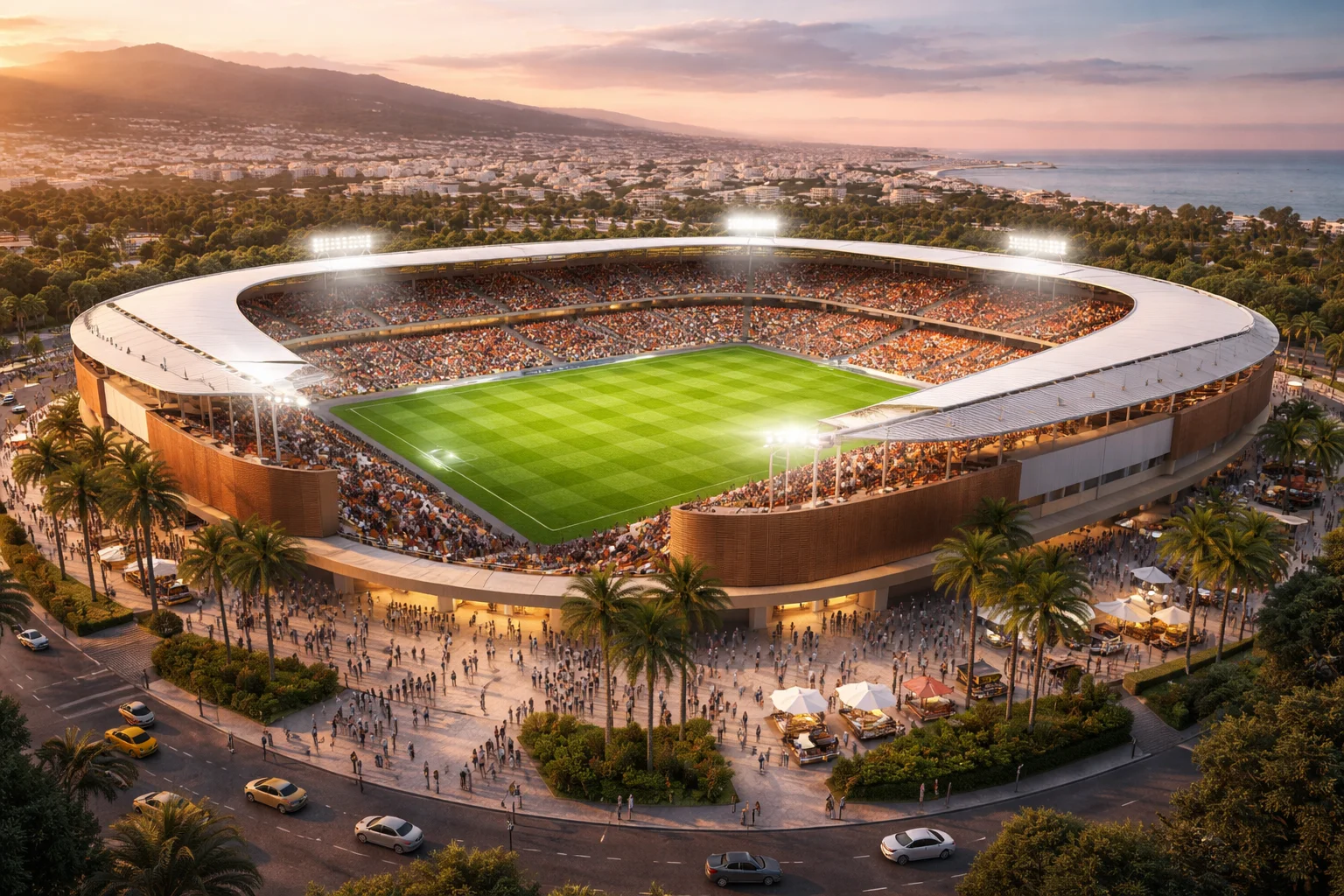
The region of Agadir now sees the development of another 15000-seat stadium called Stadium L'Houcine Moudanib.
The world might be divided by regional, national and cultural differences, but it is definitely united in excitement and anticipation for the 2030 FIFA World Cup. This time, Morocco, Spain and Portugal together get the prestige of co-hosting the global sensation, making the concerned countries boost their infrastructure to conduct matches watched by populations worldwide.
Morocco has also set its pace in its infrastructural haul, with its administrative centre of the Souss-Massa region first launching the Adrar stadium renovation in its bid to host the 2027 African Cup of Nations and the FIFA World Cup, along with renovations across other regions of Casablanca, Marrakech, Tangier, Rabat and Fez.
The region of Agadir now sees the development of another 15000-seat stadium called Stadium L'Houcine Moudanib. The stadium is in compliance with the wider renovation of many nearby stadiums in transforming Morocco into a host of events of international importance.
A new small capacity stadium coming near you soon.
— The road to WC 2030 (@Elcamino2030) March 12, 2026
🏟️Stadium LHoucine Moudanib
📍Agadir
⚽️ 15000 seats
This stadium reinforces Agadir’s sport infrastructure as a bidding city for the 2030 FIFA World Cup. #yallavamos #yallavamos2030 pic.twitter.com/elEyZQLDHD
State mechanisms to handle Sports led tourism push
Complementary to the sports initiatives, the humongous crowd that shall fly into the country to cheer for their teams shall be managed by the authorities, for which significant projects are being undertaken. The government has allotted funds for various other sporting activities to entertain its visitors, backed by Morocco being the most visited country in Africa, with the country welcoming 17.4 million tourists in 2024.
“We are diversifying our tourist attractions to enhance visitor experiences. This includes promoting niche activities like cultural tourism, water sports – especially surfing – golf, and services targeting digital nomads.” Rachid Boukhenfer, vice president in charge of economic development at Souss Massa’s regional council, said earlier.
Written by
Chetan is an Editor at Sportscape Magazine, bringing over three years of experience across sports, defence, international relations, and sports law. With more than 3,500 articles to his name covering player insights, match performances, and team analysis, he…