
FIFA Confirms FIFA World Cup 2026 Ball ‘Trionda’ Will Use Charging Technology for Smart Match Tracking System
FIFA World Cup 2026 official ball Trionda will require charging before matches due to advanced connected sensor technology designed to enhance officiating and real-time tracking.
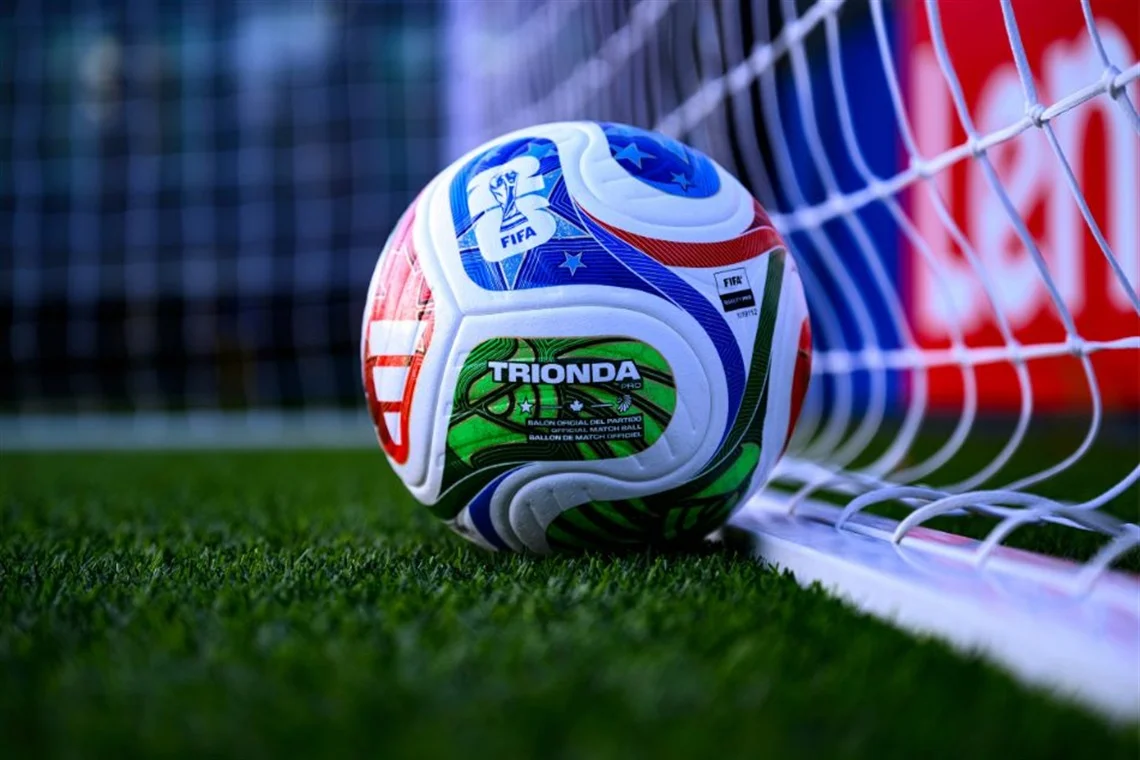
The FIFA World Cup 2026 is set to introduce one of the most technologically advanced match balls in football history after reports confirmed that the official tournament ball, named Trionda, will require charging before matches because of embedded smart sensor technology.
The development marks another major step in FIFA’s growing integration of connected sports technology following the use of semi-automated offside systems during recent international tournaments.
According to reports, the FIFA World Cup 2026 ball Trionda will contain an internal motion sensor unit designed to transmit real-time positional and contact data to match officials and VAR systems. The sensor-enabled ball is expected to improve decision-making around offsides, handballs, touches, and goal-related incidents.
The technology builds on the “Connected Ball Technology” previously introduced by FIFA and Adidas during the FIFA World Cup Qatar 2022, where inertial measurement sensors inside the match ball transmitted data 500 times per second to video operations rooms.
For the 2026 edition across the United States, Canada, and Mexico, FIFA is expected to further enhance the system with improved battery efficiency, advanced tracking precision, and deeper integration into AI-assisted officiating systems. Industry reports suggest the Trionda ball will need charging before every match to maintain uninterrupted sensor communication throughout gameplay.
Adidas, FIFA’s long-term equipment partner, has been central to the development of intelligent football technology over the last decade. During the Qatar World Cup, the Al Rihla ball became the first FIFA World Cup ball equipped with a suspended inertial measurement unit capable of tracking ball movement in real time.
FIFA President Gianni Infantino has repeatedly defended the organisation’s expansion into AI-driven officiating systems, arguing that technology is improving transparency and accuracy in modern football competitions.
The FIFA World Cup 2026 will also become the largest tournament in the competition’s history, featuring 48 teams and 104 matches across three host nations. Analysts believe the expanded scale of the tournament is accelerating FIFA’s push toward advanced automation and real-time tracking systems capable of handling higher officiating demands. However, the Trionda technology has also reignited debates over football’s increasing dependence on automation. Critics argue that excessive technological intervention risks reducing the spontaneity and emotional unpredictability traditionally associated with the sport.
Despite the concerns, FIFA appears committed to expanding connected match infrastructure as elite football increasingly moves toward data-assisted officiating and AI-supported decision-making.
Sportscape feels the FIFA World Cup 2026 Trionda ball represents more than a technological upgrade, it signals football’s accelerating transition into fully connected, AI-assisted competition ecosystems. As smart equipment becomes central to officiating and analytics, the balance between technological precision and football’s human unpredictability may become one of the sport’s defining debates of the next decade.
Written by

Anushka Raghav is an Editor at Sportscape Magazine, where she covers the intersection of sports business, governance, policy, technology, and infrastructure. Having written over 200 news stories and editorial features, she focuses on the ideas, institutions,…