
The 2026 FIFA World Cup 'Group of Death' Debate: Why Groups I, F, and L Will Keep Fans Guessing
With the expanded 48-team format in the 2026 FIFA World Cup, there is no single undisputed "Group of Death." However, Groups I, F, and L are shaping up to be the most brutally competitive pools.
Each time the draw takes place for the biggest tournament in international football, everyone starts looking for just one thing - the "Group of Death". It is no secret that in the history of the World Cup, there has always been one group where strong competitors meet some dangerous underdogs, and early elimination becomes inevitable.
The draw for the FIFA World Cup 2026, which will take place in the USA, Canada, and Mexico, should have led to the weakening of the group stage in a new format for 48 teams. Instead, this year's draw produced a more exciting event. Although there is no group with an absolutely indisputable "Group of Death," the most plausible candidates for it are Group I, followed by Groups F and L.
In this case, it can guarantee absolute fun for all football fans across the world. Moving on to next summer, let us discuss what exactly is happening in three terrifying groups.
The Frontrunner: Group I
Of all the Groups of Death, Group I deserves to be called so the most. This is a deadly combination of elite status and unpredictability:
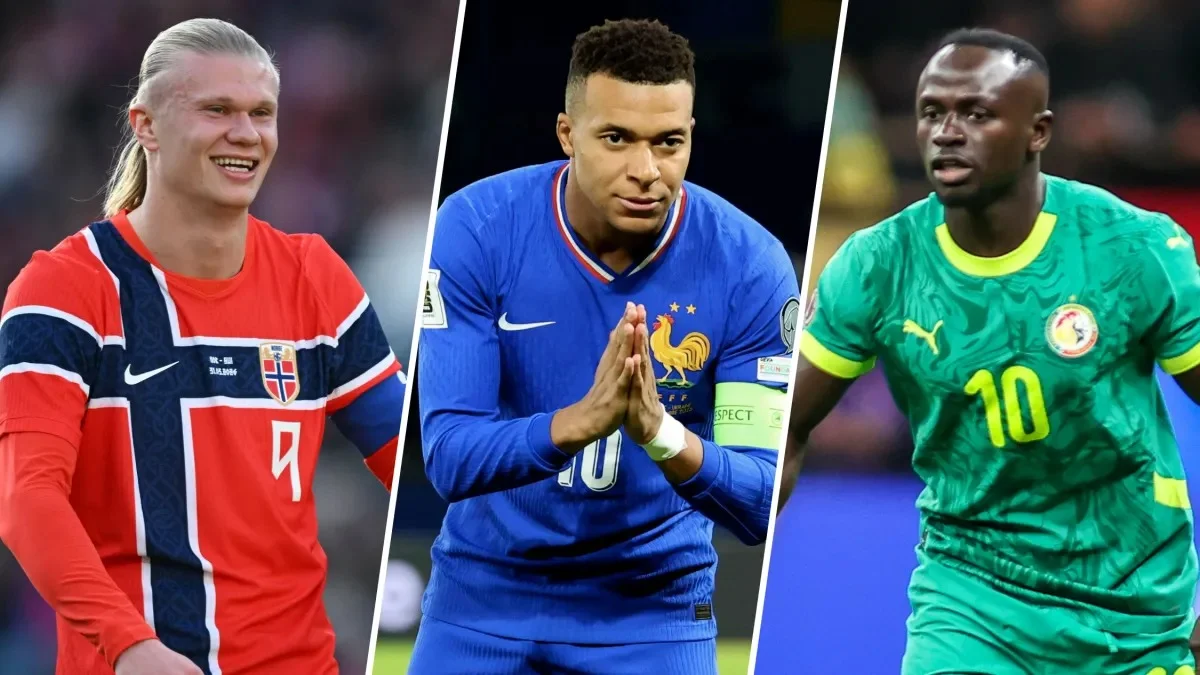
- France – the 2018 champions and 2022 runners-up, field one of the best national teams ever assembled that boasts a seemingly endless pool of talent including Kylian Mbappé, Ousmane Dembélé, and Michael Olise.
- Senegal – the African superpower packed with elite players like Sadio Mane and others from leading clubs.
- Norway – with Erling Haaland and Martin Ødegaard as their attacking arsenal, this squad can score more goals than just about any other.
- Iraq – a scrappy, hard-nosed team of dark horses that is ready to upset the favourites at any time.
A game against any opponent in Group I looks like it could end in defeat. The mighty France cannot underestimate their opponents, as they will face the likes of Senegal and Norway that could surprise anyone.
The Heavyweight Contenders: Groups L and F
Though Group I might grab all the attention, tone absolutely cannot ignore the brutal, highly competitive landscapes of Group L and Group F.
The Chaos of Group L: On paper, Group L could be the best balanced pool of all.
- As the England team arrives as a usual favourite, they immediately find themselves under threat from Croatia, who are known to possess an aggressive midfield along with their ability to progress into the knock-out stages at the World Cup including a runner-up finish in 2018.
- Along comes Ghana, whose tactics make them the masters of shocking big European teams; along with Panama, who are always ready to cause a disruption from CONCACAF.
The Trap of Tactics in Group F
- Both the Netherlands and Sweden offer a fierce all-European confrontation.
- But these two will first need to get past Japan, the ultimate giants-killer of the tournament that has a reputation of beating European giants such as Germany and Spain in the past.
- With Tunisia completing the set of four nations, the slightest miscalculation in the first games might mean doom for the favourites in the group.
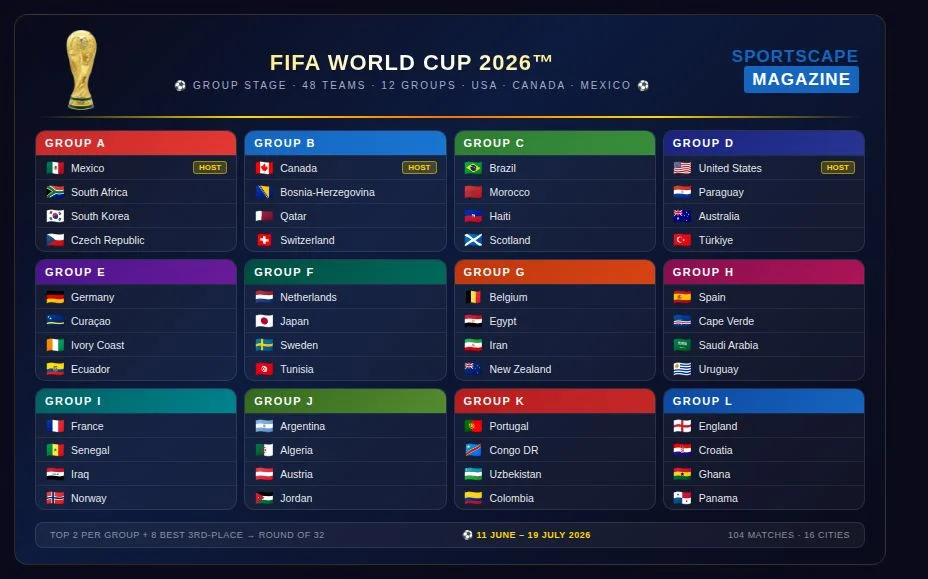
Sportscape believes that having multiple potential "Groups of Death" ensures that the drama of the 2026 group stages will be off the charts. The margins for error in Groups I, F, and L are virtually non-existent. Fans are in for a massive treat as we wait to see which of these fiercely competitive blocks stands up to the hype, and which heavily favoured nation suffers an early, shocking flight home.
Written by