
Minerva FC's 6-0 Rout of Liverpool: A miracle that exposes India’s stale football policies
Minerva Academy FC’s stunning 6-0 win over Liverpool’s youth side exposes deeper cracks in Indian football, from poor infrastructure to failing policies and funding gaps. Tags
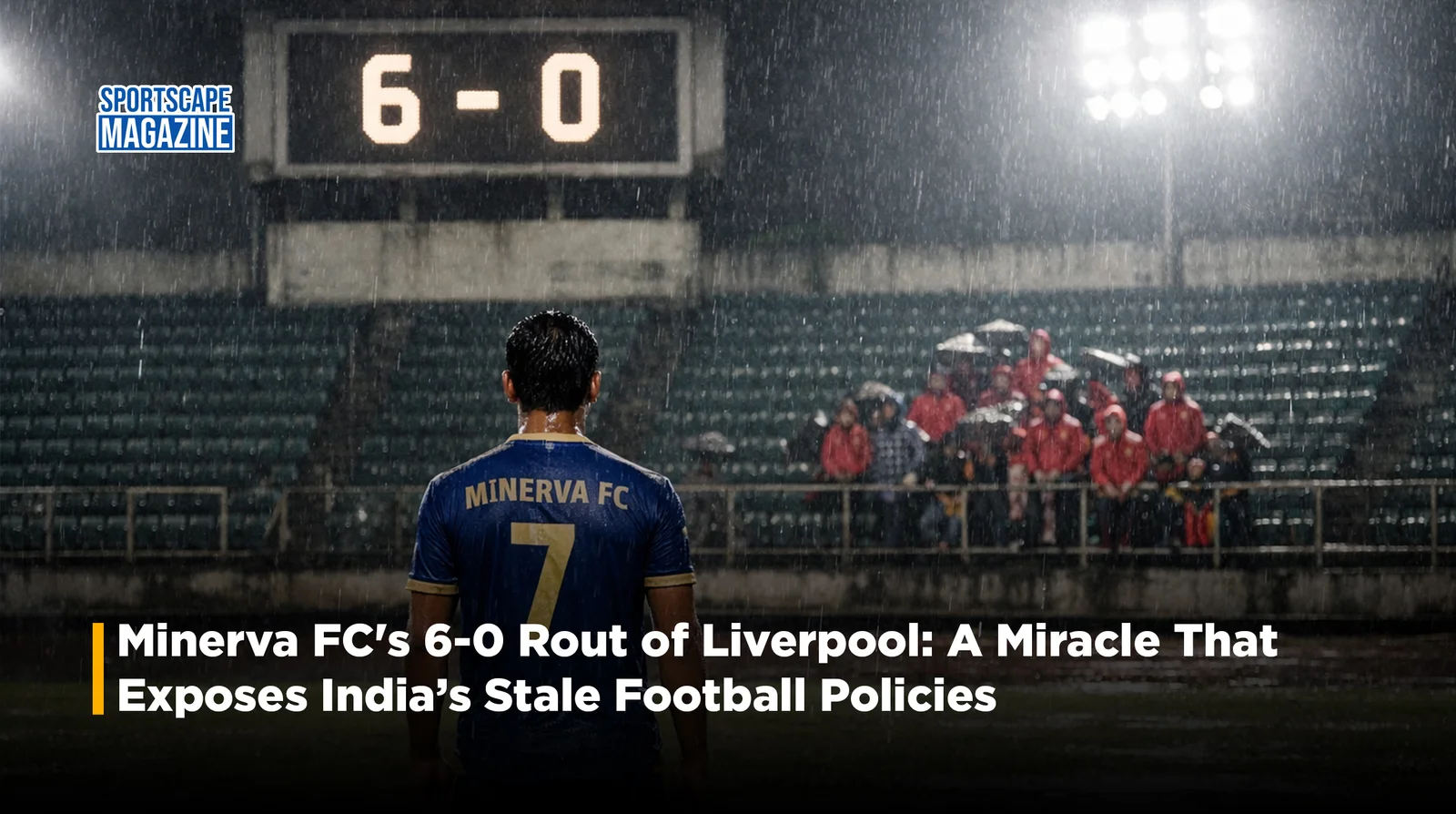
Indian football has been searching for a moment, a moment that inspires and reignites belief. And that moment came in Spain.
Recently, a group of youngsters from Mohali, Punjab’s Minerva Academy FC, stepped onto the field against Liverpool‘s youth side and turned the game into a statement: a 6-0 thrashing defeat to Liverpool in the round of 16 of the Mediterranean International Cup (MIC) in Spain.
But the real story begins much before this game. Three weeks before the historic day, the team was struggling to even make the trip. Funds were running dry, opportunities were slipping away, and dreams were hanging by a thread.
That’s when one man once again stepped in: Ranjit Bajaj, the coach and the man behind Minerva’s rise, made a desperate appeal. Not to sponsors, not to institutions, but to the people. A crowdfunding campaign followed, and he even mortgaged his own property.
This isn’t the first time the Minerva has done something that has shaken the footballing world. Last year, Minerva Academy FC’s under-14 side won three major European trophies: the Gothia Cup in Sweden, the Dana Cup in Denmark and the Norway Cup in Norway.
These same tournaments that have witnessed legends like Erling Haaland, Zlatan Ibrahimović, and Alan Shearer rise to the ranks have now seen an Indian academy rise to fame. Though Minerva FC’s campaign at MIC was short-lived, as after the historic victory over Liverpool, their dream was halted at the quarterfinals with a narrow 2-1 loss to the Unió Esportiva Figueres (UE Figueres), decided by a late penalty. The result left the players shattered and fans frustrated because this team deserves more.
But beyond the result, what they have achieved is something that Indian football cannot ignore. At a time when the system struggles for direction, these youngsters showed what is possible if the right mindset, infrastructure, resources and policies together can help India reach the top.
They have proved that talent and potential exist, but what’s missing is support, structure and vision.
This is why this should be a wake-up call for India’s entire footballing ecosystem., Minerva has definitely shown the way,, but now the question is, will Indian policies follow, or will heroics like these continue to be exceptions?
Football Players desperate cry to help
This wasn’t just another statement; it felt like a breaking point.
In a rare and powerful show of unity, some of India’s biggest football voices, Sunil Chhetri, Gurpreet Singh Sandhu, and Sandesh Jhingan, stepped beyond the pitch and into a space athletes usually avoid: public desperation. In a widely circulated appeal, they didn’t just talk about tactics or tournaments, they asked for survival. “We request FIFA to intervene and find a solution… save Indian football.”
The words weren’t dramatic, they were deliberate. Because behind that appeal lies a system on the brink. Players spoke of uncertainty not just for themselves, but for coaches, support staff, and entire football ecosystems that depend on a functioning league structure. They warned of a collapse that goes beyond sport: “This is not just a sporting issue, it is a humanitarian and economic crisis.”
At the heart of their concern was the instability surrounding domestic football, particularly the ISL crisis, where governance failures, funding gaps, and administrative confusion have left clubs and careers hanging in limbo. For young players in academies, this uncertainty is even harsher: no clear pathway, no stable competition, and increasingly, no reason to stay.
And then comes the stark contrast. Days after Minerva Academy FC dismantled Liverpool FC 6-0, proving that Indian talent can compete, and dominate, on the global stage, Minerva failed to progress further, crashing out in the quarterfinals despite the historic win, their campaign ending not with momentum, but with another reminder of how fragile success is without structure.their owner Ranjit Bajaj echoed the same despair:
“We beat Liverpool 6-0, but we have no funds.” That isn’t irony. That’s an indictment. Because when players are asking global bodies to “save” their sport, and clubs are surviving on personal sacrifices despite historic wins, it becomes clear: This is no longer a performance issue, it’s a policy failure.
How government policies failed to give a podium to Football
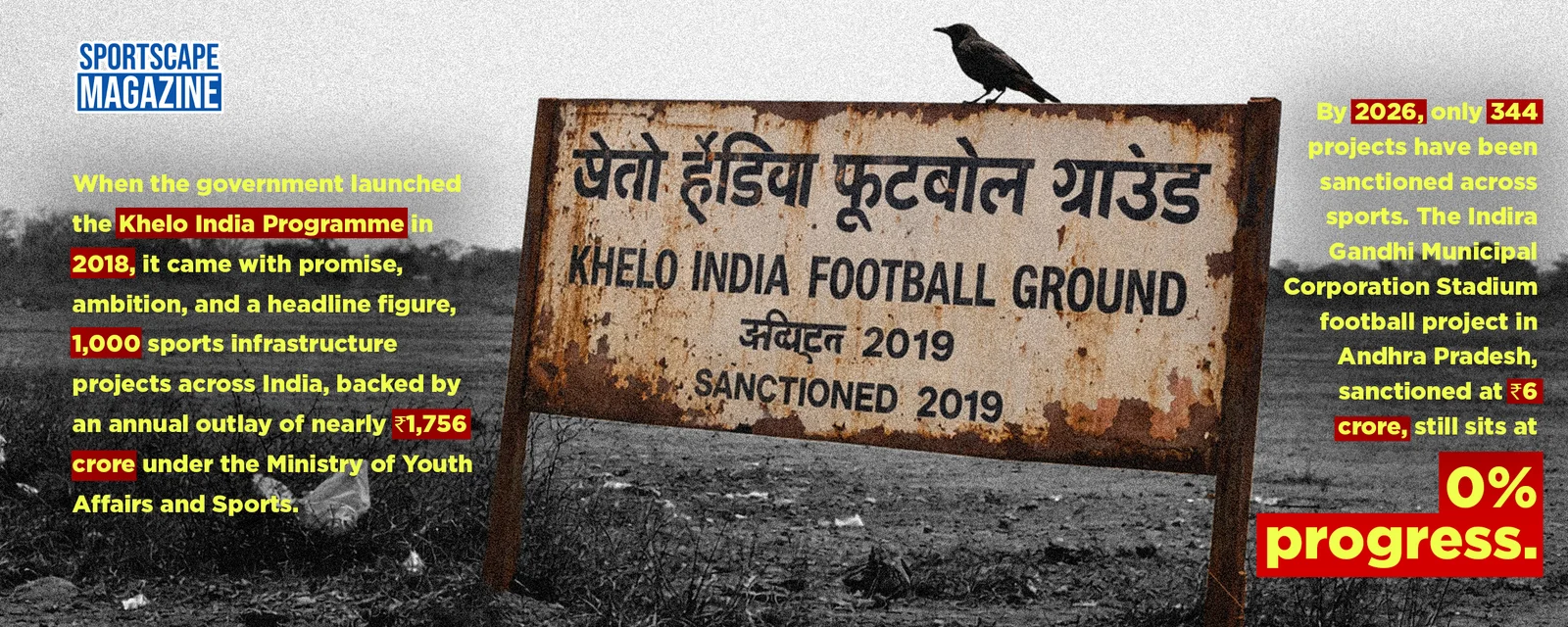
When the government launched the Khelo India Programme in 2018, it came with promise, ambition, and a headline figure, 1,000 sports infrastructure projects across India, backed by an annual outlay of nearly ₹1,756 crore under the Ministry of Youth Affairs and Sports. On paper, it looked like a revolution. On the ground, it tells a very different story.
By 2026, only 344 projects have been sanctioned across sports. While a few football facilities, like Nagaland’s District Mon Football Ground, have been completed, many others remain stuck. The Indira Gandhi Municipal Corporation Stadium football project in Andhra Pradesh, sanctioned at ₹6 crore, still sits at 0% progress.
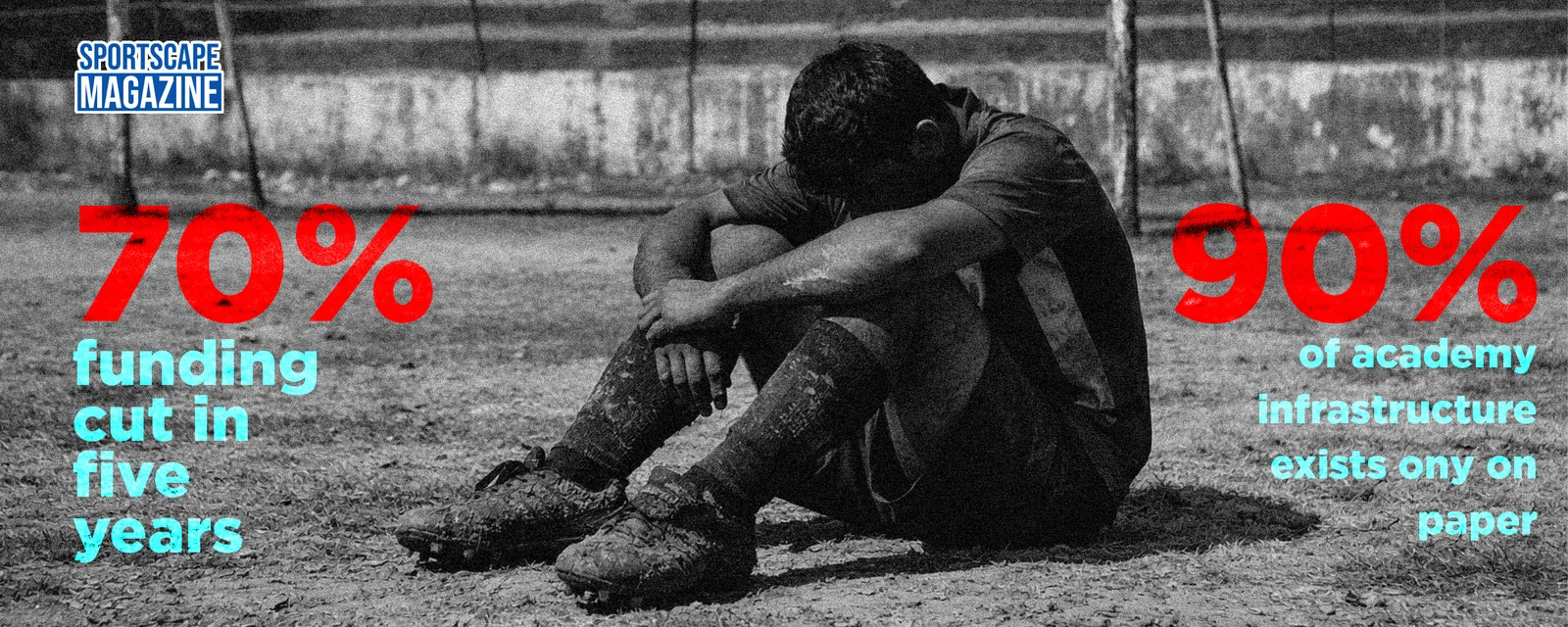
Audits further expose the gap between promise and performance. Reports by the Comptroller and Auditor General (CAG) have flagged how funds meant for State and District Sports Authorities remain unapportioned, despite clear mandates under the Sports Policy 2000. In fact, bureaucratic inertia has stalled nearly 70% of the promised infrastructure pipeline.
And football?
Funding under National Sports Federations dropped sharply, from ₹44.11 crore in 2019–20 to just ₹5.25 crore in 2021–22. Even under the National Sports Policy 2021, football’s share in Khelo India allocations remains under 5%.
Clubs like Minerva Academy FC have received no meaningful support, forcing owners like Ranjit Bajaj to rely on personal funds to survive.
Meanwhile, official claims of “comprehensive infrastructure” continue, even as ₹230 crore was cut from the sports budget in 2021. It has been pushed further to the margins. The result? Policies promise football fields but deliver empty ground.
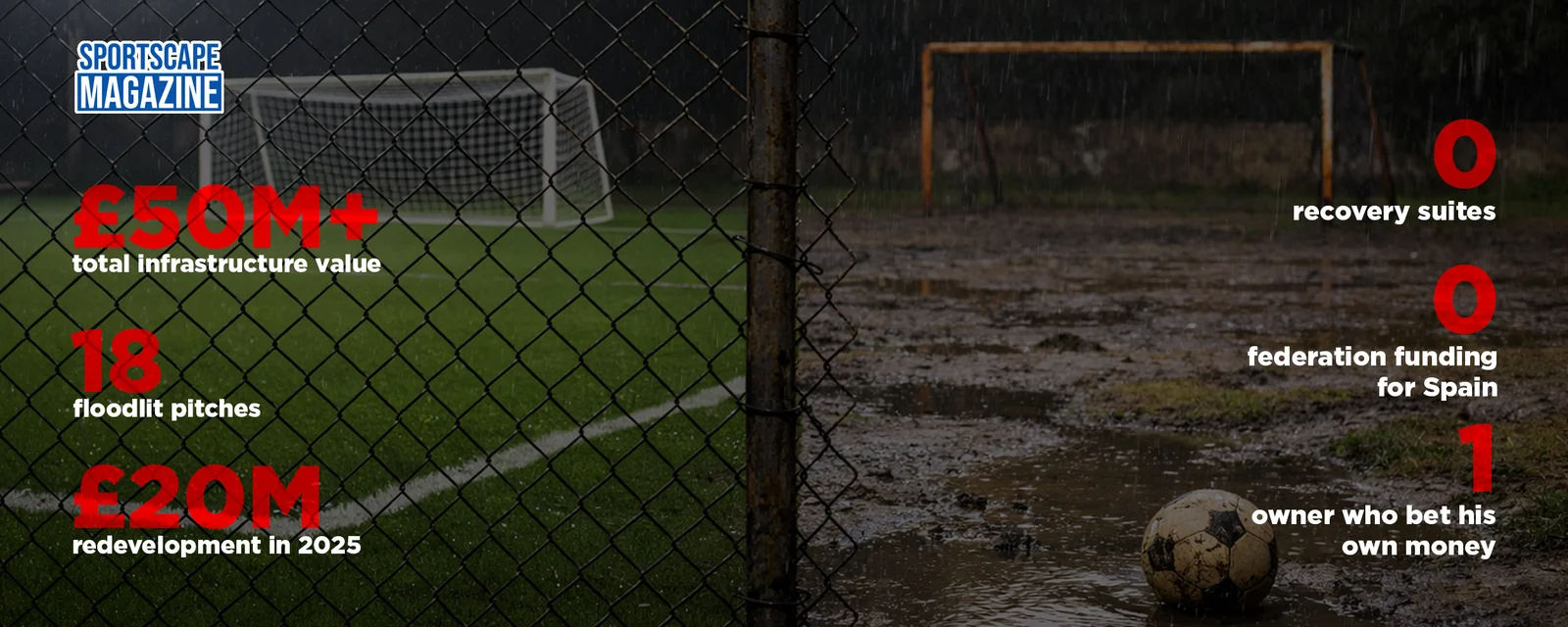
Liverpool’s Luxuries VS. Minerva’s Mud Pitches
Liverpool FC’s academy in Kirkby is what elite football systems look like, 18 floodlit pitches, a planned domed show pitch, cryotherapy units, data labs, gyms, and full-time sports science and psychology support. A £20 million redevelopment (2025) adds to an already world-class setup, backed by UK funding through the Football Foundation and FA pathways. Players train with GPS trackers, nutritionists, and residential programs, moving seamlessly from academy to first team.
Now contrast that with Minerva Academy FC.
No high-tech labs. No recovery suites. Often just basic grounds in Chandigarh, mud pitches, limited staff, and privately funded facilities. Their Spain campaign? Built on ₹ 27 lakh crowdfunding and a ₹2 crore personal loan by Ranjit Bajaj, with no meaningful federation or government backing.
And yet, before facing Liverpool, Bajaj told his players: “We need to show that we belong here… and when given opportunity, we can smash anyone.”
They did exactly that, a 6-0 win.
This chasm is glaring: Liverpool's state-backed ecosystem nurtures stars like Trent Alexander-Arnold; Minerva's grit proves talent exists, but without matching infra, such upsets remain rare flashes. Had India mirrored this support, Minerva could dominate annually.
Blueprint for Government’s Action
India's government can craft a comprehensive, phased blueprint to supercharge football support, drawing from global successes and tailored to local needs. Start with a National Football Infrastructure Fund (NFFI), allocate Rs 5,000 crore over five years (10% of annual sports budget), ringfenced for football alone, partnering with FIFA Forward for matching grants to build 100 FIFA-standard pitches and 50 academies by 2030.
Governments must pivot to Public-Private Partnerships (PPP), like Bhutan's model where corporates funded 20 stadiums, skyrocketing their rankings.
Call in architects for smart stadiums: solar roofs, 5G-enabled VAR tech, and modular pitches that switch for multi-use, cutting costs 30%. But even industry insiders acknowledge the gap. As sports architect Siddharth Soni noted in an interview with sportscape, “We still have quite a long way to go before we can get some of the same quality and standards that we see in some of the other venues.”
This shows the dire need of government action to advance it’s step towards aiding Indian Football with Infrastructure.
Qatar's pre-2022 revolution, $200 billion in infra, turned desert pitches into World Cup arenas, birthing stars like Akram Afif. India could replicate: auction PPP bids for 100 academies, tax breaks for sponsors, and AI scouting nationwide.
Result? Football fever matching cricket's roar.
Minerva's Liverpool thrashing is India's football wake-up call, raw grit beating pedigree. With revived policies, dusted-off funds, and bold infra leaps, imagine hordes of Minervas conquering Europe.
Minerva’s Win demands for more than applause
Minerva Academy FC’s 6-0 win over Liverpool FC should have been a turning point. Instead, it stands as a reminder of what Indian football achieves despite the system, not because of it.
A team built on crowdfunding, personal loans, and sheer belief took down a global giant, only to exit quietly and return to uncertainty. That contrast is the real story.
Because talent is not India’s problem. Infrastructure, intent, and execution are.
If policies like Khelo India move beyond paperwork, if infrastructure meets ambition, and if clubs are supported, not left to survive, this won’t be a one-off miracle.
It will be the beginning of a pattern. Until then, every such victory will carry a question louder than the cheers: how much more could Indian football achieve, if it was truly backed to win?
Written by

Anushka Raghav is an Editor at Sportscape Magazine, where she covers the intersection of sports business, governance, policy, technology, and infrastructure. Having written over 200 news stories and editorial features, she focuses on the ideas, institutions,…