
AI Sports Prediction Tools in 2026: Best Platforms, Accuracy & Future Trends
Discover the best AI sports prediction tools in 2026. Learn how AI predicts sports outcomes, improves betting analysis, and transforms fantasy sports with advanced analytics.
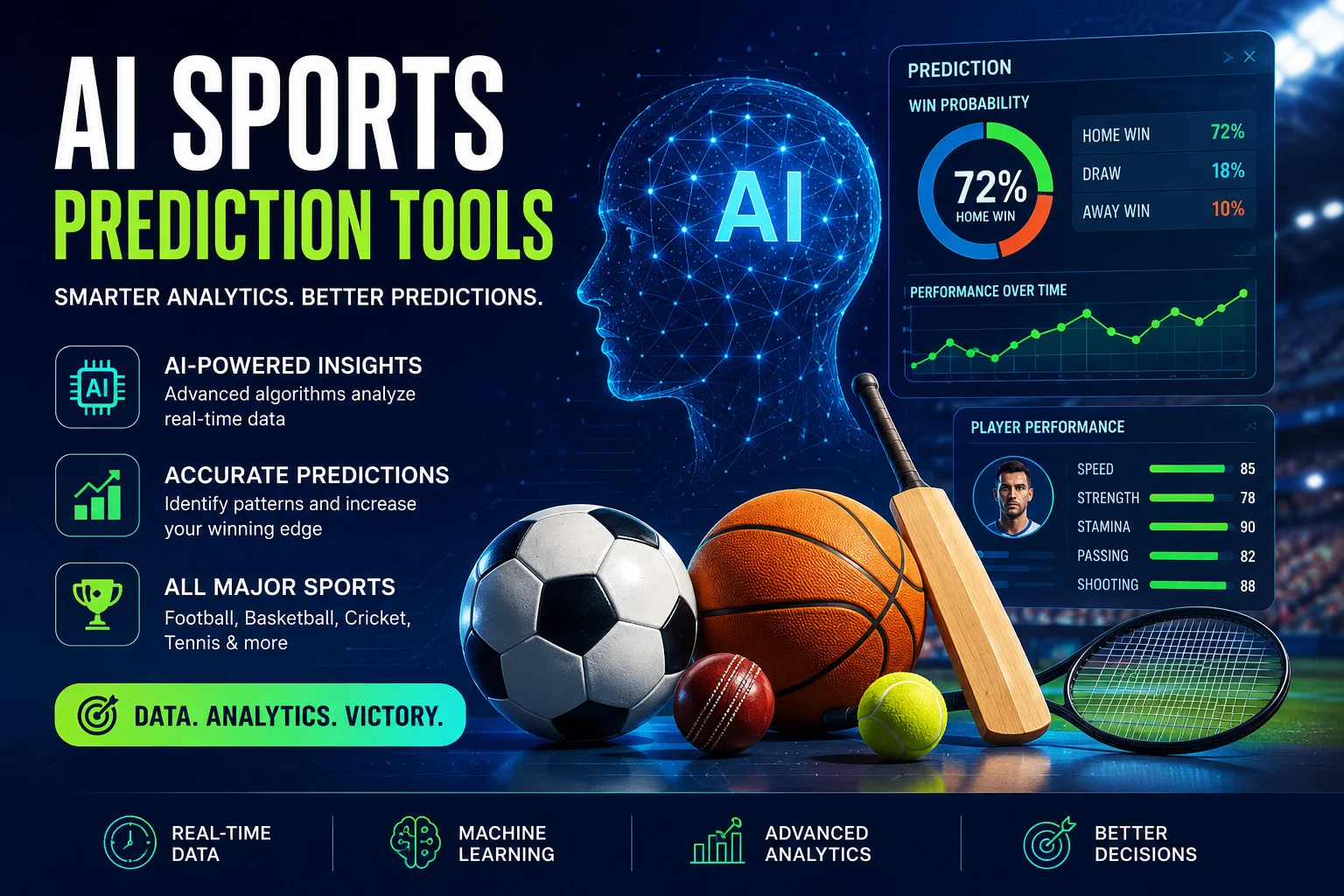
Artificial intelligence has transformed nearly every industry, but few sectors have embraced predictive technology as aggressively as sports. From professional analysts and fantasy sports players to bettors and sports media companies, everyone wants one thing: accurate predictions. That demand has created explosive growth in AI sports prediction tools, platforms that use machine learning, historical statistics, player performance data, and real-time analytics to forecast sports outcomes with impressive speed and accuracy.
The rise of AI in sports is no longer a niche trend. Sports organizations, analysts, betting platforms, and fantasy leagues are investing heavily in predictive systems that can process thousands of variables in seconds. In many ways, AI has become the digital coach sitting behind the scenes, quietly analyzing every pass, shot, injury, weather change, and tactical adjustment.
But here’s the big question: are these tools actually reliable, or are they just glorified calculators wrapped in flashy dashboards? The truth lies somewhere in the middle. AI sports prediction tools can deliver remarkable insights, but understanding how they work is essential before trusting them blindly. Like a GPS system, AI can guide you toward the most likely route, but unexpected detours can still happen. Sports remain unpredictable because humans remain unpredictable.
What Are AI Sports Prediction Tools?
At their core, AI sports prediction tools are software platforms that use artificial intelligence and statistical modeling to forecast sports outcomes. These systems gather enormous amounts of data from games, player performance records, injury reports, weather conditions, coaching tactics, and even crowd behavior. Once the data is collected, machine learning algorithms process the information to identify patterns humans might miss.
Think of these tools like advanced chess engines, except instead of calculating the next move on a chessboard, they calculate probabilities for sporting events. They might predict the likelihood of a football team winning, estimate the number of goals scored in a soccer match, or determine how likely a basketball player is to exceed a scoring threshold. The beauty of AI lies in its ability to process millions of variables much faster than any human analyst ever could.
What makes modern AI prediction systems fascinating is their ability to learn continuously. Older statistical models relied heavily on static formulas, but AI systems evolve as more data becomes available. If a team changes tactics mid-season or a player suddenly improves performance, the algorithm adapts. This constant learning process is why AI-powered sports analytics have become so attractive to professionals and casual fans alike.
The technology is now being used far beyond betting. Fantasy sports players rely on AI projections for drafting decisions, media companies use prediction engines for audience engagement, and professional teams analyze AI-generated insights for tactical planning. AI has shifted from being an optional advantage to becoming an essential competitive weapon.
Why AI Sports Predictions Are Growing So Fast
The rapid growth of AI sports prediction tools is tied directly to the explosion of sports data. Every game today generates a mountain of information. Cameras track player movement in real time, wearable devices monitor athlete health metrics, and advanced sensors measure everything from sprint speed to shot accuracy. Sports have effectively become data factories.
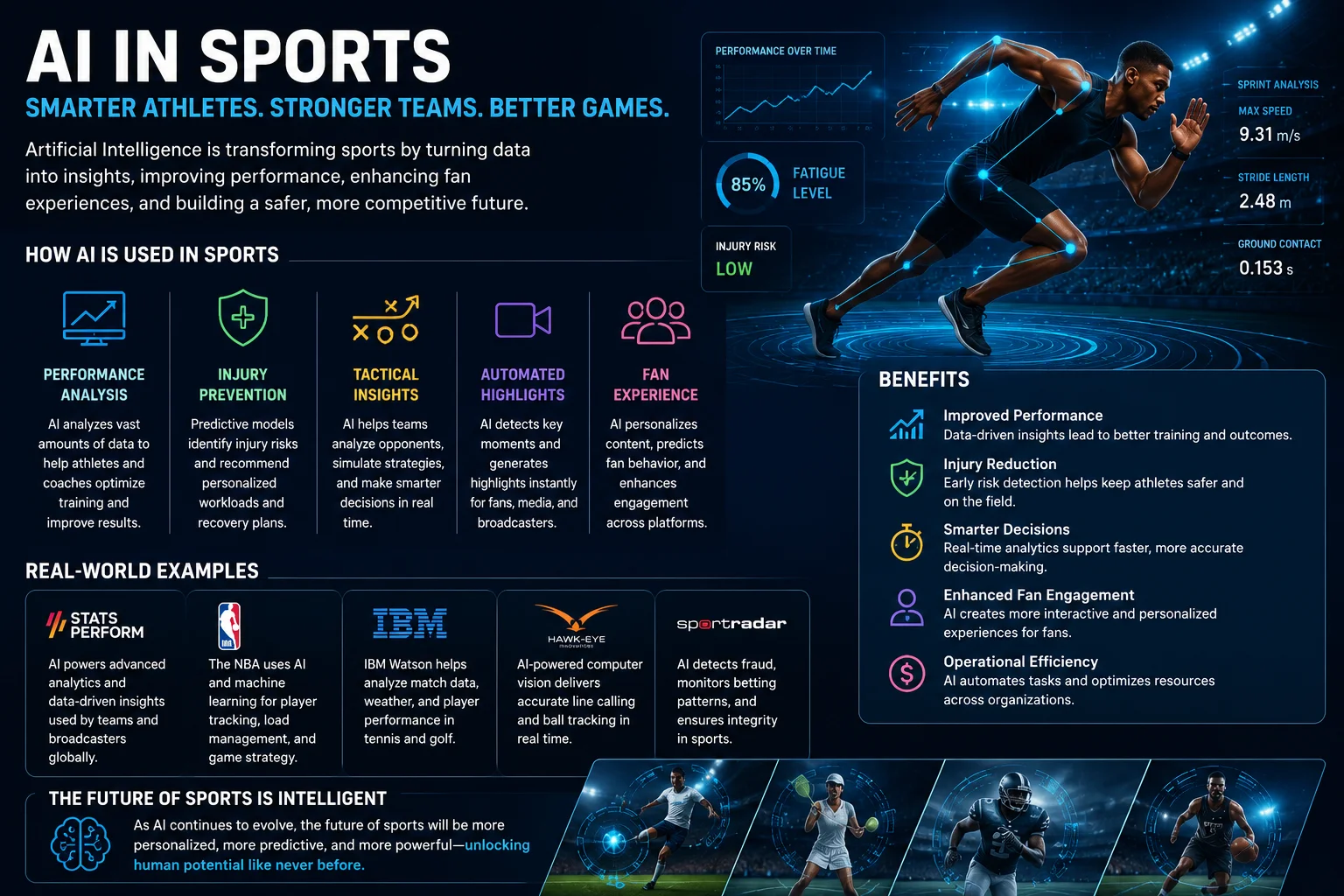
Sports organizations now realize that data-driven decisions can improve both performance and profits. Teams are hiring data scientists alongside traditional coaches, while broadcasters integrate predictive analytics into live coverage. Fans are also demanding deeper insights than ever before, creating a perfect environment for AI-driven tools to flourish.
Betting markets have also accelerated AI adoption. Online sportsbooks and prediction platforms attract millions of users looking for analytical advantages. Traditional sports betting once depended heavily on intuition and expert opinions. Today, bettors increasingly rely on AI-driven models that can identify inefficiencies in betting odds. AI systems compare statistical probabilities with market prices, searching for situations where the odds underestimate a likely outcome.
Fantasy sports have created another massive demand wave. Fantasy managers are no longer satisfied with basic statistics. They want predictive insights about injuries, form trends, matchup advantages, and player consistency. AI tools answer those questions instantly, giving users a level of analytical depth that once required an entire research team.
Key Technologies Behind AI Sports Prediction Tools
Machine Learning Algorithms
Machine learning is the engine powering modern sports prediction systems. Instead of relying on one rigid formula, machine learning models analyze historical data to identify patterns and relationships. These systems become smarter over time because they continuously adjust based on new information.
For example, if a football team performs significantly better at home during rainy conditions, the AI may assign extra importance to weather and venue data in future predictions. This flexibility allows machine learning systems to capture hidden variables that traditional statistics often ignore.
Different algorithms specialize in different tasks. Neural networks excel at identifying complex patterns, while regression models focus on probability estimation. Ensemble models combine multiple approaches to improve prediction reliability. Many top platforms use a blend of algorithms because no single method works perfectly in every situation.
Predictive Analytics and Big Data
Predictive analytics transforms raw sports data into actionable forecasts. AI systems process massive datasets containing player stats, historical trends, injury reports, travel schedules, fatigue levels, and even referee tendencies. The goal is simple: find relationships that improve predictive accuracy.
This is where big data becomes essential. Human analysts might evaluate a few dozen factors before a game, but AI systems can analyze thousands simultaneously. That scale creates opportunities humans simply cannot replicate manually.
Advanced analytics platforms now evaluate everything from shot quality in basketball to batting patterns in cricket. These insights help coaches make smarter tactical decisions while also powering public prediction systems.
Computer Vision and Tracking Systems
Computer vision is another game-changing technology. Cameras installed in stadiums can track player movement frame by frame, generating incredibly detailed performance data. AI systems analyze positioning, acceleration, spacing, and tactical structures during matches.
In basketball, computer vision can evaluate shot selection efficiency. In soccer, it measures pressing intensity and defensive shape. In cricket, AI analyzes bowling angles and batting mechanics. These visual insights provide a deeper layer of predictive analysis that goes beyond traditional box-score statistics.
This technology has essentially turned every sporting event into a real-time laboratory. Coaches, analysts, broadcasters, and prediction systems all benefit from the same flood of visual data.
Best AI Sports Prediction Tools in 2026
The market for AI sports prediction tools has become crowded, but several platforms stand out because of their innovation, usability, and reported accuracy.
| Tool | Key Features | Popular Sports |
|---|---|---|
| Sports AI | Real-time betting insights and analytics | NFL, NBA, Soccer |
| Rithmm AI | Predictive betting models and custom analytics | NBA, NFL |
| BetQL | Betting line analysis and AI recommendations | Multiple sports |
| Leans.AI | AI-generated daily picks and predictions | NBA, MLB, NHL |
Sports AI has gained popularity because of its strong real-time analytics engine
Rithmm AI focuses heavily on customizable prediction models. Instead of forcing users into one prediction system, it allows bettors and analysts to build personalized strategies. That flexibility has made it attractive to serious sports traders.
BetQL emphasizes calibration and reliability rather than flashy prediction percentages. Many users appreciate its more conservative approach because sports predictions can become dangerous when overconfidence replaces disciplined analysis.
Leans.AI specializes in generating daily recommendations across multiple sports leagues. Its algorithms focus heavily on player trends, injury data, and scheduling effects.
The reality is that no AI tool can guarantee profits or perfect predictions. The most effective users treat these platforms as analytical assistants rather than crystal balls. AI provides probabilities, not certainties.
AI Sports Prediction Accuracy Explained
One of the biggest marketing tricks in the AI sports industry is the obsession with accuracy percentages. You’ll often see platforms advertising win rates of 70% or higher. While those numbers sound impressive, they can also be misleading.
Imagine a weather forecast claiming 90% accuracy because it predicts sunshine every day in a desert climate. Technically accurate, but not especially useful. Sports predictions work the same way. Context matters far more than raw percentages.
Prediction markets and betting odds also complicate the picture. A model that wins 60% of its predictions may still lose money if the betting prices are unfavorable. Experienced traders understand that value matters more than simple accuracy.
Several factors can disrupt AI predictions:
- Unexpected injuries
- Weather changes
- Coaching adjustments
- Emotional momentum
- Referee decisions
- Player fatigue
- Locker room conflicts
Sports are emotional, chaotic, and deeply human. AI can analyze patterns, but it cannot fully measure motivation, pressure, or psychological resilience. That unpredictability is exactly why sports remain exciting.
AI Sports Prediction Tools for Different Sports
Football and Soccer
Football and soccer are ideal environments for AI predictions because they generate huge amounts of statistical data. AI systems analyze possession rates, expected goals, passing networks, defensive structures, and player fitness metrics.
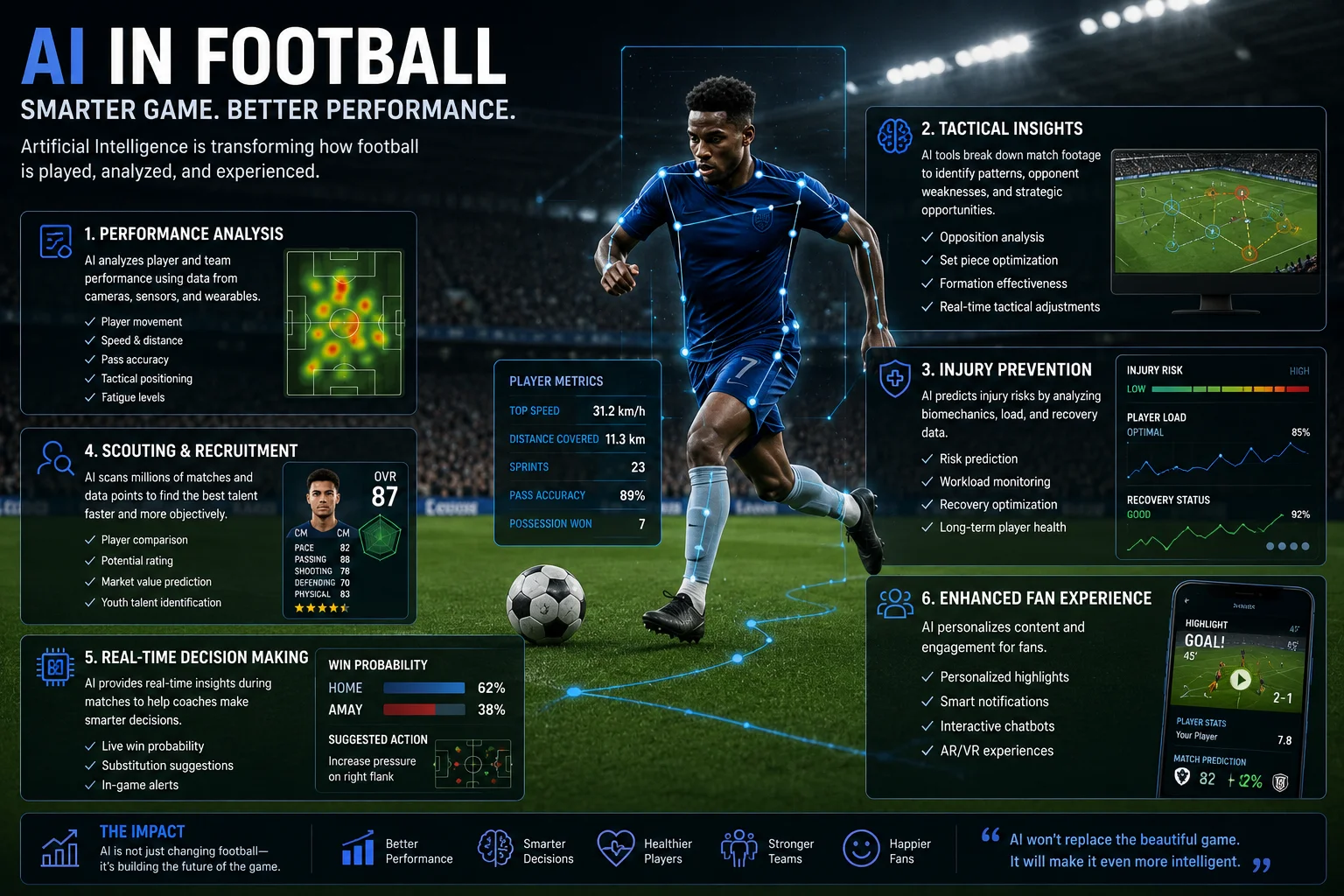
Soccer predictions often focus on probabilities rather than exact outcomes. AI might estimate the likelihood of both teams scoring, predict total goals, or calculate win probabilities. Because soccer has relatively low-scoring games, randomness still plays a major role, making prediction accuracy especially challenging.
Basketball and NBA
Basketball produces high-volume statistical data, making it one of the most AI-friendly sports. AI systems track pace, shot efficiency, defensive ratings, lineup combinations, and player workload management.
NBA predictions are particularly popular because basketball outcomes tend to follow statistical trends more consistently than lower-scoring sports. AI models can also react quickly to injury news and lineup changes, creating real-time forecasting advantages.
Cricket and IPL
Cricket has become a major growth area for AI analytics, especially in countries where sports technology adoption is accelerating rapidly. AI systems analyze batting strike rates, bowling variations, pitch conditions, and match phases.
The IPL has embraced advanced analytics heavily because short-format cricket generates enormous data opportunities. AI predictions now influence commentary, fantasy leagues, and strategic planning.
Tennis and Individual Sports
Individual sports like tennis offer unique prediction advantages because outcomes depend heavily on one athlete instead of an entire team. AI systems evaluate serving consistency, surface preferences, stamina, and head-to-head matchups.
Tennis prediction models also benefit from clearer performance indicators. Unlike team sports where chemistry and tactics complicate analysis, tennis outcomes often correlate strongly with measurable individual metrics.
Benefits and Risks of Using AI Sports Prediction Tools
The biggest advantage of AI sports prediction tools is speed. Humans simply cannot process thousands of data points in real time the way AI can. These systems identify patterns faster, react to updates instantly, and remove emotional bias from analysis.
Another major benefit is accessibility. Years ago, advanced sports analytics were available only to professional teams and wealthy bettors. Today, casual fans can access sophisticated prediction engines from smartphones and laptops.
AI also improves strategic understanding. Even when predictions fail, users gain deeper insight into sports dynamics. Fans become more informed about tactics, player efficiency, and statistical trends.
Still, there are serious risks. Overreliance on AI can create false confidence. Many users mistake probability for certainty and underestimate the randomness inherent in sports. That mindset becomes particularly dangerous in gambling environments.
There are also ethical concerns around fairness, data privacy, and addiction. As prediction technology improves, regulators may introduce stricter oversight on AI-driven betting systems. Some experts worry that increasingly sophisticated prediction models could encourage reckless gambling behavior among younger users.
Transparency is another issue. Many AI tools operate like black boxes, offering predictions without explaining the reasoning behind them. That lack of explainability makes it difficult to evaluate reliability objectively.
The Future of AI Sports Prediction Tools
The future of AI sports prediction tools looks incredibly aggressive. AI systems are already evolving beyond simple prediction engines into autonomous analytical ecosystems capable of processing global sports markets in real time.
Generative AI may soon transform how predictions are presented. Instead of static percentages, AI assistants could provide conversational explanations, tactical simulations, and personalized recommendations. Imagine asking an AI assistant, “Why is this team favored tonight?” and receiving a fully interactive breakdown backed by live data.
Wearable technology will push sports analytics even further. As athlete monitoring devices improve, AI systems may predict injuries, fatigue, and performance fluctuations before coaches even notice warning signs.
Prediction markets themselves are also expanding rapidly. Financial firms and hedge funds are increasingly hiring prediction-market specialists because sports forecasting overlaps heavily with financial risk modeling.
One thing seems certain: AI will continue reshaping sports culture. Fans will consume games differently, teams will train differently, and analysts will think differently. The sports world is moving toward a future where data and intuition work side by side instead of competing against each other.
Conclusion
AI sports prediction tools have transformed sports analytics from simple statistics into sophisticated predictive ecosystems. What once required teams of analysts can now be accomplished in seconds through machine learning, real-time data processing, and advanced modeling systems. These tools are changing how fans watch games, how bettors analyze odds, and how organizations make strategic decisions.
Still, sports remain gloriously unpredictable. AI can estimate probability, but it cannot fully account for human emotion, pressure, momentum, and chaos. That balance between science and uncertainty is exactly what keeps sports compelling.
The smartest approach is to treat AI as a powerful assistant rather than an all-knowing oracle. Used responsibly, these tools can sharpen decision-making, improve understanding, and unlock fascinating insights into the hidden patterns of sports. The future of sports forecasting won’t belong entirely to humans or machines. It will belong to the partnership between the two.
Written by