
Olympics 2028 Qualification Rules Explained: Complete LA28 Guide
Learn The Complete Olympics 2028 Qualification Rules For La28, Including Athletics, Cricket, Football, Swimming, Boxing, Rankings, Quotas, And Qualification Pathways.
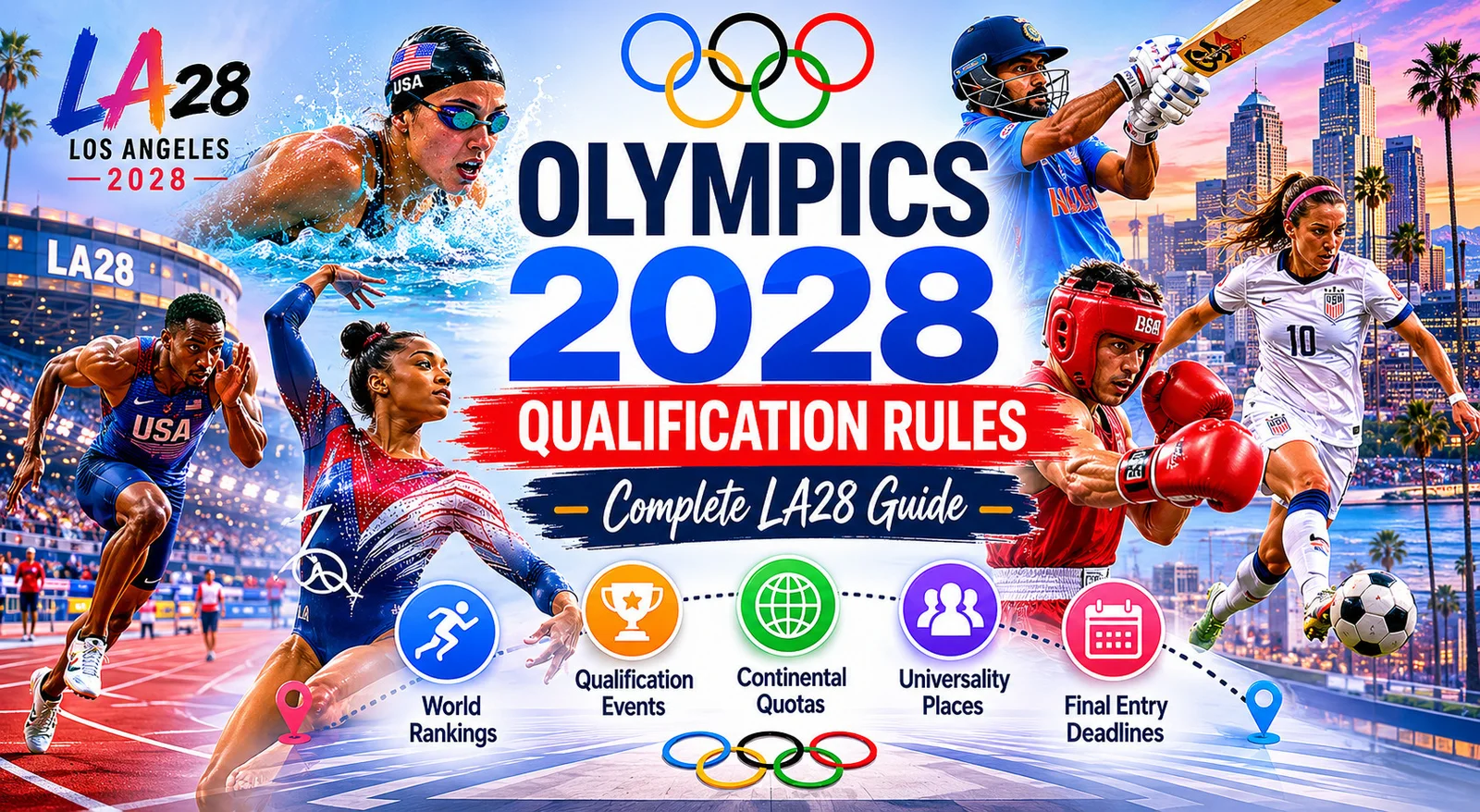
The road to the Los Angeles 2028 Olympic Games is already taking shape, and athletes around the world are beginning their long and demanding journey toward qualification. Unlike a simple ticket purchase or league promotion system, Olympic qualification is a maze of rankings, continental tournaments, world championships, and strict quota allocations. Every sport follows its own pathway, yet all of them must comply with the broader framework established by the International Olympic Committee (IOC). For fans, coaches, and athletes alike, understanding the Olympics 2028 qualification rules is crucial because the qualification process often determines which countries dominate the Games before the opening ceremony even begins.
The LA28 Olympics will introduce several new sports while also updating qualification systems for existing events. Sports such as cricket, flag football, squash, lacrosse, and baseball/softball are generating major excitement because qualification pathways are still evolving. At the same time, established Olympic sports like athletics, swimming, gymnastics, and boxing have already started releasing approved qualification systems for athletes aiming to compete in Los Angeles. According to recent IOC-approved qualification announcements, most qualification periods will run from 2026 through mid-2028.
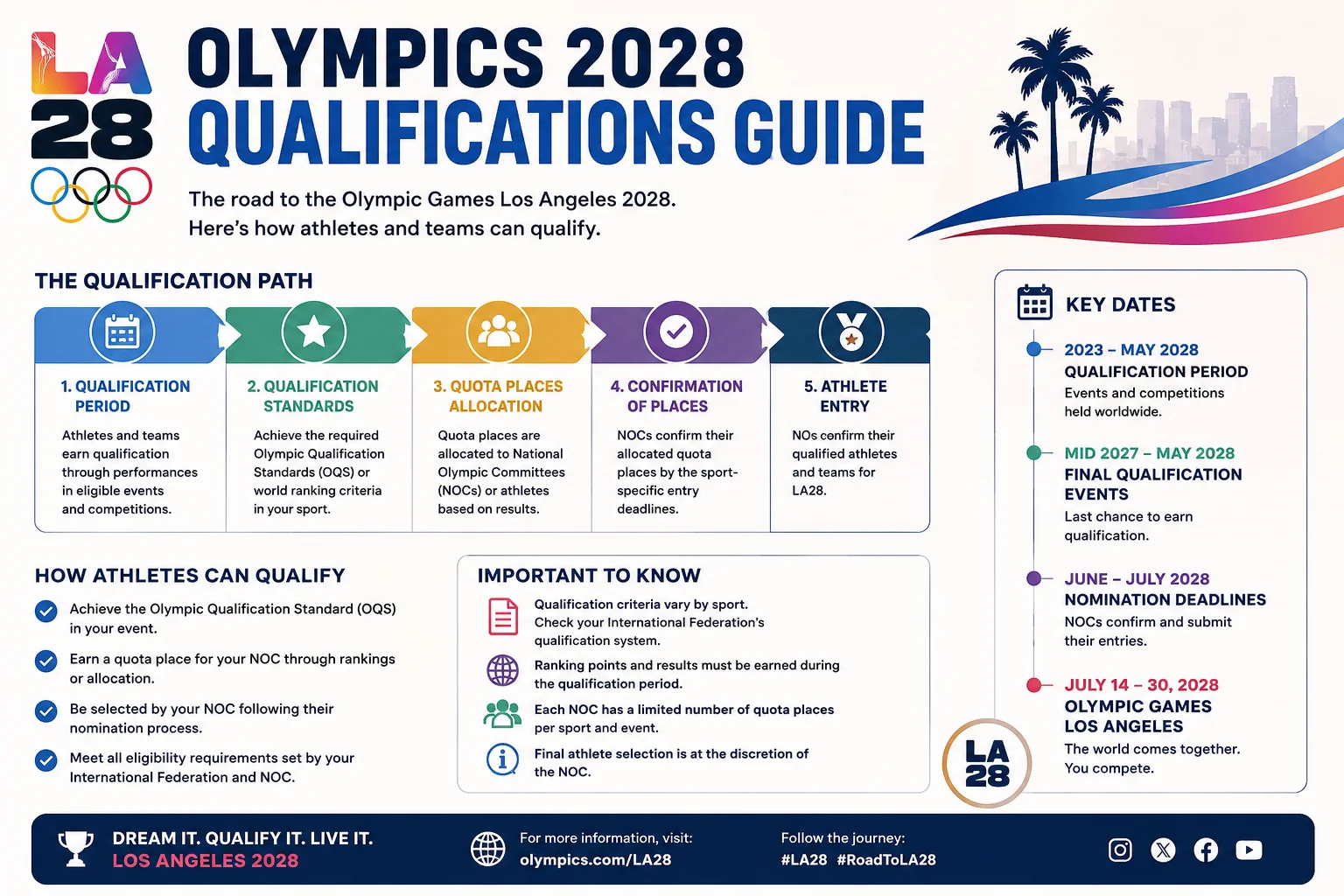
Think of Olympic qualification like climbing a mountain during a storm. Talent alone is not enough. Athletes must choose the right tournaments, maintain world rankings, avoid injuries, and peak at exactly the right moment. One bad season can ruin a four-year Olympic dream. That is why LA28 qualification rules are attracting massive attention already, especially with the Olympics heading back to the United States for the first time since Atlanta 1996.
Understanding the LA28 Olympic Qualification System
The Olympic qualification system for LA28 follows a familiar structure but includes several modern adjustments designed to improve fairness, gender equality, and global representation. The IOC approved broad qualification principles for Los Angeles 2028 in 2025, giving international federations the framework needed to create sport-specific qualification systems. The idea is simple in theory: the best athletes in the world should compete while ensuring representation from every continent. In practice, however, the process becomes incredibly detailed.
Most Olympic sports use a combination of qualification methods. Some athletes qualify through world rankings accumulated over two years. Others earn spots through continental championships or global qualifying tournaments. A few sports still rely heavily on direct qualification through world championship performances. For example, boxing at LA28 will feature a combination of global and continental qualification events, giving athletes multiple opportunities to secure quota places. This layered system prevents Olympic participation from becoming dependent on a single event or one lucky performance.
The IOC is also pushing strongly for gender parity at LA28. Boxing, water polo, and several other sports are expanding women’s participation to match men’s competition numbers. That shift reflects the broader direction of modern Olympic sports, where equal participation is becoming a central pillar rather than a secondary objective. Fans may notice that many qualification documents repeatedly mention “universality” and “continental balance.” These phrases matter because the Olympics are not only about finding the best athlete but also about showcasing worldwide participation.
How Olympic Qualification Works Across Sports
Every Olympic federation controls its own qualification system within IOC guidelines. Athletics may prioritize world rankings, while football qualification depends on continental tournaments. Gymnastics combines world championship performances with apparatus rankings and continental quotas. This means athletes from different sports experience completely different qualification journeys.
In many sports, quota places belong to countries rather than individual athletes. For example, a gymnast or relay team may secure a quota spot for their nation, and then the national federation decides which athlete fills that position closer to the Games. This creates intense competition even after qualification is secured. An athlete may technically qualify their country but still miss the Olympics if selectors choose another competitor later.
The qualification process also includes maximum athlete quotas per country. A nation cannot simply flood the Olympics with unlimited participants, even if it dominates world rankings. Sports like climbing, gymnastics, and weightlifting impose strict country caps to maintain diversity. According to recent climbing qualification discussions, some disciplines will allow only two athletes per nation despite growing global participation. This rule dramatically increases the pressure within powerhouse nations like the United States, China, and Japan.
Why LA28 Qualification Rules Are Different
Los Angeles 2028 represents a turning point for Olympic qualification because of the inclusion of new sports and the expansion of digital engagement around qualification events. The IOC’s Olympic Q-Series will play a major role in sports such as skateboarding, BMX freestyle, climbing, and flag football. Events in Tokyo, Shanghai, Montreal, and Orlando are expected to serve as major qualification stops. This creates a more global and media-friendly qualification pathway compared to older Olympic cycles.
LA28 also emphasizes youth-driven sports and entertainment-focused competition formats. Modern pentathlon, for example, will replace equestrian show jumping with obstacle racing inspired by Ninja Warrior-style competitions. This is not just a cosmetic change. Qualification strategies, athlete training programs, and talent pipelines will all shift dramatically because of the new event structure.
Another major difference is the increased focus on long-term ranking systems. Weightlifting qualification, for instance, now requires athletes to post results across multiple qualification periods rather than relying on one exceptional performance. Athletes must now demonstrate consistency, durability, and strategic competition planning over nearly two years.
Key Dates for Olympics 2028 Qualification
The qualification timeline for LA28 officially begins for many sports during 2026 and continues until mid-2028. While every federation sets its own qualification windows, most follow a two-year qualification cycle. This gives athletes enough time to collect ranking points and participate in required competitions.
| Qualification Stage | Expected Timeline |
|---|---|
| Initial qualification events | Early 2026 |
| Major world championships | 2026–2027 |
| Continental qualifiers | 2027–2028 |
| Final Olympic ranking cutoffs | Mid-2028 |
| Athlete entry confirmations | Weeks before LA28 |
Triathlon’s qualification window, for example, opens on May 18, 2026, and closes on May 18, 2028. Weightlifting qualification begins in July 2026 and includes several mandatory ranking events through 2028. These timelines are carefully designed to balance athlete preparation with competitive fairness.
Athletes and coaches must plan years in advance. Missing a required qualifying event due to injury or scheduling conflicts can destroy Olympic hopes. This is why elite athletes often organize entire seasons around qualification calendars rather than championship medals alone.
General IOC Qualification Principles for LA28
The IOC established several universal principles for all LA28 qualification systems. These principles include fairness, transparency, global participation, and gender equality. Every international federation must align with these standards when creating qualification rules.
One of the most important concepts is the quota system. Olympic spots are limited, meaning qualification is not just about performance but also about allocation. For example, weightlifting will feature only 120 athletes total at LA28, split equally between men and women. That small quota makes qualification incredibly competitive because dozens of world-class lifters may be fighting for just a few available positions.
World Rankings and Qualification Points
World rankings remain the backbone of Olympic qualification in many sports. Athletes accumulate points through approved international competitions during the qualification period. The more prestigious the event, the more points available. World championships usually offer the highest point totals, followed by continental championships and sanctioned international tournaments.
This ranking-based system rewards consistency instead of isolated performances. An athlete who performs well across multiple events often has a stronger qualification position than someone who wins one major tournament but performs poorly elsewhere. This approach also encourages athletes to compete internationally more often, increasing global exposure for their sports.
Continental Qualification Events
Continental qualifiers remain essential for ensuring geographic diversity at the Olympics. Africa, Asia, Europe, Oceania, and the Americas each receive designated qualification opportunities in many sports. Hockey, for instance, will allocate Olympic places through continental championships alongside professional league performances and Olympic qualifying tournaments.
These continental pathways create fascinating Olympic stories. Smaller nations that might never qualify through world rankings can still reach the Games by winning continental competitions. This keeps the Olympic spirit alive because the Games are meant to showcase global participation rather than simply repeating world championship lineups.
Universality Places and Host Nation Quotas
The United States automatically receives host nation places in several sports at LA28. Host country quotas guarantee local representation even if athletes fail to qualify through standard pathways. This tradition helps boost local fan engagement and national excitement during the Games.
Universality places are another unique Olympic feature. These spots allow smaller or developing nations to participate even if they do not meet normal qualification standards. Gymnastics and several other sports continue to reserve special universality positions for nations with limited Olympic representation. This system reflects the Olympic ideal of inclusiveness.
Athletics Qualification Rules for Olympics 2028
Athletics remains the centerpiece of the Olympic Games, and its qualification system is expected to resemble Paris 2024 with a combination of entry standards and world rankings. Athletes can qualify either by achieving demanding performance benchmarks or through their ranking position within the qualification window.
This dual-pathway system balances elite excellence with consistency. Imagine two marathon runners. One produces a stunning performance at a major race and hits the Olympic standard immediately. Another consistently finishes near the top at multiple international races without achieving the automatic standard. Both athletes may still qualify because the ranking system rewards long-term competitiveness.
Athletics qualification also involves strict national entry limits. Even if a country has six athletes meeting the Olympic standard in one event, only three may compete at the Games. This rule creates brutal internal competition in powerhouse athletics nations such as the United States and Jamaica.
Swimming and Aquatics Qualification System
Swimming qualification typically revolves around Olympic trials and world championship performances. Countries such as the United States and Australia use highly competitive national trials to determine Olympic teams. In some cases, winning the national trials is harder than winning an Olympic medal because of the incredible depth within those nations.
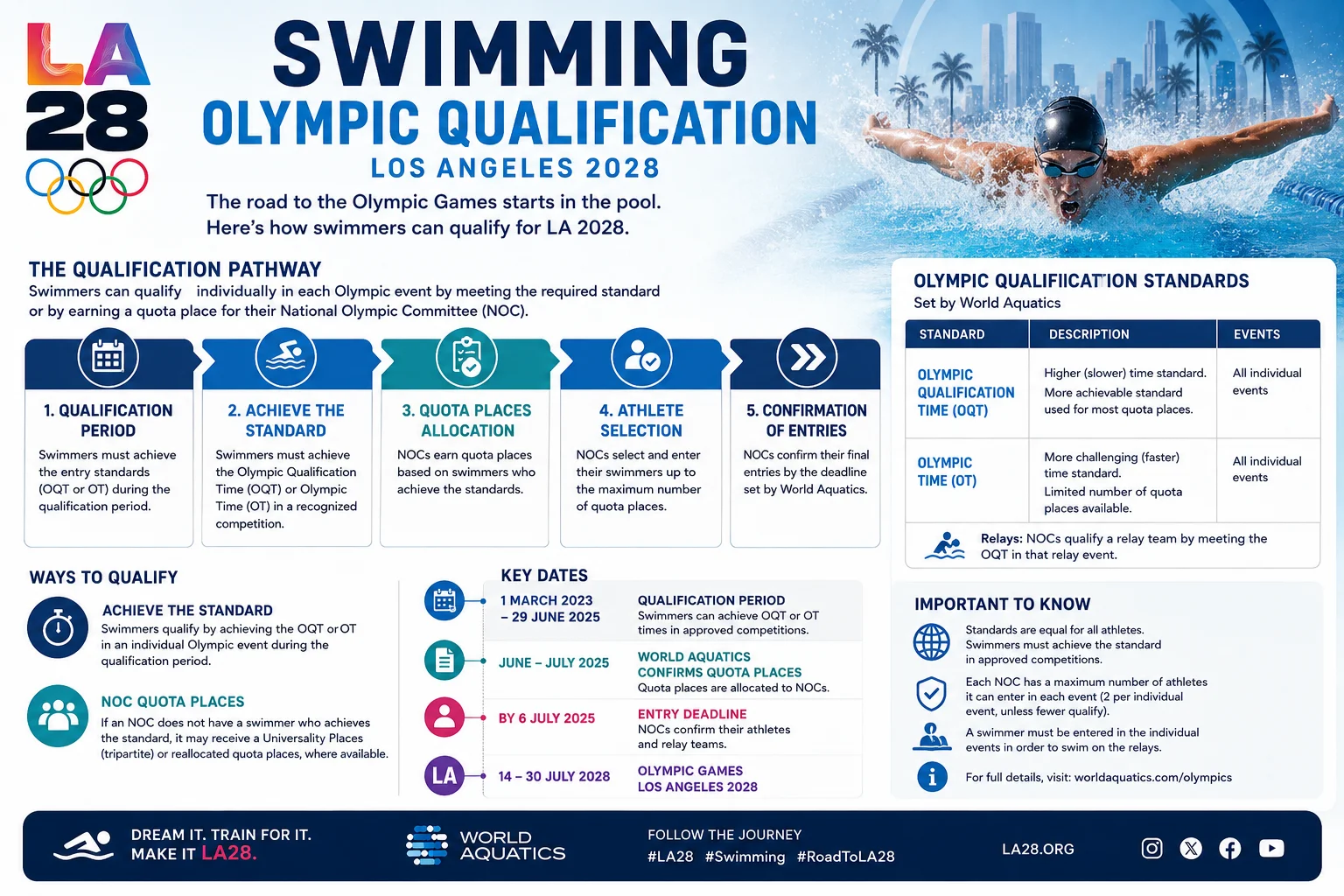
World Aquatics recently finalized qualification principles for LA28 water polo, including expanded women’s participation to achieve full gender parity. Qualification pathways include world championships, continental events, and Olympic qualification tournaments. This layered structure ensures both elite competition quality and global representation.
Aquatics qualification systems are emotionally intense because races are often decided by hundredths of a second. One touch at the wall can separate an Olympian from an athlete watching at home. That razor-thin margin is what makes Olympic qualification so dramatic for fans and heartbreaking for athletes.
Football Qualification Rules for LA28
Football qualification for the Olympics differs significantly from the FIFA World Cup structure. Men’s Olympic football primarily features under-23 players with limited overage exemptions, while the women’s tournament includes full senior national teams.
Qualification usually occurs through continental tournaments such as the UEFA Under-21 Championship, AFC Asian Cup qualifiers, and CONMEBOL pre-Olympic tournaments. Host nation USA is expected to receive automatic qualification in several team sports, though final allocations vary by federation.
The women’s football tournament is expected to remain one of the most competitive Olympic events because Olympic qualification pathways are extremely limited compared to the FIFA Women’s World Cup. Nations must navigate tough continental tournaments where a single loss can end Olympic dreams instantly.
Cricket Qualification for the 2028 Olympics
Cricket’s return to the Olympics after more than a century is one of the biggest stories surrounding LA28. The Games will feature T20 cricket, a fast-paced format designed for global audiences and television appeal. Qualification rules are still being finalized, but world rankings and continental qualification tournaments are expected to play major roles.
The inclusion of cricket creates huge opportunities for countries like India, Australia, England, Pakistan, and South Africa. At the same time, smaller cricket nations could use Olympic qualification to grow the sport dramatically. Olympic exposure often acts like rocket fuel for emerging sports programs because governments and sponsors invest heavily once Olympic participation becomes possible.
Fans are particularly excited about the possibility of India competing in Olympic cricket. Considering cricket’s enormous popularity, Olympic qualification tournaments could attract viewership numbers rivaling major ICC events.
Boxing Qualification Rules
Boxing qualification for LA28 has already been officially approved by the IOC and World Boxing. The system includes three global competitions and five continental events, giving athletes multiple qualification opportunities. Gender parity will also be achieved for the first time in Olympic boxing history, with equal male and female participation.
This qualification model rewards persistence. A boxer eliminated early in one qualifier still has additional opportunities to earn an Olympic place later. That structure reduces the randomness often associated with combat sports qualification systems.
Olympic boxing qualification also depends heavily on strategic scheduling. Fighters must balance professional opportunities, injury prevention, and qualification tournaments carefully. One poorly timed injury can erase years of preparation.
Gymnastics Qualification Pathway
Gymnastics qualification is one of the most complex systems in Olympic sports. Team qualification, individual apparatus qualification, continental quotas, world championships, and World Cup rankings all interact simultaneously. Recent LA28 gymnastics qualification documents indicate that the overall quota structure will remain similar to previous Olympics.
For gymnasts, Olympic qualification is often emotionally exhausting because competition margins are microscopic. One wobble on the beam or one step out of bounds can determine Olympic participation. The sport’s scoring system leaves almost no room for error.
Another interesting feature of gymnastics qualification is the importance of specialist athletes. Some gymnasts qualify specifically for apparatus events like rings, vault, or uneven bars without competing in the all-around competition. This allows nations with limited team depth to still send elite individual performers.
New Sports and Qualification Rules at LA28
LA28 introduces several new sports that are reshaping Olympic qualification conversations worldwide. Flag football, squash, baseball/softball, lacrosse, and cricket all bring fresh qualification systems and new opportunities for athletes.
Flag football qualification already includes world championships and continental events. According to approved qualification plans, the top teams from global championships will secure direct Olympic places. This structure mirrors other established Olympic team sports while helping the sport expand internationally.
Squash athletes are expected to qualify primarily through world rankings and continental championships. Lacrosse qualification will likely involve world championship placement combined with regional qualification events. These new sports create fresh Olympic dreams for athletes who previously had no Olympic pathway at all.
How Athletes Earn Olympic Ranking Points
Olympic ranking systems operate like a giant global scoreboard that updates constantly during the qualification period. Athletes earn points based on performance, event prestige, and opponent quality. Some sports count only the best results, while others use cumulative scoring systems.
Weightlifting’s LA28 qualification system is particularly interesting because it combines multiple competition totals across two qualification phases. This means athletes must maintain elite performance levels consistently rather than peaking once.
Strategic tournament selection becomes critical in ranking-based qualification systems. Athletes often travel globally chasing ranking points, balancing travel fatigue against qualification opportunities. Coaches must think like chess players, calculating which competitions provide the best pathway to Olympic qualification.
Challenges Athletes Face During Olympic Qualification
Olympic qualification is mentally and physically brutal. Athletes must maintain elite form for years while handling injuries, travel, media pressure, and financial stress. Many qualification events take place across multiple continents, forcing athletes into exhausting schedules.
Financial pressure is especially difficult for athletes from smaller sports or developing nations. International travel, coaching costs, equipment, and recovery expenses can become overwhelming. Some athletes spend years fundraising simply to remain on the qualification circuit.
The psychological toll is equally intense. Imagine training for four years and missing Olympic qualification by one ranking position or a fraction of a second. These moments define careers and sometimes entire lives. That emotional intensity is what makes Olympic qualification one of the most dramatic processes in world sport.
Conclusion
The Olympics 2028 qualification rules are shaping up to be one of the most fascinating Olympic qualification systems ever created. LA28 combines traditional Olympic values with modern sports innovation, introducing new sports, updated ranking systems, gender parity improvements, and entertainment-focused formats. Athletes will navigate world rankings, continental championships, qualification tournaments, and strict quota systems during the long road to Los Angeles.
For fans, the qualification journey is almost as exciting as the Olympics themselves. Every ranking update, qualification event, and continental championship becomes part of a larger Olympic storyline. By the time the opening ceremony begins in Los Angeles, thousands of athletes worldwide will already have experienced triumph, heartbreak, pressure, and unforgettable moments during the qualification process.
The road to LA28 is not just about reaching the Olympics. It is about surviving one of the toughest competitive systems in global sport.
Written by