
What Is Pickleball? Rules, Benefits & Beginner’s Guide 2026
Discover What Is Pickleball, How It Is Played, Official Rules, Health Benefits, Equipment, And Why This Fast-growing Sport Is Becoming Popular Worldwide.
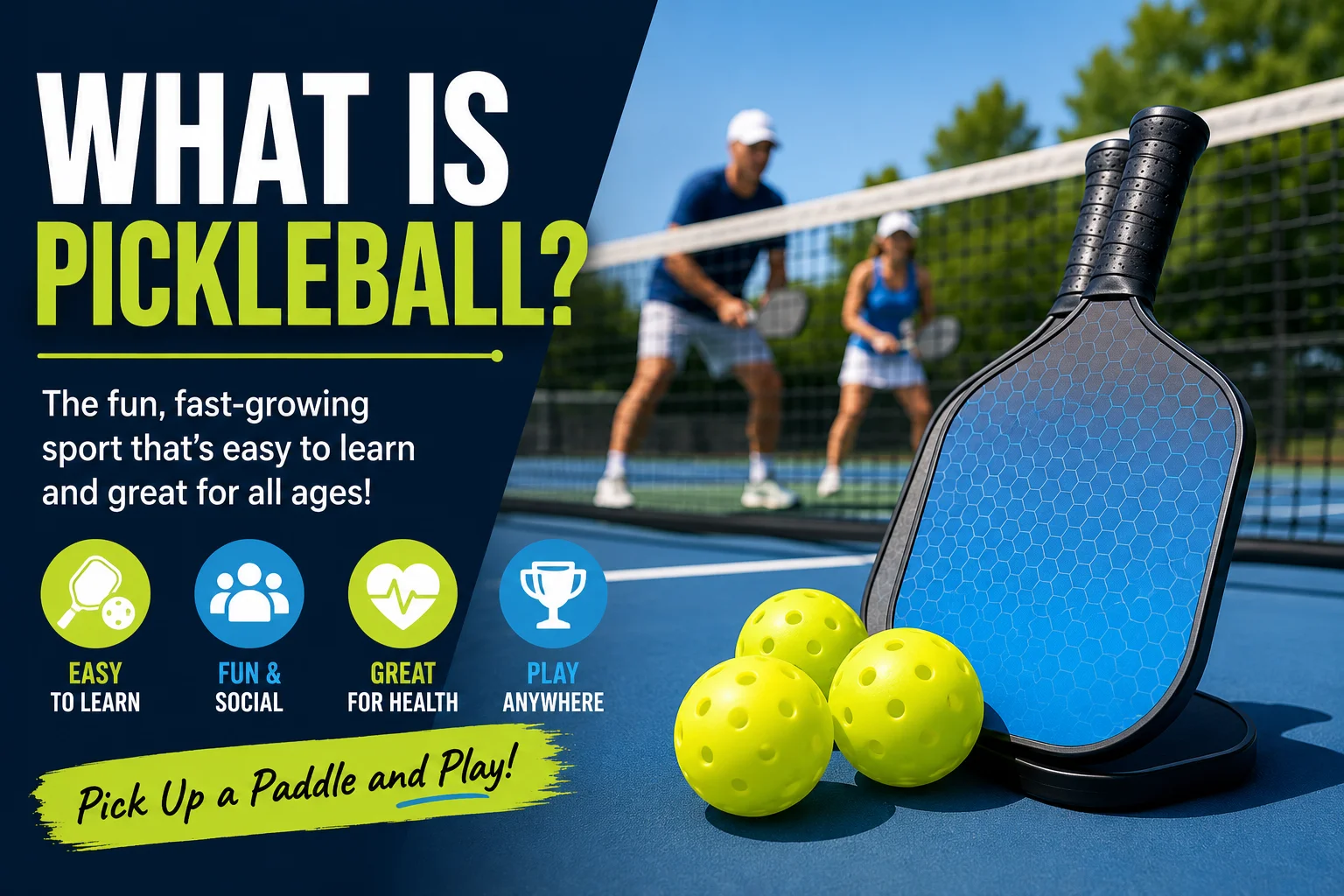
Pickleball is no longer just a backyard hobby played by retirees on sunny afternoons. If you are wondering what is pickleball, it is one of the fastest-growing sports in the world that combines elements of tennis, badminton, and ping-pong into a fun and highly social game. It has exploded into a global sports phenomenon that is attracting teenagers, celebrities, professional athletes, and even major investors. In 2025 alone, more than 24.3 million Americans played pickleball, according to the Sports & Fitness Industry Association (SFIA). That number represents a staggering 171.8% growth in just three years.
So, what exactly is pickleball? Why is everyone suddenly talking about it? And why are cities around the world building thousands of courts for a sport many people had never even heard of five years ago?
This guide breaks down everything you need to know about pickleball, from its history and rules to equipment, scoring, benefits, and why it has become one of the most addictive sports on the planet.
The Origins of Pickleball
Pickleball was invented in 1965 on Bainbridge Island, Washington, by three friends — Joel Pritchard, Bill Bell, and Barney McCallum. The story goes that they wanted to create a simple game that their families could enjoy together during the summer. Using a badminton court, handmade paddles, and a perforated plastic ball, they unintentionally created one of the fastest-growing sports in modern history. What began as a casual backyard experiment slowly evolved into a structured sport with official rules, tournaments, and professional leagues.
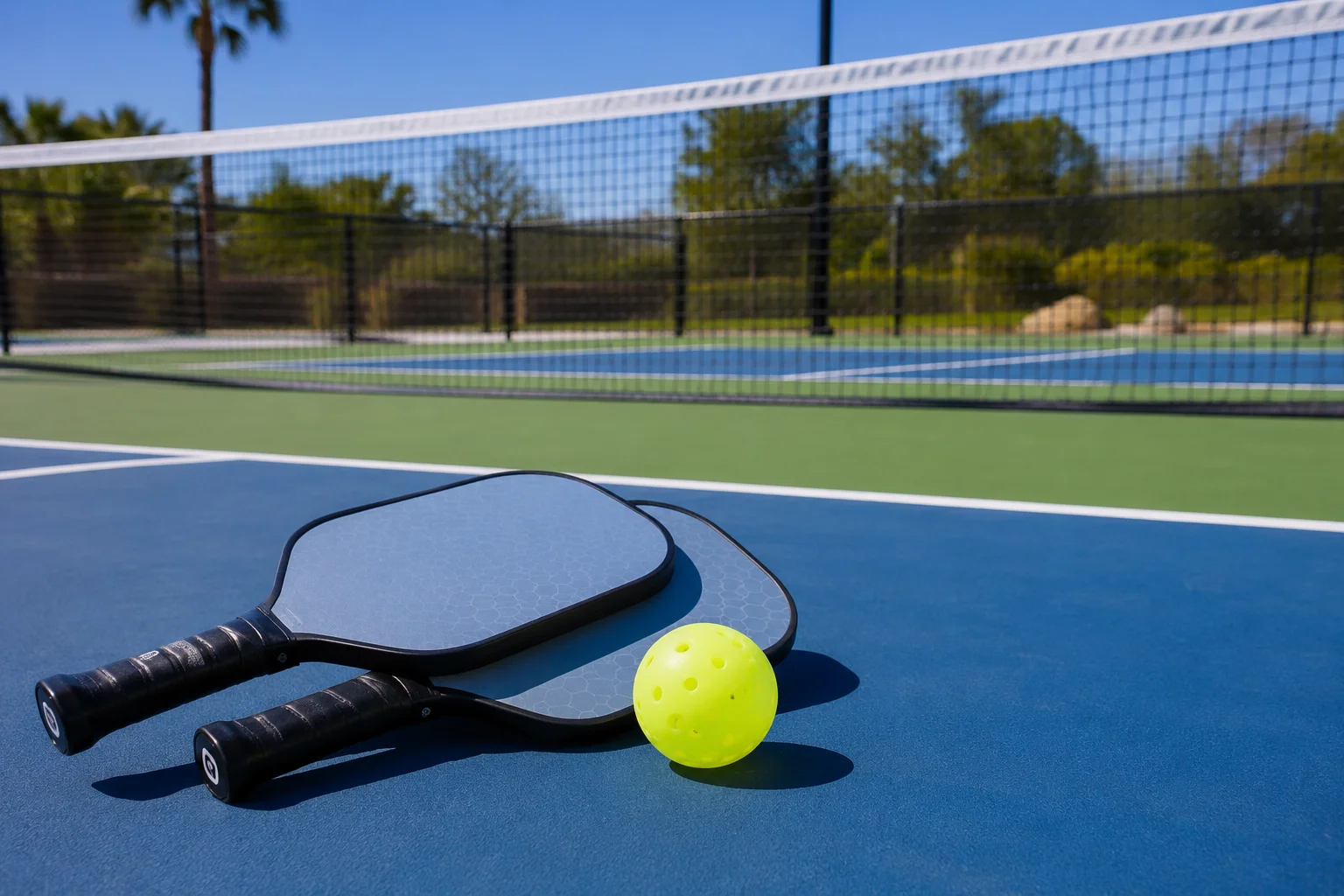
One of the most fascinating things about pickleball is how accidental its creation was. Unlike sports that were carefully engineered with formal governing bodies from day one, pickleball grew organically. Families loved it because it was easy to learn, and older adults appreciated that it was less physically demanding than tennis. Over time, younger players joined in, transforming pickleball into a multi-generational sport. That wide appeal is one of the key reasons behind its explosive growth today.
The name “pickleball” has sparked debates for decades. Some believe it was named after the Pritchard family dog named Pickles, while others say the name came from the term “pickle boat” in rowing, which refers to a boat made up of leftover rowers from other teams. Regardless of the true origin, the quirky name became part of the sport’s charm. It sounds fun, approachable, and unintimidating — which perfectly matches the sport itself.
Today, pickleball is no longer limited to small recreational centers. Massive investments are pouring into professional leagues and facilities. Pickleball businesses, leagues, and tournaments are becoming serious commercial ventures, with investors valuing the industry in the hundreds of millions of dollars.
What Makes Pickleball Different From Other Sports
At first glance, pickleball looks like a strange hybrid of tennis, badminton, and ping-pong. That’s because it borrows elements from all three sports. The court resembles a badminton court, the net is similar to tennis, and the paddle feels like an oversized table tennis paddle. Yet pickleball has its own unique rhythm and strategy that separates it from every other racket sport.
One major difference is the speed of the game. Tennis often relies on explosive serves and powerful shots, while pickleball emphasizes control, placement, and quick reactions. The perforated plastic ball moves slower than a tennis ball, making rallies longer and more accessible for beginners. Players don’t need elite athleticism to enjoy the sport, which removes a huge barrier for newcomers.
Another unique feature is the “kitchen,” officially called the non-volley zone. This small area near the net prevents players from smashing every shot aggressively. It creates a strategic balance where patience and finesse often beat raw power. Imagine chess mixed with ping-pong reflexes — that’s the magic of pickleball.
Pickleball vs Tennis
| Feature | Pickleball | Tennis |
|---|---|---|
| Court Size | Smaller | Larger |
| Equipment | Paddle | Racket |
| Ball-type | Plastic perforated ball | Felt-covered tennis ball |
| Game Speed | Moderate | Fast |
| Accessibility | Beginner-friendly | More physically demanding |
Many former tennis players are switching to pickleball because it puts less stress on the body while still delivering competition and excitement.
Pickleball vs Padel
Pickleball and padel are often compared because both are booming racket sports. Padel uses enclosed glass walls and a depressurized tennis ball, while pickleball is played on an open court with a lightweight plastic ball. Padel tends to be more expensive because specialized courts are required, whereas pickleball can be played almost anywhere. That affordability has helped pickleball spread rapidly across schools, parks, and recreation centers.
Basic Rules of Pickleball
The rules of pickleball are surprisingly simple, which is one of the reasons people fall in love with the game so quickly. Beginners can understand the basics within 15 minutes, yet mastering strategy and placement can take years. That combination of accessibility and depth keeps players hooked.
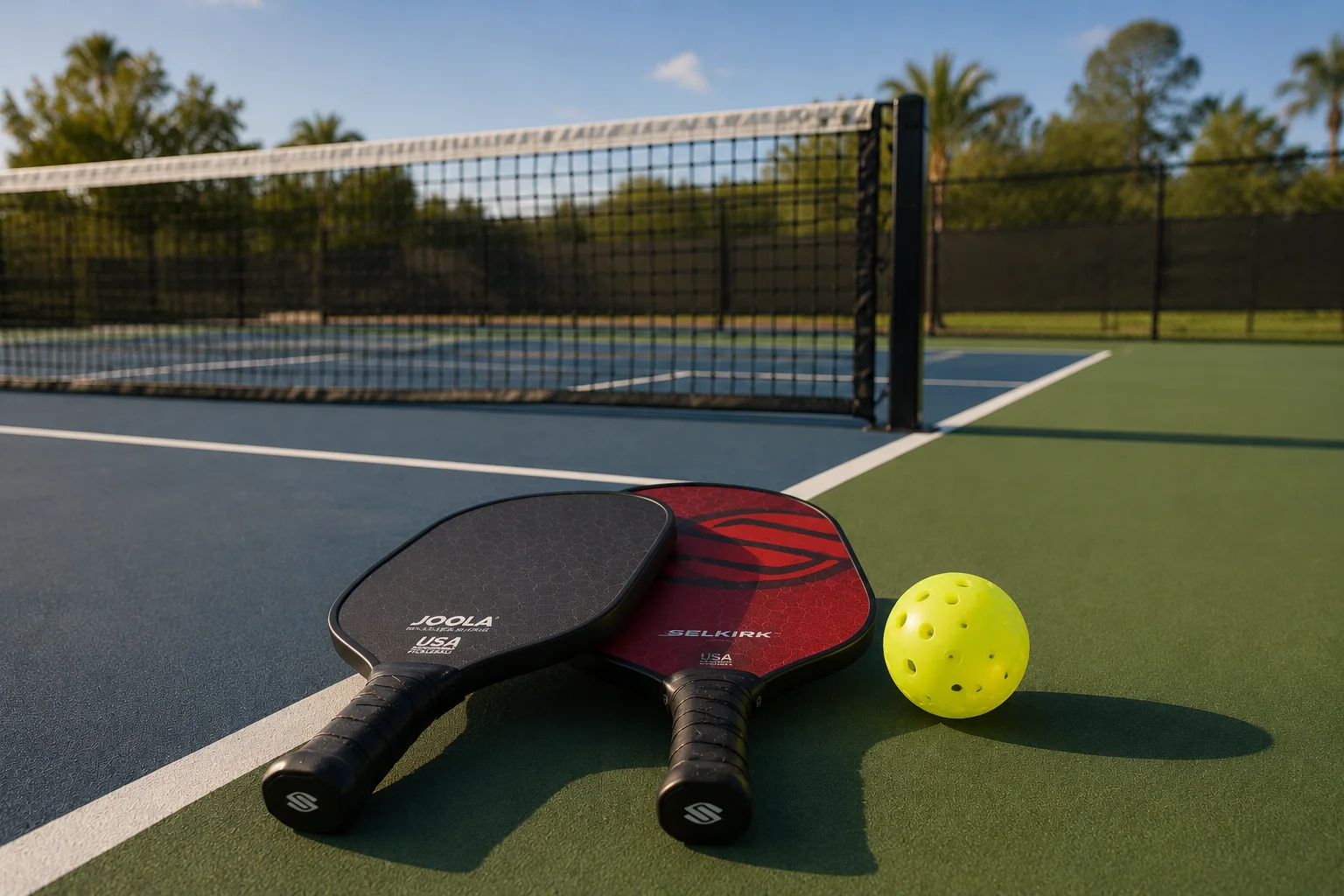
A pickleball game usually starts with an underhand serve made diagonally across the court. Unlike tennis, overhand serves are not allowed. After the serve, both teams must let the ball bounce once before volleying. This is known as the “double bounce rule.” Once those two bounces happen, players can either volley the ball in the air or let it bounce before returning it.
Scoring only happens when the serving team wins a rally. Games are commonly played to 11 points, although tournaments may go to 15 or 21. A team must win by at least two points. Because points can only be earned while serving, momentum shifts become incredibly important. One hot serving streak can completely change a match.
How the Scoring System Works
Pickleball scoring sounds confusing at first because doubles games involve three numbers. For example, a score announcement like “5-3-2” means:
- Serving team has 5 points
- Opponents have 3 points
- The second server is serving
It feels strange initially, but after a few games it becomes second nature.
What Is the Kitchen in Pickleball?
The “kitchen” is a seven-foot non-volley zone near the net. Players cannot volley the ball while standing inside this area. This rule prevents players from camping near the net and smashing every shot downward. Instead, rallies become strategic battles involving soft shots called “dinks.”
The kitchen is arguably what gives pickleball its personality. Without it, the sport would resemble miniature tennis. With it, pickleball becomes a tactical game requiring patience, touch, and precision.
Pickleball Equipment Explained
One reason pickleball has exploded in popularity is because it is relatively cheap to start. Unlike golf, hockey, or even tennis, you don’t need thousands of dollars worth of equipment. A beginner can get started with a paddle, a few balls, and access to a court.
Pickleball Paddle
Pickleball paddles are solid rather than strung like tennis rackets. Most paddles are made from graphite, fiberglass, or composite materials. Lightweight paddles offer faster reactions, while heavier paddles generate more power. Beginners typically prefer balanced paddles that provide both control and comfort.
The paddle market has grown dramatically alongside the sport itself. Hundreds of new paddle models and manufacturers are entering the industry every year.
Pickleball Ball
The ball is made from hard plastic with holes, similar to a wiffle ball. Indoor and outdoor balls differ slightly. Outdoor balls are heavier and have smaller holes to handle wind better. Indoor balls are softer and bounce differently.
The ball’s slower speed is one of the reasons pickleball is easier for beginners compared to tennis. It gives players more reaction time and creates longer rallies.
Court Dimensions
A pickleball court measures 20 feet by 44 feet, making it much smaller than a tennis court. This smaller size reduces running distance and physical strain. Interestingly, multiple pickleball courts can fit into a single tennis court area, which is why cities are converting tennis facilities into pickleball venues.
How to Play Pickleball
Learning how to play pickleball is surprisingly easy. Most beginners can rally within their first session, which creates an instant sense of accomplishment. That early success is addictive. Instead of feeling frustrated like many people do when first trying tennis or golf, pickleball players feel competitive almost immediately.
The game can be played in singles or doubles, though doubles is far more common. Doubles emphasizes teamwork, communication, and strategic positioning. Singles involves more running and athleticism, but doubles creates the social atmosphere that makes pickleball so popular.
Singles vs Doubles
| Format | Characteristics |
|---|---|
| Singles | Faster pace, more movement |
| Doubles | Strategic, social, beginner-friendly |
Most recreational players prefer doubles because it is easier on the body and more conversational. Pickleball courts often become social gathering spaces where people chat between rallies and make new friends.
Serving Rules
Serving in pickleball must be underhand, with the paddle contacting the ball below waist level. This unique serving style keeps rallies alive instead of ending points immediately with overpowering serves. Some advanced players use spin and placement to create difficult serves, but overall the serve is less dominant than in tennis.
This creates a more balanced game where rallies, not serves, determine winners.
Why Pickleball Is So Popular
Why has pickleball exploded while countless other sports struggle to attract new players? The answer lies in accessibility, affordability, and social connection.
Pickleball is easy to learn but difficult to master. That balance is incredibly powerful. Beginners can enjoy themselves immediately, while competitive players can spend years improving tactics and skills. It works equally well as a casual social activity or a high-level competitive sport.
The sport also became popular during the pandemic because it allowed people to stay active outdoors while maintaining social distance. Once players discovered how fun it was, they kept coming back. Communities formed around local courts, creating friendships and routines.
Statistics show pickleball participation reached 24.3 million players in 2025, making it one of America’s most-played sports.
Social and Community Appeal
Unlike many sports where players rotate quickly and leave immediately afterward, pickleball encourages social interaction. Open-play sessions often mix strangers together, creating a welcoming atmosphere. People of different ages and skill levels can compete together more comfortably than in many other sports.
Many players describe pickleball as a networking activity, fitness routine, and social club all rolled into one.
Easy for Beginners
The smaller court, slower ball, and straightforward rules make pickleball incredibly beginner-friendly. New players don’t need years of technical training before enjoying matches. That low barrier to entry is fueling worldwide growth.
Health Benefits of Pickleball
Pickleball is more than entertainment — it’s also a fantastic workout. Because the game involves quick movements, hand-eye coordination, and constant reaction, players improve both cardiovascular fitness and agility.
Doctors and fitness experts increasingly recommend pickleball for older adults because it provides exercise without the intense joint strain associated with running-heavy sports. Yet younger players also benefit because competitive matches can become surprisingly intense.
Physical Benefits
Some key physical benefits include:
- Improved cardiovascular health
- Better balance and coordination
- Increased agility and reflexes
- Lower-impact exercise compared to tennis
- Enhanced muscle endurance
Because rallies can last a long time, players often burn hundreds of calories without realizing it.
Mental Benefits
Pickleball also supports mental health. Social interaction reduces loneliness, while physical activity releases endorphins that improve mood. The strategic aspect of the game keeps the brain engaged, almost like solving puzzles in real time. Many players describe pickleball as therapy disguised as sport.
Professional Pickleball and Global Growth
Professional pickleball has evolved at astonishing speed. Just a few years ago, there were barely any televised events. Today, major tournaments attract sponsors, celebrity investors, and packed crowds.
Major League Pickleball (MLP) and the Professional Pickleball Association (PPA) are leading the professional scene. Investment in pickleball businesses reached massive levels in recent years, including reported multi-million-dollar investments into major organizations.
Technology is also entering the sport. AI-powered electronic line-calling systems are now being introduced in professional pickleball matches.
Major Leagues and Tournaments
Professional pickleball now includes:
- National championships
- International tournaments
- Celebrity exhibition matches
- Major League Pickleball
- Professional sponsorship deals
Former tennis stars and celebrities are joining the movement, bringing even more mainstream attention.
Pickleball in India and Worldwide
India is emerging as one of the fastest-growing pickleball markets globally. New courts, leagues, and tournaments are appearing across cities, and interest continues to surge among younger players.
Globally, pickleball is spreading across Europe, Asia, and Latin America. Countries are launching national circuits and investing in infrastructure as the sport moves beyond its American roots.
How Beginners Can Start Playing
Starting pickleball is refreshingly simple. You don’t need elite fitness, expensive gear, or years of coaching. The easiest way to begin is by finding a local court and joining beginner-friendly open play sessions.
Most recreation centers offer rental paddles, so there’s no pressure to buy equipment immediately. Watching a few tutorial videos and understanding the basic rules is enough to get started. Within a single afternoon, most people can rally and play casual games.
If you want to improve quickly, focus on:
- Consistent serving
- Controlled dinking
- Proper footwork
- Communication in doubles
- Patience during rallies
The beauty of pickleball is that progress feels visible. Every session brings noticeable improvement, which keeps players motivated.
Conclusion
Pickleball is much more than a passing trend. It combines the best elements of tennis, ping-pong, and badminton into a sport that is social, accessible, strategic, and genuinely fun. Its rapid growth is not happening by accident. Millions of people are discovering that pickleball offers competition without intimidation and exercise without exhaustion.
Whether you are looking for a new hobby, a way to stay fit, or a social activity that doesn’t require elite athletic skill, pickleball delivers all of those things in one surprisingly addictive package. From neighborhood parks to professional arenas, the sport continues to reshape the future of recreational athletics.
Written by