
Pickleball and Padel in India: From Rooftop Culture to a Rising Sporting Movement
Pickleball and padel are redefining urban sport in India, from rooftop courts to league ambitions. Explore how these racquet games became a cultural and economic movement.
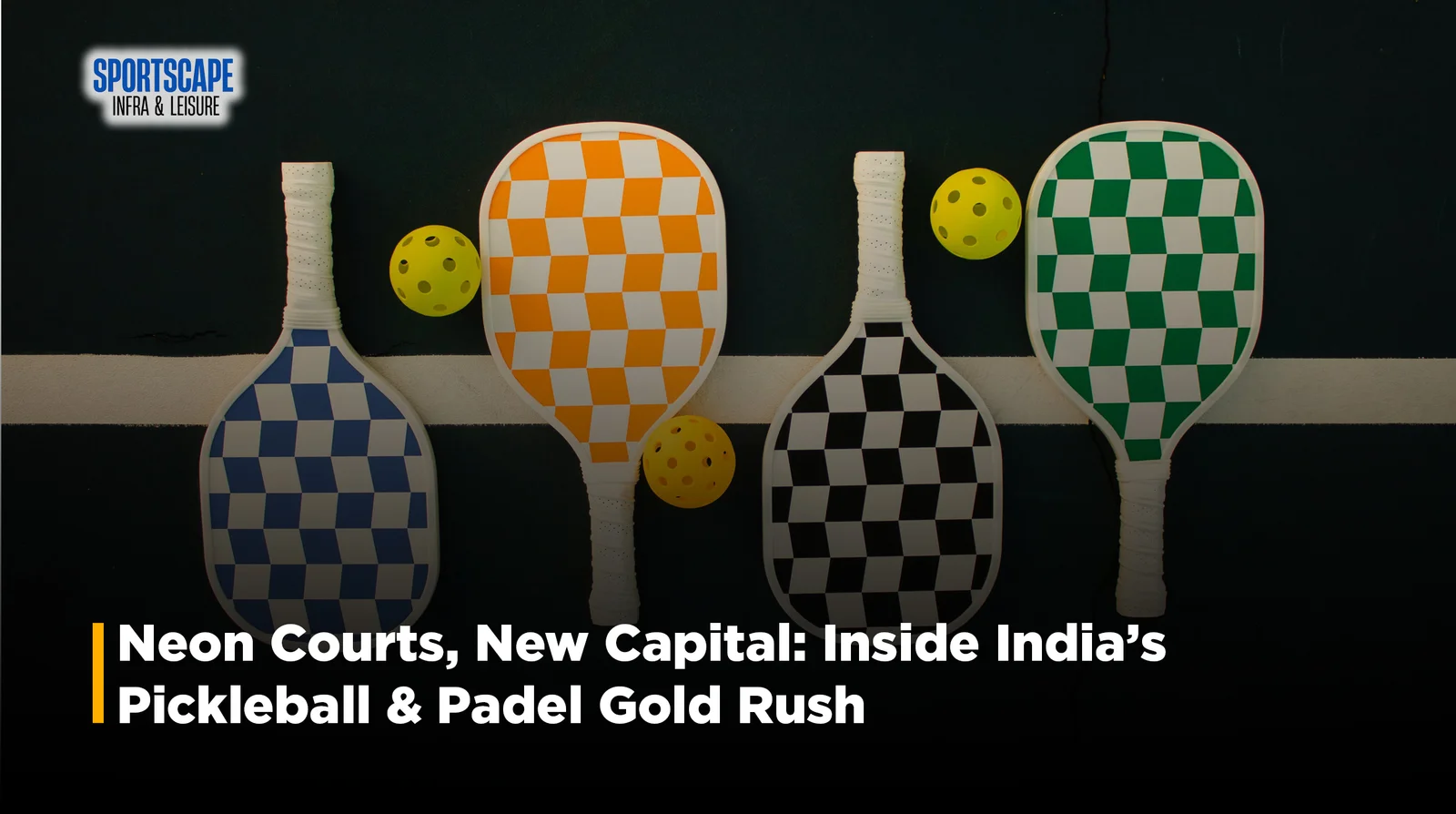
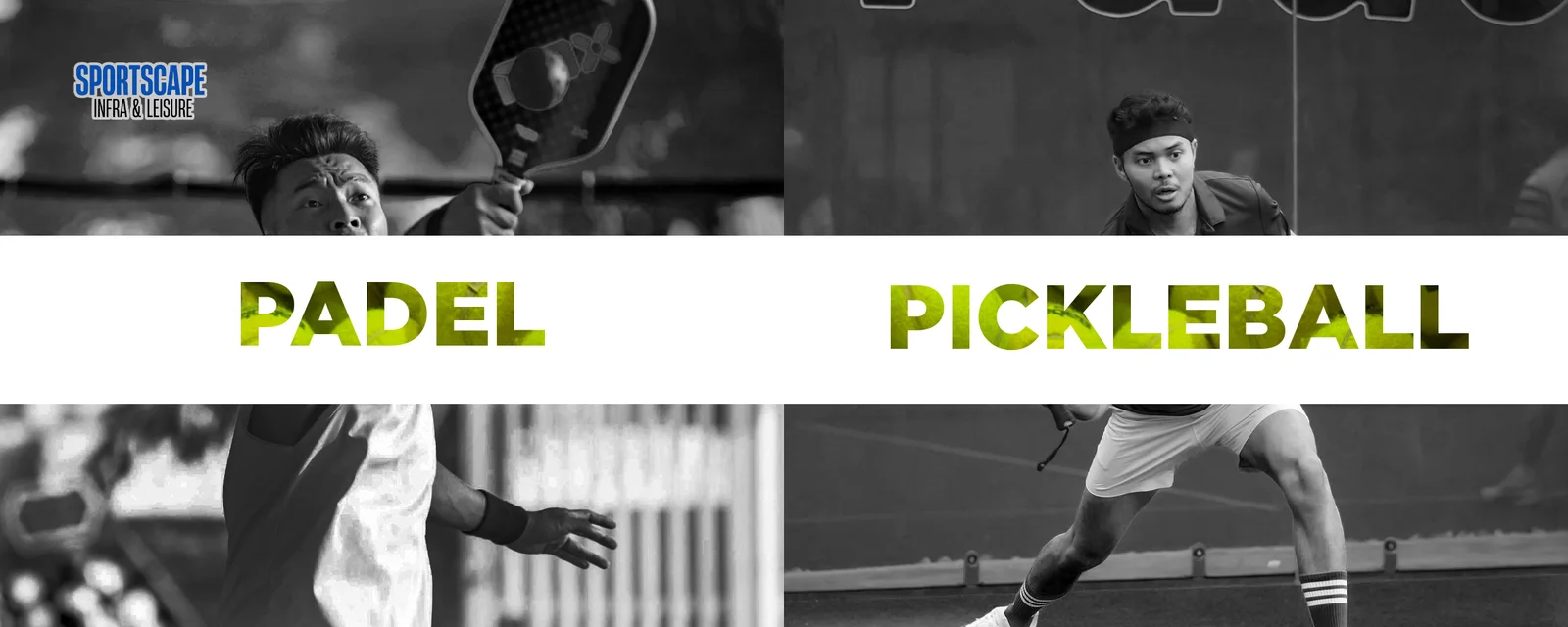
There was a time when India’s sporting imagination unfolded inside cavernous stadiums, under the authority of floodlights and federations. Today, it glows on rooftops. Scroll through a Gen Z feed in Mumbai or Gurugram, and you will find it, chilling around glass-walled courts suspended above corporate towers, pastel paddles resting beside oat-milk lattes, playlists humming between rallies. In comment sections and clubhouse conversations, the friendly debate of pickleball vs padel now flows as naturally as match playlists, two racquet cousins competing not just for points, but for cultural dominance in India’s urban playgrounds. Pickleball and padel are not merely sports, they have turned into aesthetic experiences, communal rituals, and increasingly, structured economic propositions. Between rallies, beginners compare spin, grip and weight, obsessing over finding the best pickleball paddle as carefully as they curate sneakers or playlists, because in this generation, performance and personality travel together. What began as leisure has evolved into league ambition.
What appeared to be weekend recreation is fast drafting itself into India’s next organized sporting movement. And whether India’s fast-paced generation is welcoming it with open arms? India took it, gave it a full VIP treatment, right to the popcorn-sticky edge, and to every horizon pickle and padel is an undeniable vibe of the moment.
The surge that numbers cannot whisper
Globally, pickleball has already crossed the threshold from curiosity to cultural force. In the United States, the USA Pickleball and participation studies show that by 2022, the sport had reached over five million players across the country, marking one of the fastest growth curves in American recreational history. USA’s Pickleball National Championships are knocking right on the door, and this recreational activity has pushed other sports aside and secured a place firmly in mainstream American athletics, drawing corporate sponsorship, broadcast attention, and institutional legitimacy. Meanwhile, India is conducting its own symphony of speed and is drafting progress in bold strokes.
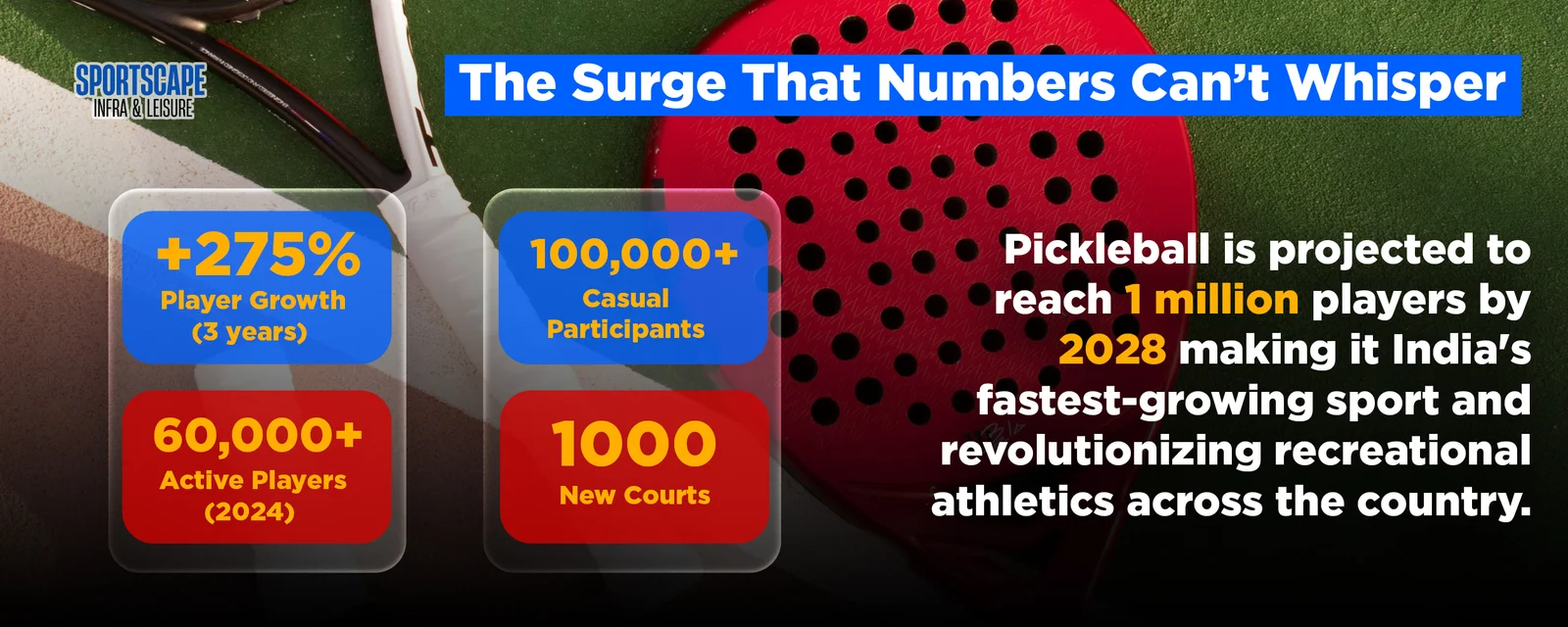
A staggering 275 percent. That is how much India’s active pickleball player count has risen in the past three years. By the end of 2024, the country is estimated to have nearly 60,000 active players. If one includes casual participants, those who have picked up a paddle at least once in their existence, that figure comfortably crosses 100,000.
Infrastructure tells an even louder story. According to The CapTable, India had roughly 200 operational pickleball courts in early 2024. Today, that number has surged past 1,200. Three to four new courts are emerging every week in cities such as Mumbai, Bengaluru, Delhi, Hyderabad, Ahmedabad, and Surat. And projections suggest that by 2028, India could see one million active players, a dramatic 1,500 percent rise, which eventually raises eyes for making about 2500 courts nationwide. Here, the pace accelerates from leisure to law, inviting steps for architecture, which remains an indispensable spine.
From petite rooftops to corporate corridors
Every sport that survives beyond trend status must be institutionalized. Pickleball and padel have now crossed that inflection point in India. Corporate India has entered the court. Food delivery giant Swiggy has come on board as a brand partner for the World Pickleball League, signalling that the sport has moved from clubhouse chatter into sponsorship portfolios. The Adani Group has partnered with the Indian Pickleball League, placing one of India’s largest conglomerates within the sport’s commercial architecture. Pepsico has sped up its roadmap with the introduction of pickleball in its offices through the introduction of an internal league named the PepsiCo India league.
In padel, the corporate footprint is equally visible. Westlife Foodworld, which owns and operates McDonald's India in West and South India, has announced a strategic partnership with the Indian Padel Academy to promote and grow the sport across the country. When quick-service restaurant chains align with emerging sports academies, the message is unmistakable: this is not trend participation; it is ecosystem investment. The sport is no longer being played only between white lines. It is being negotiated in boardrooms.
Where industry rushes to glass courts
Perhaps nothing captures this transition more vividly than the sight of a padel court perched atop a corporate tower, a rectangle of turf suspended between quarterly targets and city skylines, where strategy momentarily yields to spin. Parth Jindal, Managing Director of JSW Cement, encountered padel in Dubai during the stillness of the pandemic. What began as accidental discovery soon became ritual. Today, he plays two to three times a week and has constructed a court on the roof of his office building, reflecting an architectural declaration that this is not a passing indulgence but a serious engagement. He is not alone in this corporate courtship.
Ankit Agarwal, Managing Director of Sterlite Technologies, once devoted his weekends to tennis and badminton, yet found padel to be something distinctly exhilarating, a sport that seems to distill the best of multiple racquet traditions into a format that feels both familiar and refreshingly different.
For others, the sport is as much about connection as competition. Anurag Verma, founder of BI Sports, and Sampada Gosavi, Managing Director at Astellas Pharma India, spend their weekends on pickleball courts, with Verma increasingly gravitating toward padel as well. He describes it as becoming “the new golf.” That sentiment finds resonance with Mihir Akolkar, Co-founder and COO of DoWhistle, who views padel as a distinctly social sport, a high-net-worth arena where conversations travel as swiftly as the ball, and where ideas, investments, and collaborations are often exchanged between points. In these elevated courts, sport is no longer insulated from enterprise. It is entangled with it. The glass walls reflect more than athleticism; they mirror a shift in how India’s business class is choosing to play, to network, and perhaps to invest.
Tech-driven courts and smart surfaces: where infrastructure meets inspiration
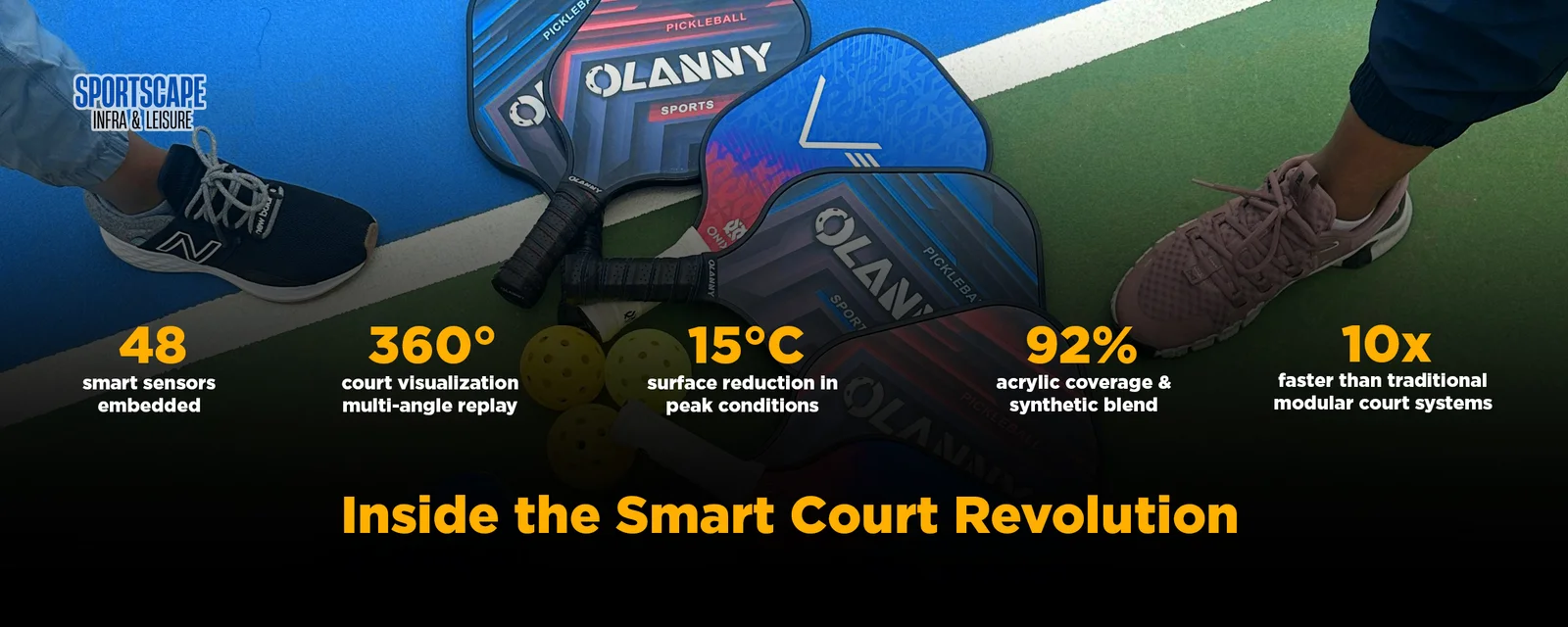
As pickleball and padel surge from urban trend to structured sport, the future of infrastructure isn’t limited to more courts; it must be smarter, adaptive, and connected. Imagine a new generation of courts where smart sensor surfaces embedded beneath the turf capture player movement, ball speed and shot patterns in real time, feeding data to performance dashboards that make training more insightful and engaging. These systems, being pioneered by a US-based surface technology firm, are transforming how athletes refine technique, turning every session into a quantified performance improvement opportunity.
Across North America, court developers are adapting optical tracking systems and AI-powered officiating tools, similar in principle to Hawk-Eye systems used in professional tennis, to bring automated line calling into pickleball. High-speed cameras and machine-learning algorithms now make real-time decisions on line calls, eliminating disputes while enhancing competitive integrity. For emerging Indian leagues, such technology would professionalize tournaments and elevate broadcast credibility.
Beyond officiating, sensor-embedded court systems are redefining training. Beneath the acrylic or polymer top layer, micro-sensors can track player movement, footwork patterns, shot velocity and ball placement. This performance data is transmitted instantly to mobile applications or courtside dashboards, allowing players to analyze rally efficiency, fatigue patterns and positional intelligence.
Cushioned polymeric surfaces are also gaining global traction for their shock-absorbing properties. These multi-layer systems reduce joint stress without compromising ball consistency, making the sport more accessible to senior players while preserving competitive bounce dynamics. In a country where recreational sport often overlaps with wellness culture, such surfaces could significantly expand demographic reach.
Heat management is another frontier. Outdoor courts in tropical and semi-arid climates face surface degradation and extreme heat absorption. New temperature-regulating coatings incorporate UV-reflective technology to keep playing surfaces cooler, extending material lifespan while improving player comfort. For Indian cities where summer temperatures can exceed 40°C, this is not luxury; it is a functional necessity.
For the times where need shifts like a tide, Convertible multi-sport courts becomes impediment as it facilities to shift between pickleball, tennis and basketball using retractable nets and digitally adjustable line systems. For residential complexes, educational institutions and corporate campuses, this modularity multiplies utility without demanding additional acreage. If India integrates smart court ecosystems into upcoming leagues, adopts advanced climate-adaptive materials suited to its geography, and encourages modular solutions for urban clusters, the sport can transcend its recreational label and become structurally mainstream.
Compact Courts, Expanding Possibilities: The Infrastructure Powering the Pickleball and Padel Boom
Part of the quiet genius behind pickleball and padel lies not only in the rhythm of the rally but in the simplicity of the rectangle it inhabits. Unlike cricket stadiums that demand acres of land or football arenas that require expansive urban planning, pickleball and padel courts are compact, modular and comparatively easier to construct. A standard pickleball court measures just 20 by 44 feet, while a padel court, enclosed within tempered glass and steel mesh, occupies roughly one-third the footprint of a tennis court. This spatial economy allows developers to fit multiple courts within the area traditionally reserved for a single racquet facility, turning limited urban land into high-frequency sporting spaces.
The construction itself is engineered yet efficient. Most pickleball courts begin with a concrete or asphalt base layered with acrylic coatings that ensure durability, traction and consistent bounce. Padel courts add an architectural layer: synthetic turf laid within steel-framed glass enclosures that allow the ball to rebound off walls, blending the tactical geometry of squash with the openness of tennis. These modular components can often be prefabricated and assembled on-site within weeks, enabling clubs and developers to build playable courts far faster than traditional sports facilities.
Because the footprint is small and the build cycle short, the courts have begun appearing in places where traditional sports infrastructure once seemed improbable. Rooftops of corporate towers in Mumbai and Bengaluru now host evening padel sessions. Vacant warehouse floors in Gurugram are being converted into multi-court pickleball arenas. Boutique fitness clubs are carving out indoor pickleball zones beside yoga studios, while residential societies and hospitality properties are installing courts as lifestyle amenities that double as networking arenas.
Behind this quiet expansion stands a new wave of sports infrastructure firms that are beginning to specialize in racquet-sport ecosystems. Companies such as PickleBugs are positioning themselves in building pickleball communities and constructing dedicated courts across India. Michezo Sports Infrastructure offers turnkey pickleball court construction, from site planning to surface installation, helping schools, resorts, and clubs adopt the sport quickly. AFI Padel focuses on manufacturing and installing professional-grade padel courts aligned with international standards, while firms like Sky Padel India and Meckavo Sports & Infra are bringing glass-enclosed padel courts and synthetic turf systems to clubs, academies and luxury residential projects across the country.
In essence, the infrastructure story of pickleball and padel is not merely about building courts. It is about unlocking overlooked spaces, rooftops, warehouses, residential campuses and corporate courtyards, and turning them into compact arenas of movement, networking and commerce. The accessibility of the sport is therefore not accidental; it is engineered into its very geometry. And as more developers, entrepreneurs and infrastructure companies recognize this equation, the modest dimensions of these courts may prove to be the very reason they are expanding so rapidly across India’s sporting landscape.
Where the trend submerges into a perpetual framework
There is a certain poetry to what is unfolding. A paddle cuts through evening air on a rooftop in Mumbai. Below it, traffic negotiates its own rallies. Above it, glass towers reflect a city that never stops recalibrating itself. Between those lines, between skyline and surface, a new sporting language is being written. Pickleball and padel arrived as leisure. They are staying as infrastructure.
For Gen Z, the appeal is instinctive. It is fast without being forbidding. Competitive without being isolating. Social without demanding ceremony. It fits between meetings and midnight playlists. It belongs on Instagram reels as easily as it does on scoreboards. A sport where wearable tech measures footwork, where LED-lit lines shift formats at the tap of a command, where performance analytics travel straight to a smartphone, this is not yesterday’s recreation. It is coded for the present.
But beneath the aesthetic rhythm lies arithmetic. A 275 percent surge in active players in three years. Courts multiplying from a few hundred to well over a thousand in a short span. Projections of one million players by 2028 demanding 2,500 courts. Corporate giants stepping in as league partners. Industrialists are building courts atop corporate headquarters. Smart surfaces embedding sensors. Climate-adaptive coatings engineered for Indian summers. Modular systems convert tight urban spaces into revenue-generating arenas. This is not a fad’s vocabulary. It is the grammar of an emerging industry. The rally has already begun. The momentum is visible. The numbers are persuasive. Now arrives the time to take the consequential move, to craft architecture for the surge and minaret the foundation. Because sometimes revolutions do not announce themselves with thunder. Sometimes they begin with the soft, precise sound of a ball meeting a paddle and the quiet realization that the future of sport may be smaller in size, but larger in possibility.
Written by