
Animesh Kujur Reclaims 100m National Record at Federation Cup Athletics
Animesh Kujur reclaimed the men's 100m national record with a time of 10.15 seconds at the National Senior Athletics Federation Competition 2026 held in Ranchi on Friday.
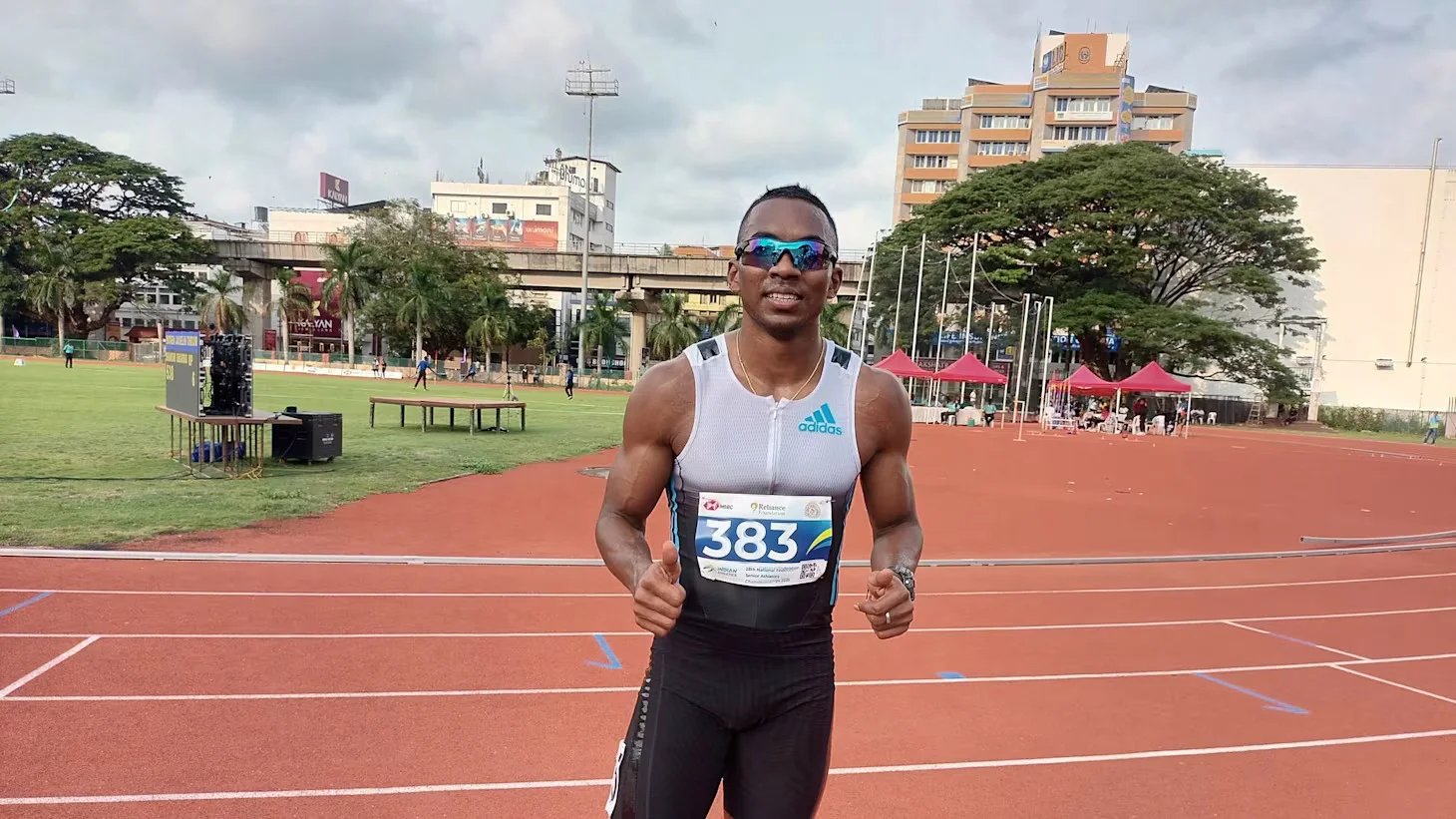
Animesh Kujurreclaimed the men's 100m national record with a time of 10.15 seconds at the National Senior Athletics Federation Competition 2026 held in Ranchi on Friday.
The 22-year-old sprinter's record-breaking performance came during the semifinals after 25-year-old Gurindervir Singh had briefly held the national record with a time of 10.17 seconds in the first heat, breaking Kujur's previous mark of 10.18 seconds set last year. Kujur's response in the following semifinal heat not only reclaimed his record but also surpassed the Athletics Federation of India qualification mark of 10.16 seconds required for the Commonwealth Games.
While no direct quotes from Kujur or his coaching staff were disclosed in the immediate aftermath of his record-breaking run, the achievement represents a significant milestone in Indian sprinting as the country prepares for major international competition. The performance sets up a compelling final showdown scheduled for Saturday between Kujur and Singh, with both athletes having demonstrated exceptional form in the semifinals.
The Federation Cup serves as India's premier athletics competition and functions as the sole selection trial for the Commonwealth Games 2026, scheduled to take place from July 23 to August 2 in Glasgow, Scotland. The Athletics Federation of India has implemented stringent qualification standards due to the limitation of 32 track-and-field athletes per country at the Commonwealth Games, requiring 100m specialists to better the existing national record to secure their place on the team. This high-stakes environment has created intense competition among India's fastest sprinters, with the Federation Cup becoming a make-or-break event for Commonwealth Games aspirations.
The opening day of competition featured multiple events across various disciplines, with several athletes achieving notable performances. Asian Games silver medallist Ancy Sojan dominated the women's long jump with a personal best of 6.75 metres, finishing ahead of Shaili Singh who recorded 6.58 metres and Bhavani Yadav with 6.39 metres. In the women's discus throw, Seema exceeded the Commonwealth Games entry standard of 56.85 metres with a throw of 57.29 metres to claim victory, while Nidhi Rani secured second place with 55.05 metres and Krishna Jayasankar rounded out the podium with 55.00 metres.
The men's distance events saw mixed results in terms of Commonwealth Games qualification standards. In the 10,000m, Deepak Bhatt won with a time of 29:42.93, though this fell short of the Commonwealth Games qualification mark of 27:39.03. Shailesh Khushwaha finished second in 29:57.56, followed by Prashant Chaudhary in 30:36.97. The women's 10,000m produced similar outcomes, with Ravina Gayakwad taking victory in 35:30.98, well outside the qualification standard of 31:14.14. Soniya placed second with 36:16.22, while Aarti Pawara completed the top three in 36:24.79. The steeplechase events also failed to produce qualifying performances, with Balkishan winning the men's 3000m steeplechase in 8:56.01, missing the 8:30.26 standard, while Ankita claimed the women's event in 9:48.16, short of the 9:27.41 requirement.
Field events presented a mixed picture for Indian athletics, with the hammer throw competition highlighting the challenges facing the country's throwers. Ashish Jakhar won the men's hammer with 68.52 metres, falling short of the 73.09-metre Commonwealth Games standard. Damneet Singh finished second with 67.62 metres, while Ajay Kumar took third place with 64.93 metres. These results underscore the gap between India's current throwing standards and international competition requirements, particularly in events where technique and years of specialized training play crucial roles.
The Federation Cup's role as the exclusive Commonwealth Games selection trial adds significant pressure to every performance, with athletes knowing that a single competition determines their international prospects for the year. The event's timing, just two months before the Glasgow Games, leaves little room for athletes to improve their marks or recover from disappointing performances. This reality has intensified preparation across Indian athletics, with coaches and athletes focusing their entire season around peak performance at this single competition.
Kujur's record-breaking performance represents more than individual achievement, serving as a benchmark for Indian sprinting development. The progression from his previous 10.18-second record to the new 10.15-second mark demonstrates the ongoing evolution of speed in Indian athletics, driven by improved training methods, better facilities, and increased competition depth. The fact that two athletes broke the previous national record within the same competition session indicates a rising standard across Indian sprinting.
The competition format, with semifinals followed by finals, creates additional tactical considerations for athletes and coaches. Kujur's ability to respond immediately to Singh's record-breaking performance in the first semifinal heat demonstrates both physical capability and mental resilience under pressure. This psychological aspect becomes crucial in championship competition, where athletes must perform on demand regardless of external circumstances or competitor performances.
Sportscape observes that Kujur's record-breaking performance at the Federation Cup represents a pivotal moment for Indian sprinting, with the immediate response to his competitor's challenge demonstrating the mental fortitude required for international success. The depth of talent evidenced by multiple athletes achieving sub-10.20 times suggests Indian athletics is entering a new era of competitiveness in speed events.
Written by