
NCAA Opens Tampering Investigation Into Ole Miss Football Following Clemson Coach's Accusations
The NCAA has opened a formal tampering investigation into Ole Miss football after Clemson coach Dabo Swinney accused Rebels defensive coordinator Pete Golding of improper contact with former Cal linebacker Luke Ferrelli.
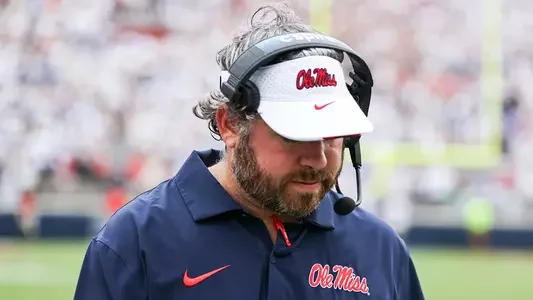
The NCAA has opened a formal tampering investigation into Ole Miss football after Clemson coach Dabo Swinney accused Rebels defensive coordinator Pete Golding of improper contact with former Cal linebacker Luke Ferrelli.
The story broke on Friday, revealing that the investigation stems from specific allegations made by Swinney during a January 23 news conference. The NCAA has reportedly seized multiple phones from Ole Miss staff members, including Golding's personal and university-issued devices, as part of their evidence-gathering process.
"If we have rules, and tampering is a rule, then there should be a consequence for that," Swinney stated during his January press conference. "And shame on the adults if we're not going to hold each other accountable."
The allegations center on Golding's alleged recruitment tactics with Ferrelli, who was playing for Clemson at the time of the purported contact. Swinney specifically accused Golding of sending Ferrelli photographs of a $1 million contract offer and texting the linebacker during class to inquire about his transfer buyout clause. The timing of these alleged communications would have violated NCAA tampering rules, which prohibit coaches from contacting players enrolled at other institutions without proper authorization through the transfer portal system. According to ESPN's reporting, the NCAA's investigation has expanded beyond Golding to include the phones of Ole Miss general manager Austin Thomas, inside linebackers coach Jay Shoop, outside linebackers coach Matt Kitchens, director of player personnel Jai Choudhary, and senior associate athletic director Matt McLaughlin.
The investigation comes at a particularly complex time for Ole Miss, which was competing in the College Football Playoff when the allegations first surfaced. The Rebels faced a linebacker shortage after TJ Dottery decided to transfer to LSU following Lane Kiffin's departure to become the Tigers' head coach. This created an opening that ultimately led to Ferrelli's recruitment to Oxford. Golding addressed the situation in March, telling reporters, "Obviously, there's two sides to every story," while defending his program's recruitment of Ferrelli. The defensive coordinator explained that he had initially told Ferrelli during an official visit, "I want you to be our green-dot Mike, but right now we already have a green-dot Mike. That spot won't be open until one becomes available." After Dottery's departure created the vacancy, Ole Miss renewed their pursuit of Ferrelli, with Golding later stating, "It's a kid that wanted to be here, that we wanted to be here, that at the end of it, came open, and he's here, and we're happy to have him."
This case represents a significant test for the NCAA's enforcement capabilities in the current era of college athletics. The organization has struggled to maintain regulatory control as unlimited NIL opportunities and liberal transfer policies have transformed the competitive landscape. In February, the NCAA Division I Board of Directors proposed new tampering enforcement measures that would presume accused schools guilty until they prove otherwise, reversing the traditional burden of proof. The proposal reflects the NCAA's acknowledgment that tampering has become widespread throughout college football, with programs regularly targeting players from rival institutions before they enter the transfer portal. The current investigation of Ole Miss occurs against this backdrop of proposed rule changes and increased enforcement efforts, making it potentially precedent-setting for how the NCAA handles future tampering cases.
The broader implications extend beyond Ole Miss to the entire structure of modern college athletics. Courts have increasingly sided with student-athletes in disputes over transfer restrictions and compensation rights, limiting the NCAA's traditional regulatory authority. The organization faces the challenge of maintaining competitive integrity while adapting to a system where player movement has become commonplace and financial incentives play an unprecedented role in recruitment. Programs across the country engage in similar practices to what Ole Miss is accused of, creating a situation where selective enforcement could appear arbitrary or unfair. The NCAA's handling of this case will signal whether the organization can effectively police tampering violations or if such rules have become essentially unenforceable in the current college athletics environment.
Sportscape observesthat this investigation represents a critical juncture for NCAA enforcement authority in an era where traditional regulatory frameworks have been fundamentally challenged. The outcome will either demonstrate the organization's renewed commitment to rule enforcement or expose the practical limitations of policing tampering in today's college football landscape.
Written by