
BCCI Bans Smart Sunglasses in IPL Player Areas Over Communication Security Concerns
The Board of Control for Cricket in India's Anti-Corruption Unit has prohibited the use of smart sunglasses by players and match officials in the ongoing Indian Premier League, citing security concerns over the devices' advanced communication capabilities.
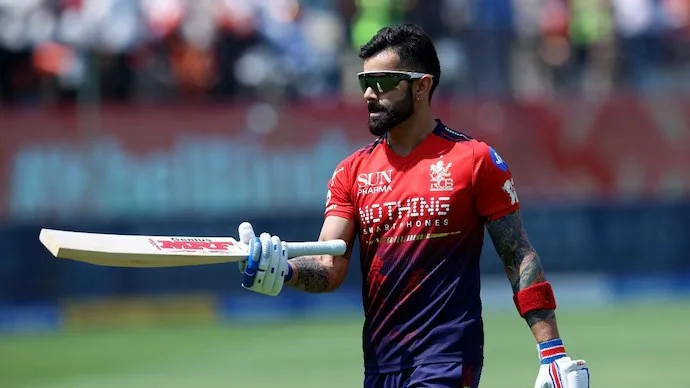
The Board of Control for Cricketin India's Anti-Corruption Unit has prohibited the use of smart sunglasses by players and match officials in the ongoing Indian Premier League, citing security concerns over the devices' advanced communication capabilities.
The ban covers all smart eyewear within the Players and Match Officials Area during IPL matches. Companies have been actively marketing these devices to cricket personnel, prompting the BCCI's Anti-Corruption and Security Unit to issue an immediate advisory to all franchises regarding the potential security risks these technologies pose to the tournament's integrity protocols.
"Kindly note that these devices are equipped with advanced communication features, including live streaming, sending and receiving text messages, as well as audio and video calling capabilities through mobile data or Wi-Fi networks," the BCCI stated in its official advisory to franchises.
The decision stems from the BCCI's classification of smart sunglasses as both audio-video recording devices and communication equipment under the Players and Match Officials Area Minimum Standards. These protocols have been established to maintain the integrity of cricket matches and prevent any potential interference or unauthorized communication during games. The IPL's security framework has become increasingly stringent as the tournament has grown in commercial value and global viewership, making it a target for various forms of corruption and external interference. The Players and Match Officials Area represents a secure zone where only authorized personnel are permitted, and all communication devices must be surrendered to maintain the sanctity of the competition.
The enforcement of this ban follows recent incidents that have highlighted the importance of strict communication protocols in professional cricket. Earlier in the current IPL season, Rajasthan Royals support staff member Romi Bhinder received a fine of one lakh rupees and an official warning after being caught using a mobile phone in the team dugout during a match. This incident demonstrated the BCCI's commitment to enforcing its communication policies without exception, regardless of the individual's role within the franchise structure. The board's zero-tolerance approach extends to all forms of unauthorized communication equipment, as these devices could potentially be used to relay sensitive information about team strategies, player conditions, or match situations to external parties. about team strategies, player conditions, or match situations to external parties.
The BCCI has mandated that all players and support staff must deposit smart sunglasses with the Security Liaison Officer upon entering the Players and Match Officials Area on match days, similar to existing requirements for mobile phones and smartwatches. This comprehensive approach ensures that no communication devices can be used to compromise the integrity of the matches or provide unfair advantages to any party. The board has warned that failure to comply with these deposit requirements will be considered a breach of PMOA protocols and may result in penalties under the IPL 2026 Minimum Standards framework. The current IPL season has witnessed several code of conduct violations, prompting the BCCI to implement increasingly strict security measures across all aspects of player and staff behavior during the tournament.
These enhanced security protocols represent part of a broader crackdown on potential integrity breaches in the IPL. The BCCI has previously implemented restrictions on late-night outings for players without explicit permission from security teams, recognizing that professional cricket players can be targets for various forms of external influence during high-profile tournaments. Additionally, the board has prohibited guests in player and support staff hotel rooms due to security concerns and fears of honey-trapping schemes that could compromise individuals and potentially affect match outcomes. The smart sunglasses ban demonstrates how rapidly evolving technology requires constant vigilance from cricket authorities to maintain the sport's integrity standards.
Sportscape observes that the BCCI's proactive stance on emerging technologies like smart sunglasses reflects the evolving challenges facing modern cricket administration in an era of sophisticated communication devices. The board's comprehensive approach to security protocols, while potentially restrictive, appears necessary to preserve the IPL's reputation as a clean and fair competition in an increasingly complex technological landscape.
Written by

Anushka Raghav is an Editor at Sportscape Magazine, where she covers the intersection of sports business, governance, policy, technology, and infrastructure. Having written over 200 news stories and editorial features, she focuses on the ideas, institutions,…