
Commercializing the Beautiful Game? How FIFA’s Controversial Hydration Breaks Are Killing World Cup Momentum
FIFA's mandated 2026 World Cup hydration breaks were supposed to protect players from extreme heat. Instead, they are killing match momentum, sparking outrage over relentless commercial breaks, and even delaying crucial VAR decisions.
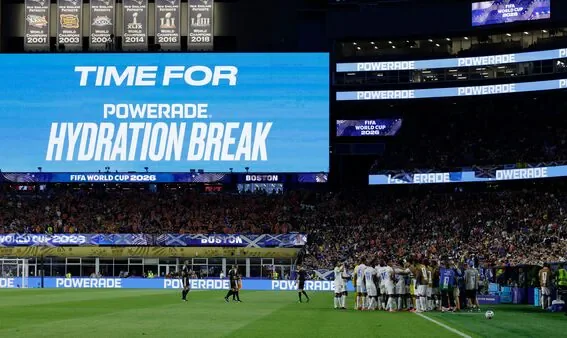
FIFA's decision to enforce three minutes' mandatory hydration breaks for the teams playing in the middle of both halves at the FIFA 2026 World Cup made perfect sense. As the competition is going to take place during the summertime in the USA, Mexico, and Canada, safeguarding the players from heat exhaustion must definitely be prioritized.
But the more the event is progressing, the more it becomes clear that an idea which was considered vital to ensuring player welfare is now the biggest turn-off of the World Cup. Many spectators, commentators, and even the footballers themselves feel frustrated about such breaks ruining the spirit of the game.
From A Flowing Game to "Four Quarters"
The sport of football is known for its continuous time, unlike many commercialized sports in America, which have constant breaks. It has been said that by insisting that the break happens exactly 22 minutes into each half of the game, regardless of whether it is played indoors and air-conditioned in Atlanta, FIFA has effectively divided a football game into four quarters.
The impact is very clear on the field. Team players who may have spent 20 minutes playing aggressively are suddenly left without any steam after this break. On the other hand, defense teams that have not been performing well get an extra, totally undeserved break on the side lines to rest.
The Real Winner: Broadcasters and Corporate Greed
Whereas the hydration breaks may be annoying for the players on the field, they are definitely infuriating those who watch the game from their homes. The reason why they are so frustrated is the moment they see as soon as the referee sounds the whistle.
Instead of focusing the camera on the actual game, which allows viewers to witness firsthand the drama, emotions, and the real atmosphere of the stadium, broadcasters choose to immediately switch to a commercial block which takes up the whole screen. In fact, fans have filled up social media with protests and accusations, stating that FIFA and the television networks take advantage of the players' safety in order to earn huge amounts of money.
According to football aficionados, it is important that fans should have access to the reality, especially when there are many commercials in the game.
Disruptions Beyond Just Momentum
The emphasis on fitting the ads into the periods where players can hydrate themselves has resulted in direct and unprecedented interference with the way games are played.
This preoccupation with getting more out of ads reached its pinnacle recently when the proceeds from commercial breaks directly disrupted protocols for playing the game. There was quite a bit of controversy when a referee had to wait before making a VAR call due to the fact that the commercial period was not over yet.
Sportscape thinks that while it would be unfair to claim that players should not be allowed to get hydrated in temperatures exceeding 95 degrees, the current method through which they are enforced seems a lot more mercenary than health-related. Should the organization be interested in maintaining the tradition, they will have to reconsider the way these breaks are managed before moving on to the knockout stage.
Written by