
From Fields To Finals: Leap In India’s Sports Infrastructure And What’s Next
From fields to finals, India’s sports infrastructure is evolving. Explore the rise, the gaps, and the roadmap to global sporting excellence.
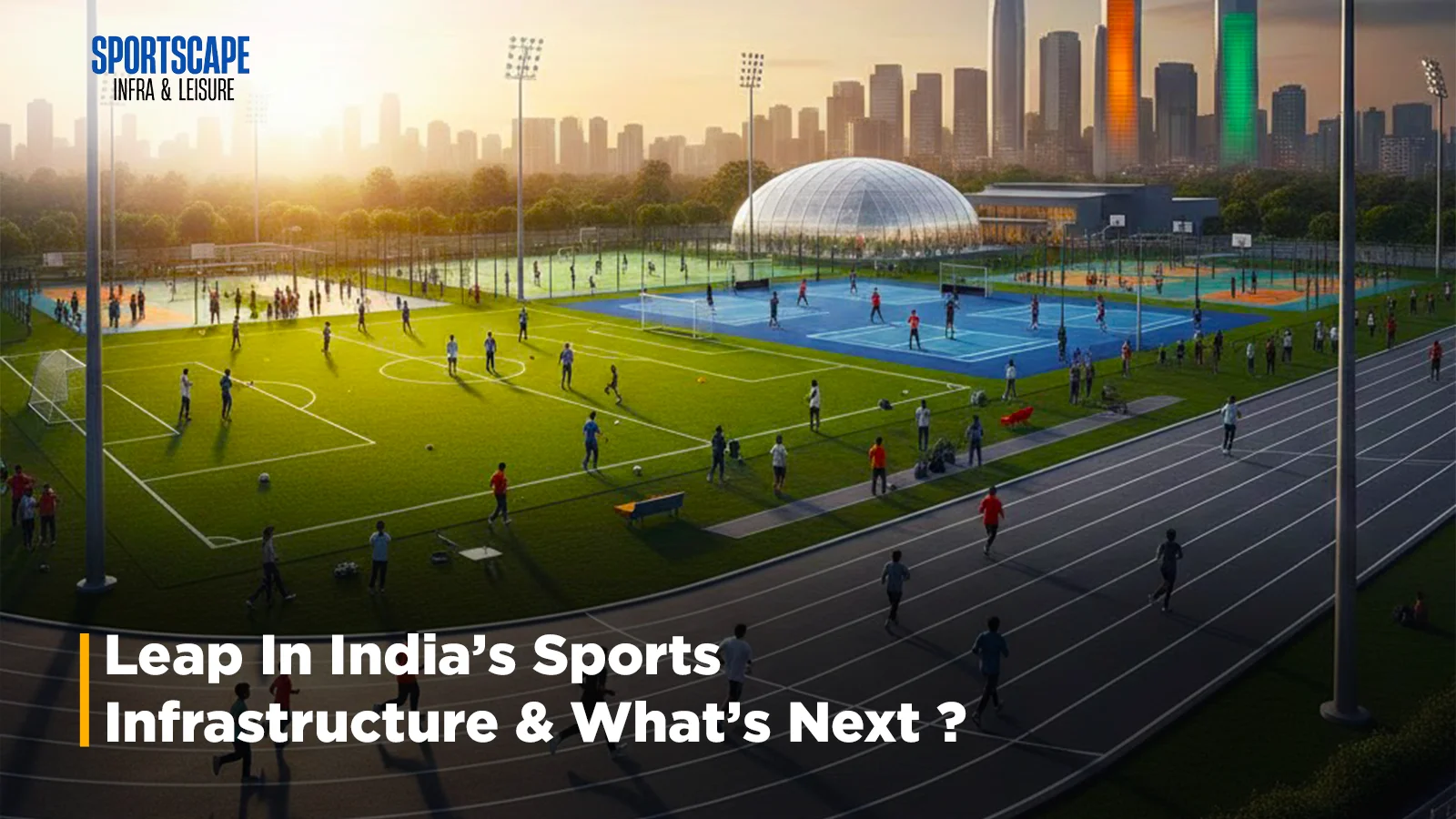
In a country with a population of over 1.4 billion, like India, where ancient temples share the skyline with glass skyscrapers, bullock carts pause at traffic lights beside Mercedes, and centuries-old festivals are live-streamed on smartphones, nothing stays constant for long. But when it comes to sports, everyone’s imagination has adorned just one jersey, cricket. For decades, cricket has dominated the Indian sporting landscape.
The game has been embedded so much in the Indian sporting ecosystem that the country has around 37 major cricket stadiums, more than thrice the number of the originator of the game, England (England has 12 major cricketing stadiums). The overall cricket dedicated stadiums, as per national and international standards in the country, account for around 58. But now, you can feel the wind of change. Ask yourself, how many games in India have that privilege to keep people awake at midnight, eyes glued to their screens, and heart racing to the very last moment?
Changing Trends
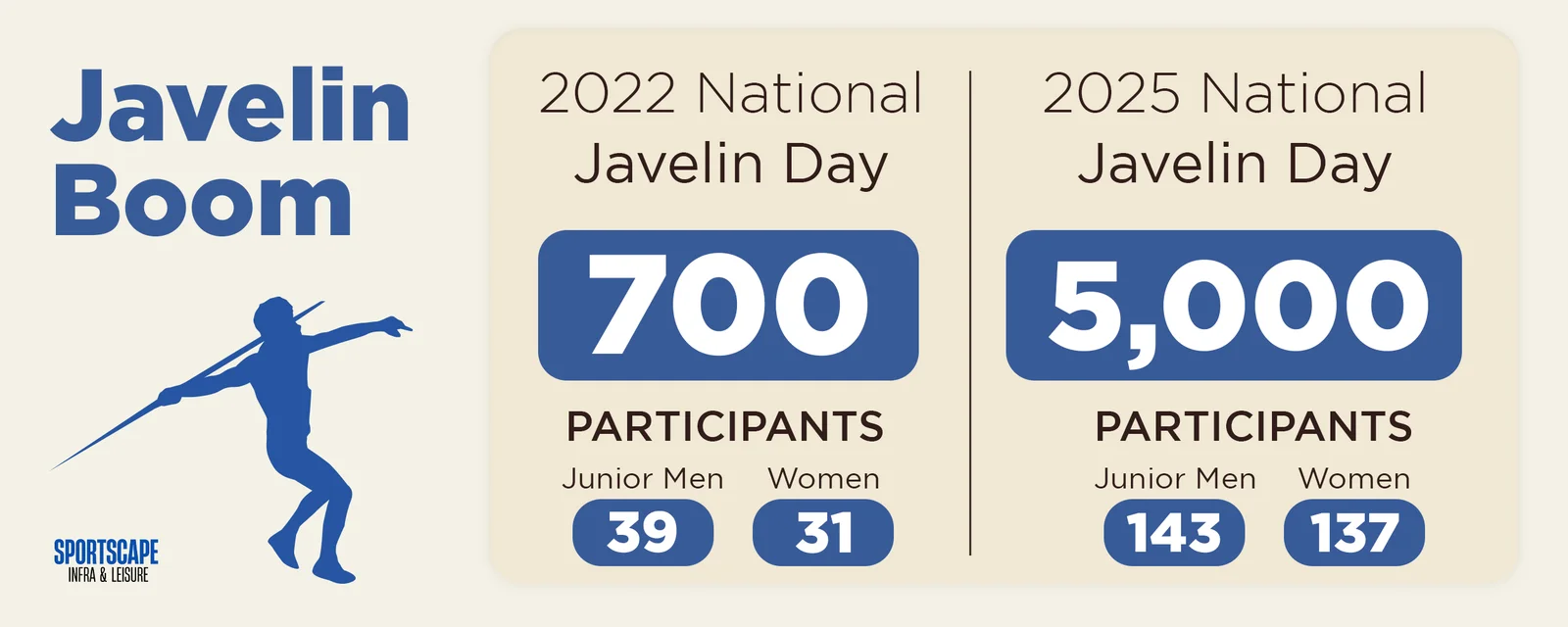
If this question were asked just a decade back, hardly any sport come to mind other than cricket. But today, games like javelin have gathered a massive audience, especially after Neeraj Chopra’s monstrous throws that bagged him consecutive medals at the Olympics. On National Javelin Day in 2022, 700 participants turned up, which was later spiked to almost 5000 in 2025. Increased participation in junior competitions also saw a major engagement. Women’s participation rose from 31 to 137, and men’s junior rose from 39 to 143. Not to everyone’s surprise, this excitement wasn’t just restricted to javelin alone.
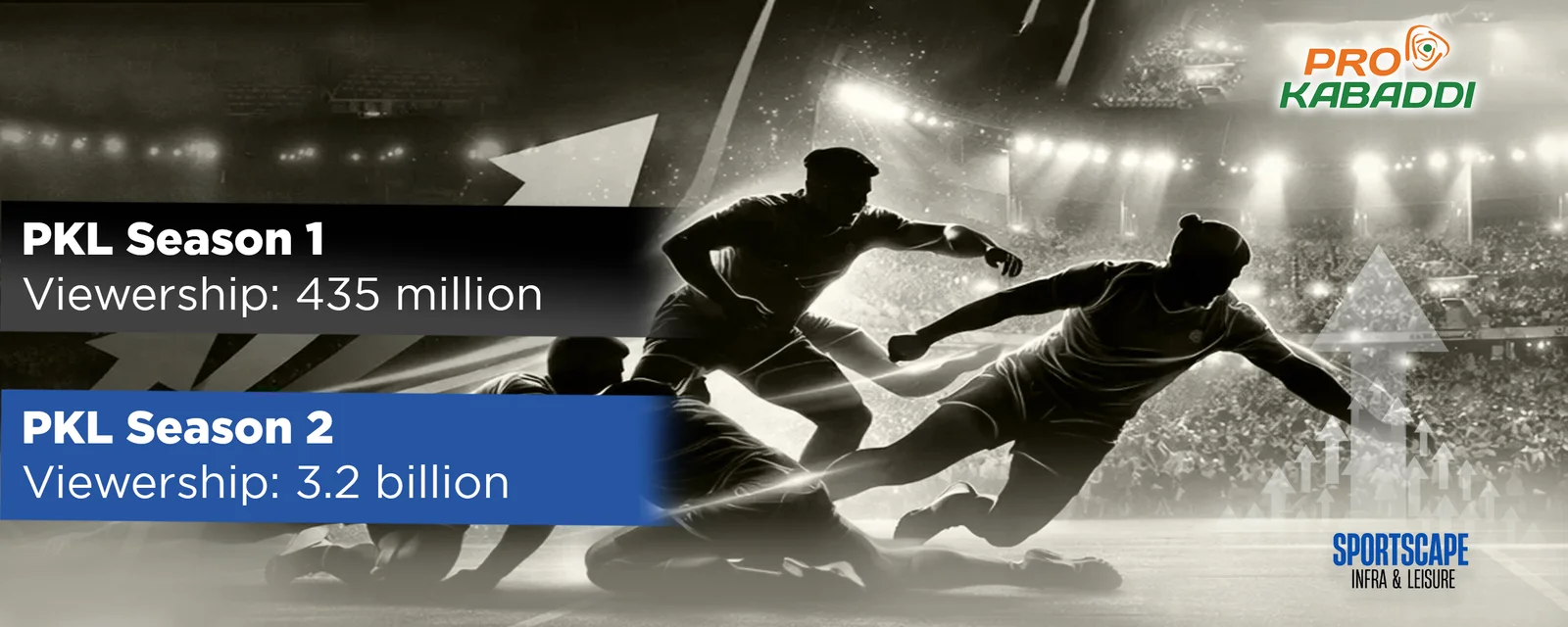
India’s one of the most thrilling indigenous games, Kabaddi, has gained tremendous popularity, especially after the Pro Kabaddi League (PKL) that started in 2014. Each season, the viewership has been increasing rapidly. Season 1 of the league mounted for a viewership of 435 million. While the most recent season of PKL, i.e., season 12, generated 3,200 million just on the opening and closing day combined. All these milestones are a result of governmnet’s few flagship programs, including Khelo India, Khelo India Niti, Pandit Deendayal Upadhyay National Welfare Fund for Sportspersons (PDUNWFS), and others.
India has the largest youth population. It consists of around 65% being under 35 years of age. When the government of India recognized this potential of the demographic dividend, it decided to channelize the latent capability by introducing schemes like Khelo India in 2017. Before it was launched, the committed budget for sports development was ₹1643 in FY 2014-15. After a decade, the government made a record-breaking allocation of ₹3794 crores for the Ministry of Youth Affairs and sports with the Khelo India program receiving ₹1000 crore.
Khelo India: Igniting The Next Generation of Athletes
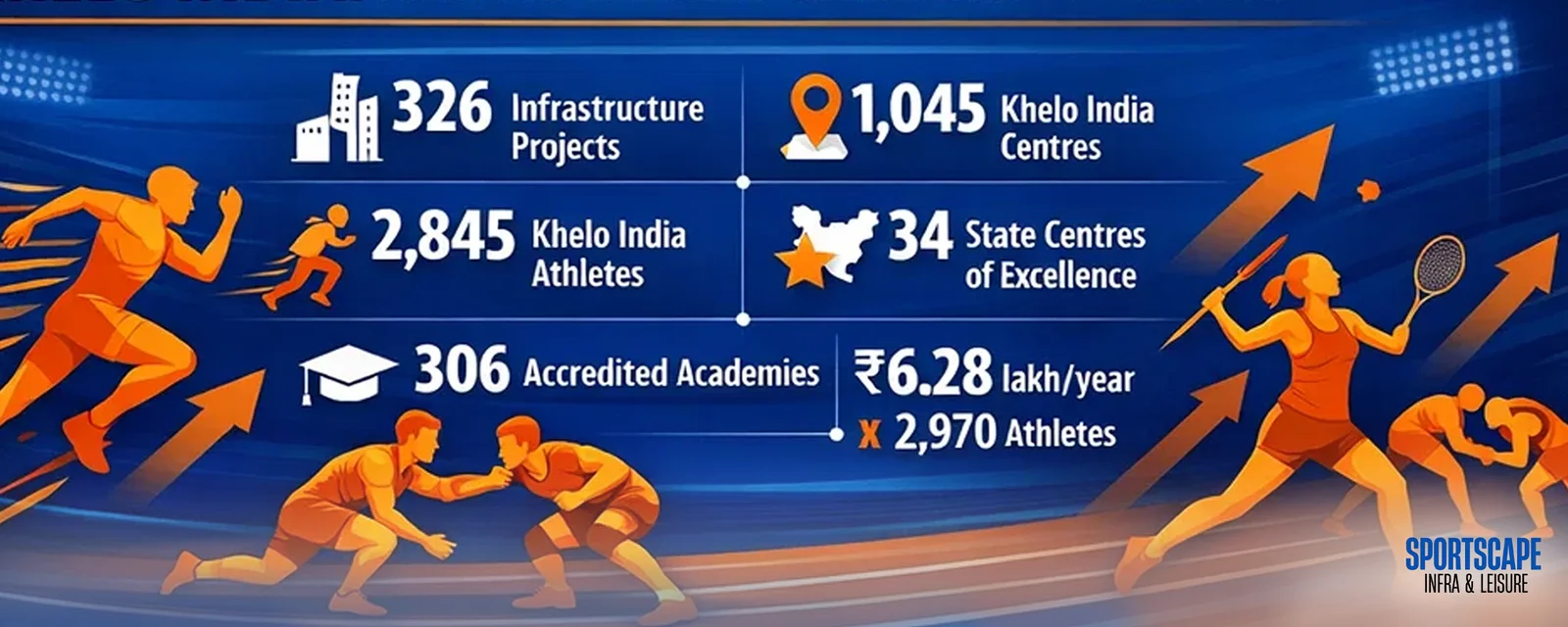
For many, the Khelo India campaign feels like less of a government scheme and rather a full-blown athlete-centred movement. Even the milestones are hard to ignore. Key achievements of this programme include the approval of 326 new sports infrastructure projects worth ₹3,124.12 crore and the establishment of 1,045 Khelo India Centres (KICs) for grassroots training and support. Notification of 34 Khelo India State Centres of Excellence (KISCEs) and accreditation of 306 academies have also been accorded to support 2,845 Khelo India Athletes (KIAs) with coaching, equipment, medical care, and a monthly out-of-pocket allowance.
Under the Khelo India movement, the Khelo India Youth Games (KIYG), the Khelo India University Games (KIUG), Khelo India Para Games (KIPG), and the Khelo India Winter Games (KIWG), and most recently, Khelo India Beach Games (KIBG) were set up as annual national sports competitions. Over 2,970 athletes receive annual scholarships of ₹6.28 lakh each; events like Khelo India Youth Games saw massive participation, and new initiatives like Khelo India Beach Games are opening new opportunities in niche sports like beach volleyball, pencak silat, and sepak takraw.
The Union Sports Minister, Dr. Mansukh Mandaivaiya, himself informed that the results are making the country proud on the world stage. At the 2022 Asian Games, 124 of India's 644 athletes (19.25% of athletes) were Khelo India alumni (KIA), securing 42 of 106 medals, including 9 golds. This ratio increased (23.93%) in the 2024 Paris Olympics when 28 KIAs were part of the 117 athletes contingent.
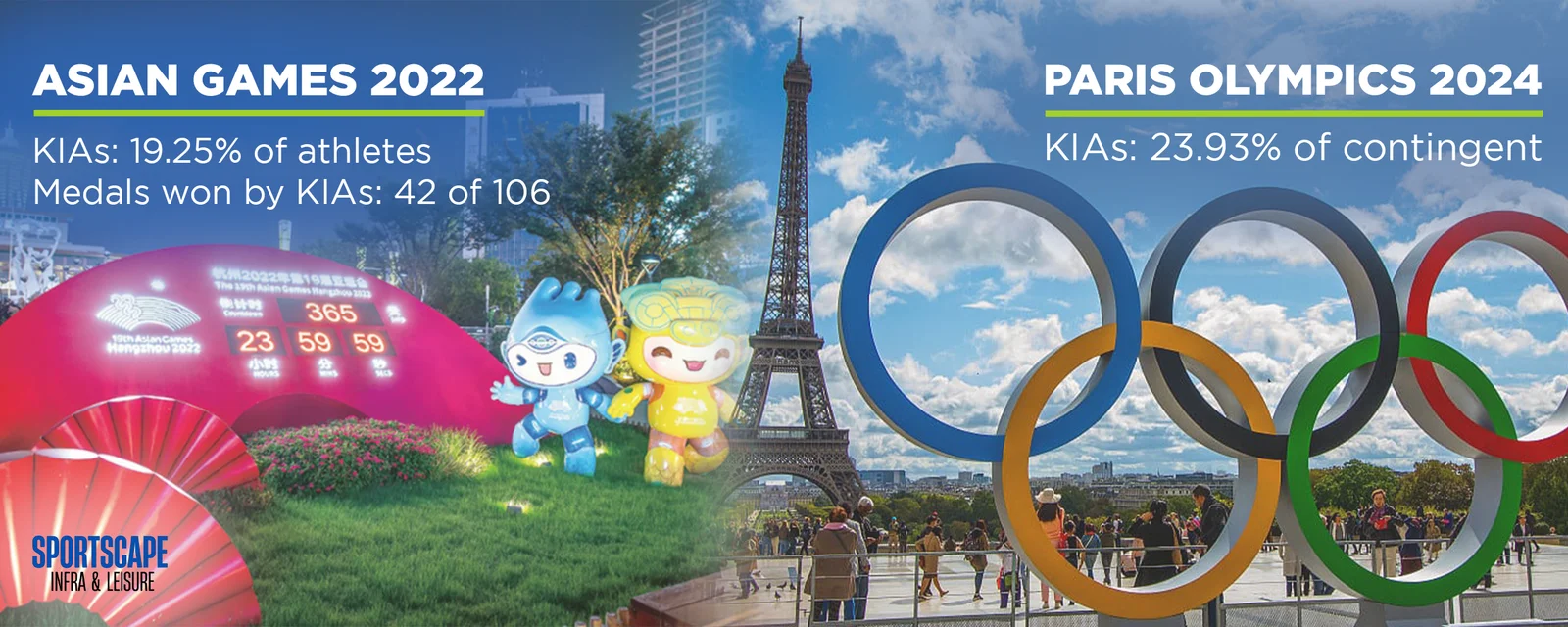
Not only did these programs identify top-notch athletes at the international level, but they also improved performance at the international level. Since the 21st century, India won a total of 13 Olympic medals before the launch of these programs. But after the commencement of these schemes from 2017, Indian athletes have already managed 13 Olympic medals in just 2 appearances (Tokyo 2020 and Paris 2024).
Urban areas had a few dilapidated stadiums, but rural and non-cricket sports lacked basics; per capita facilities were dismal, with no standardized policy leading to abandoned venues and land acquisition hurdles, as small nations have outperformed India at the global sporting arenas despite smaller populations and lesser economies. Despite performing better compared to past performances, while considering the competitive levels at par with the global standards, India has lagged by huge margins.
Feels Different This Time, But Still Has Miles To Go!
In the Paris Olympics, Iran had twice the medals of India, and ranked three times better than India (21). The primary reason for the divide is expected to be the sports infrastructure investment. Iran has an estimated GDP of just over $375 billion, but spends $100 billion on sports alone each year. While the ratio of sports spending in a second-world nation is far better than that of India, this wasn’t the only time when weaker economies and smaller populations have outperformed India on international levels.
In the recent World Para Athletics Championship that took place in the national capital, Brazil topped the list, even surpassing the powerhouse China. While the host nation, India, settled in the 10th spot. This time again, the sports pundits saw the same story unfold. The Latin American nation has an estimated economy of $2.26 trillion USD, almost half of India's. But despite being a tier 2 nation, it spends around 2% of its GDP on sports, whereas India, being the 4th largest economy, spends just 0.1% of its GDP on sporting development.
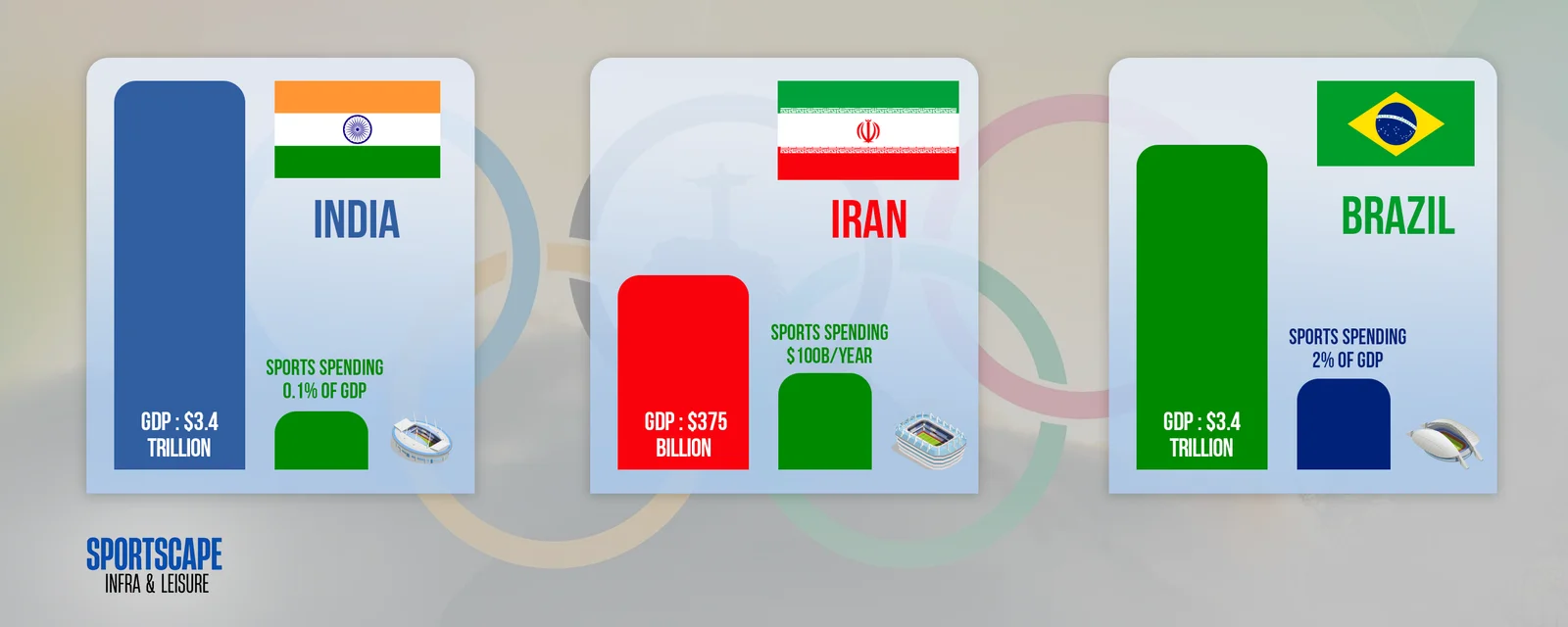
The frustration is real. The low investment numbers and the country’s overwhelming obsession with cricket make the cracks painfully wide in the Indian sporting landscape. But there are many underlying reasons that India must confront if it truly wants to compete with the best.
Why is India Still Playing Catch-Up?
Most of our sportspersons originate from under-resourced and constrained infrastructure, thus proving unexplored potential and latent abilities. Further sports is a state subject which usually creates friction between the central and the state administration while allocating funds.
Central government support has dwindled since the Tenth Five-Year Plan, leaving states to bear most of the burden. Sports funding in India remains far below global standards, and budgets for sports kits, nutrition, and infrastructure haven’t been revised in years. Sports ministry budgets hovered meekly, with central schemes like PYKKA (Panchayat Yuva Krida Aur Khel Abhiyan) allocating modest sums, ₹942.5 million for rural infrastructure and ₹201.3 million for synthetic surfaces, before responsibility shifted to states in the 10th Five Year Plan, causing further neglect. This funding gap restricts both modern infrastructure development and grassroots programs.
Moreover, these Infrastructural gaps aren’t always just disappointing; they can be heartbreaking too. Recently, a 16-year-old national-level basketball player died in Rohtak on Tuesday after a rusted basketball pole collapsed on him. Incidents like these make passionate players hesitant and worried. The other major roadblocks? Land, or rather the unavailability of land, especially in urban areas. At the same time, the Public-Private Partnership (PPP) model, which could sustain infrastructure and explore commercial viability, remains largely untapped. Together, these factors stall large-scale, sustainable sports infrastructure projects.
With 82% of schools in rural India and only 57% having playgrounds, early participation is limited. Traditional sports arenas like Akharas and IGMA academies also lack regular financial support. This creates a participation and talent gap, restricting long-term sports growth and talent identification. Administratively, the Indian sports leave a lot to be desired as well. The Sports Authority of India (SAI) has 45% of sanctioned posts vacant, relying on contract staff.
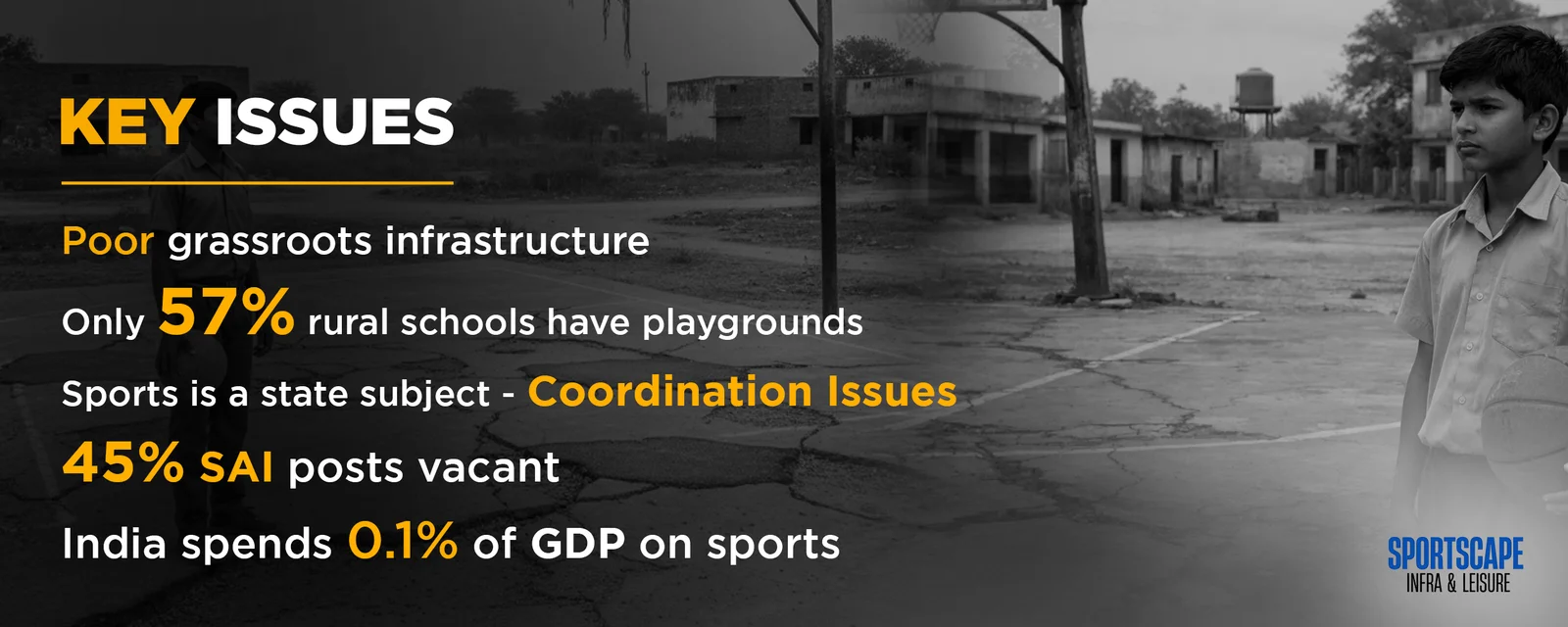
This affects the planning, maintenance, and execution of infrastructure projects, creating a capacity bottleneck in both policy implementation and facility management.
Experts Speak Out
Last year, Olympic champion P.V. Sindhu and Saina Nehwal’s coach Pullela Gopichand stirred up the hornet’s nest with his statement regarding the lack of sports infrastructure in India. Last year, he even went on to say, “I advise parents not to put their children in sports. We are not in a position to offer sports as a career. Unless the children are from rich backgrounds.” Yes, let that sink in. And if that wasn’t enough, a 9-member task force headed by Olympic champion turned entrepreneur and philanthropist, Abhinav Bindra, presented a comprehensive report with a no-holds-barred look at the sports administration in India.
According to the report, SAI and the National Sports Federations (NSFs) are supposed to be the backbone of Indian sports. However, both are struggling with deep rooted systematic and capacity issues that affect professionalism, efficiency, and good governance. This is often seen as a result of poor coordination between the government bodies, private academies, and sponsors. The panel also pointed out that although the upcoming National Sports Governance Act will require athletes to be part of NSF Executive Committees, there is currently no system to prepare or train them for these roles.
Despite these shortcomings, the hope is far from lost. India’s sporting ecosystem still has huge potential to level up. With the right push, India knows that the dream is achievable.
How India Can Level-Up Its Sports Culture
India can enhance sports infrastructure by addressing execution challenges like delays and maintenance gaps, while scaling public-private-community partnerships (PPCPs).
Fix Execution to Protect Capital
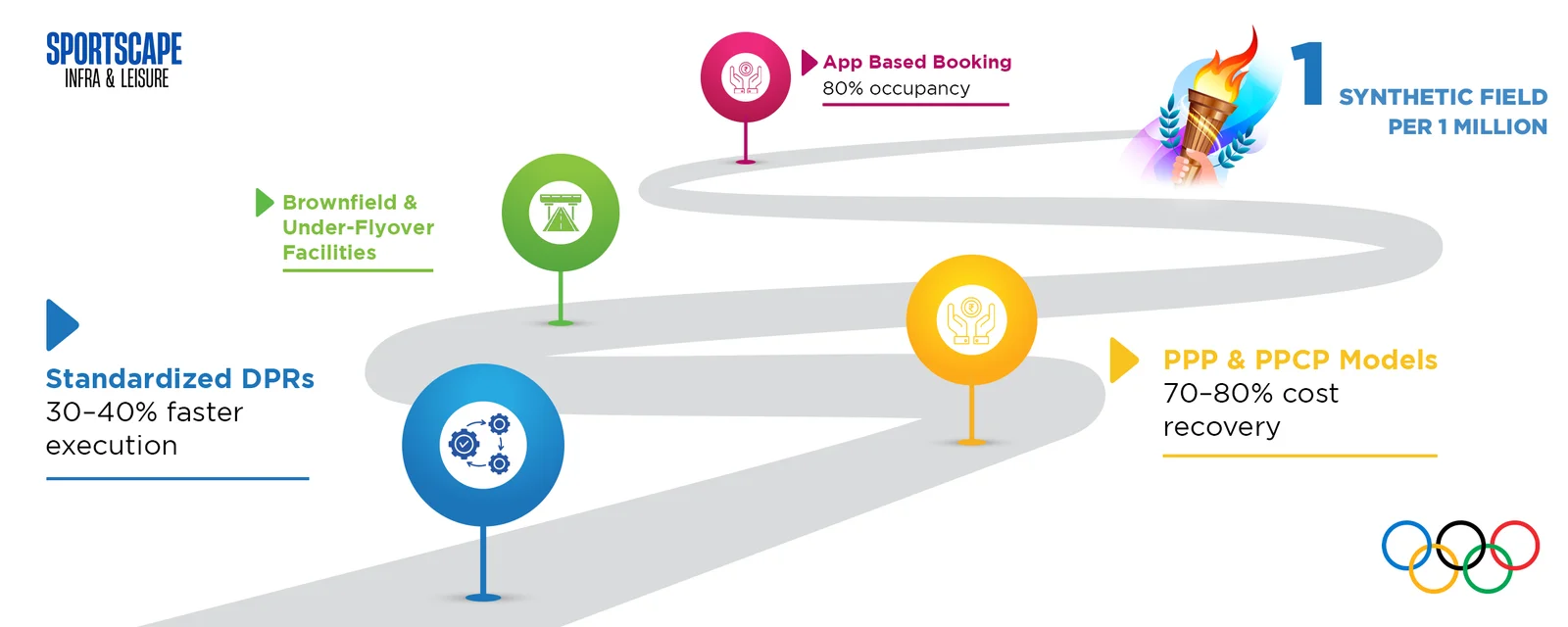
1. Standardized DPRs and geo-tagged execution can cut 30–40% time overruns, directly improving IRR for EPC firms, operators, and financiers. Punjab’s model of 3,100 standardized stadiums by June 2026 demonstrates how scale reduces per-unit cost and accelerates asset commissioning.
2. Mandatory utilization certificates and community oversight (as in Surat’s PPCP model) reduce annual municipal maintenance costs by 40–50%, improving operating margins for private operators.
Scale Grassroots Funding to Create Demand Pipelines:
1. Doubling state budgets (e.g., Punjab’s ₹1,000 crore allocation) creates predictable demand pipelines for infra developers, turf suppliers, lighting firms, and facility managers.
2. Mandating synthetic tracks and residential hostels in universities/ITIs converts sports infrastructure into education-linked revenue assets, not idle facilities.
3. Under-flyover and brownfield conversions (₹60 lakh–₹3.5 crore per site) offer high-ROI, low-capex urban micro-facilities, capable of serving 50 million youth with 80% occupancy through app-based booking.
Use PPP & Tech to Turn Infra into Operating Businesses:
1. PPCP/PPP models with 10–15 year operating rights allow private players to recover 70–80% of costs via user fees, advertising, naming rights, and academies, as seen in Ghaziabad’s 300% utilization jump.
2. Technology integration, AI performance analytics, solar-powered turfs, and LEED-certified designs reduce lifecycle costs and create premium pricing opportunities.
3. Climate-neutral facilities (e.g., Bengaluru’s hockey turf) position India as a future-ready Olympic host ecosystem, attracting global sponsors, federations, and events.
Drive Regional Equity to Unlock Untapped Markets:
1. Establishing Eklavya Centres in every block and rural gyms expands the addressable market for sports infra by 3-4x, as seen in Bihar’s ₹680 crore spending surge and Haryana’s Wazirabad complex.
2. Auditing and fast-tracking 282 delayed projects worth ₹2,328 crore creates immediate “brownfield monetization” opportunities with lower risk and faster break-even.
3. A benchmark of 1 synthetic field per million people provides investors and operators with clear demand visibility and scalable rollout logic.
Conclusion
Despite the challenges, the future of Indian sports looks promising. With initiatives like Khelo India, state-level successes in Punjab and Haryana, and the untapped potential of public-private-community partnerships, the foundation for world-class sports infrastructure can be laid. Fans can imagine a landscape where modern stadiums, well-equipped training centres, and grassroots facilities reach every corner of the country, giving young athletes the platform they deserve. By addressing execution delays, improving maintenance, and investing strategically in both urban and rural areas, India can finally match global standards. With sustained focus, collaboration, and optimism, the nation is poised to transform its sporting dreams into reality, nurturing champions for generations to come.
Written by
Chetan is an Editor at Sportscape Magazine, bringing over three years of experience across sports, defence, international relations, and sports law. With more than 3,500 articles to his name covering player insights, match performances, and team analysis, he…