
IPL's Billion-Dollar Valuations Expose India's Lopsided Sports Ecosystem
Royal Challengers Bengaluru sold for $1.78 billion. Rajasthan Royals fetched $1.63 billion. These numbers signal more than cricket's commercial triumph,they reveal the stark imbalance across India's sporting landscape.
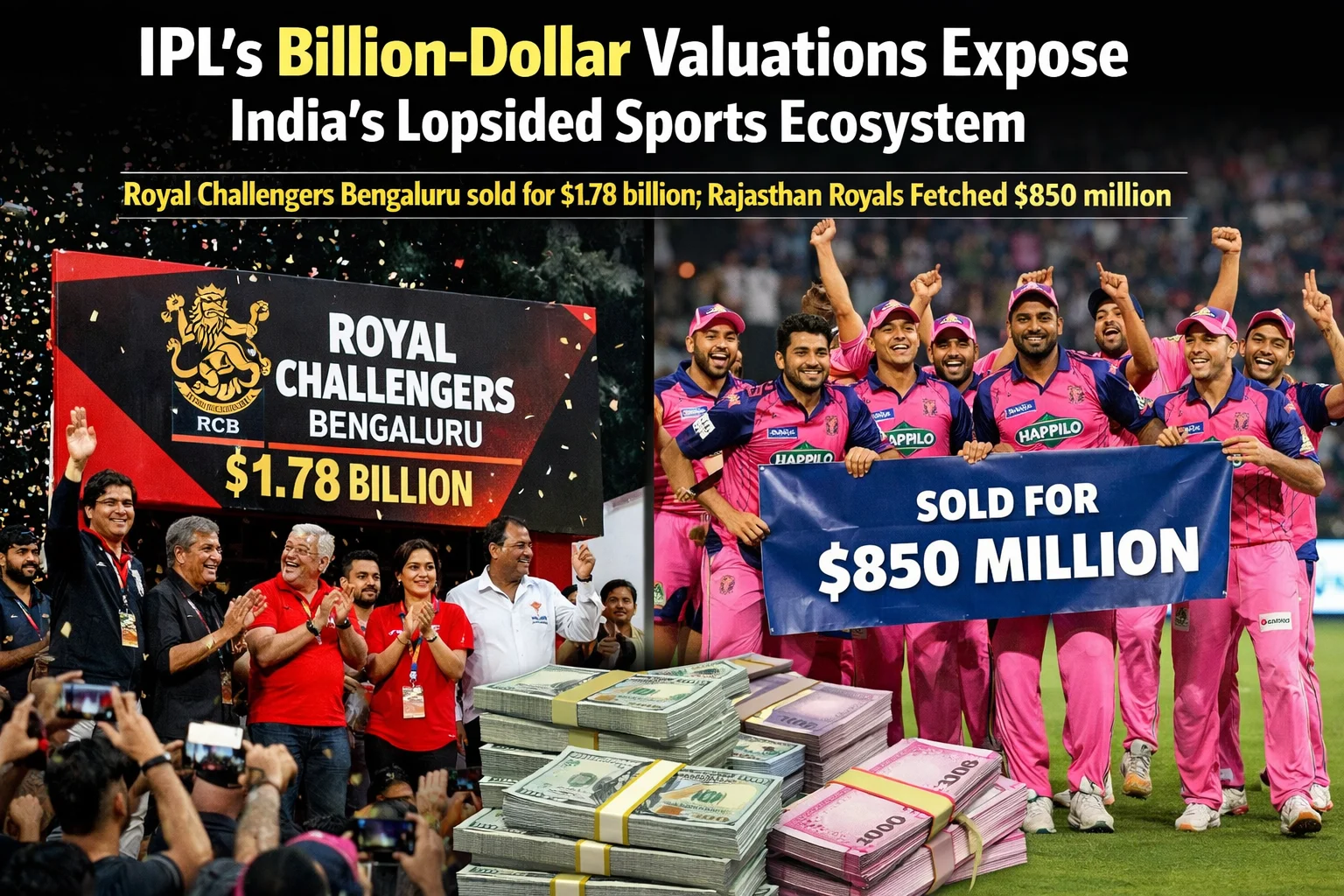
Royal Challengers Bengaluru sold for $1.78 billion. Rajasthan Royals fetched $1.63 billion. These numbers signal more than cricket's commercial triumph,they reveal the stark imbalance across India's sporting landscape.
Cricket hasn't just pulled ahead of other sports in India. It has left them in the dust entirely.
The Indian Premier League operates as a carefully engineered money machine rather than a traditional league. Just 74 matches compressed into ten weeks, built on centralized media rights, permanent franchises, and revenue sharing that compounds value year after year.
Yet crediting the IPL alone misses the deeper story. These billion-dollar valuations rest on infrastructure built long before Brendon McCullum's explosive debut on April 18, 2008. Cricket's domestic system stages over 2,000 matches annually, creating the depth that makes the IPL meaningful. Strip away that foundation, and the league becomes hollow spectacle.
No other Indian sport has constructed anything comparable.
IPL’s Infrastructure Was Built, Then Monetised
Venues like Narendra Modi Stadium, Wankhede Stadium, M. Chinnaswamy Stadium and Arun Jaitley Stadium have been upgraded or rebuilt with broadcast tech, player facilities, and year-round usability in mind.
Backed by the Board of Control for Cricket in India, this ecosystem ensured that by the time IPL arrived, infrastructure, talent pathways, and venues were already aligned.
Other Sports Promised Infrastructure, But It Never Arrived
Football’s Indian Super League brought stars and visibility, but stadium upgrades and training ecosystems remained inconsistent. Proposed world-class football hubs and multi-sport arenas across states stalled or underdelivered. The Hockey India League faded without a strong venue network, while the Pro Kabaddi League relied on temporary setups rather than permanent infrastructure.
The pattern is clear: cricket built from the ground up; others built from the top down. Cricket’s billion-dollar valuations don’t just celebrate success, they expose a system where infrastructure priority decided destiny.
Written by

Anushka Raghav is an Editor at Sportscape Magazine, where she covers the intersection of sports business, governance, policy, technology, and infrastructure. Having written over 200 news stories and editorial features, she focuses on the ideas, institutions,…