
Populous Unveils Sustainable Plans to Reinvigorate Saudi Arabia’s Historic King Fahad Sports City Stadium Ahead of FIFA World Cup 2034
Populous has revealed sustainability-led plans to transform Riyadh’s iconic King Fahad Sports City Stadium ahead of FIFA World Cup 2034, combining heritage preservation, renewable energy, enhanced fan comfort, and community-focused development.
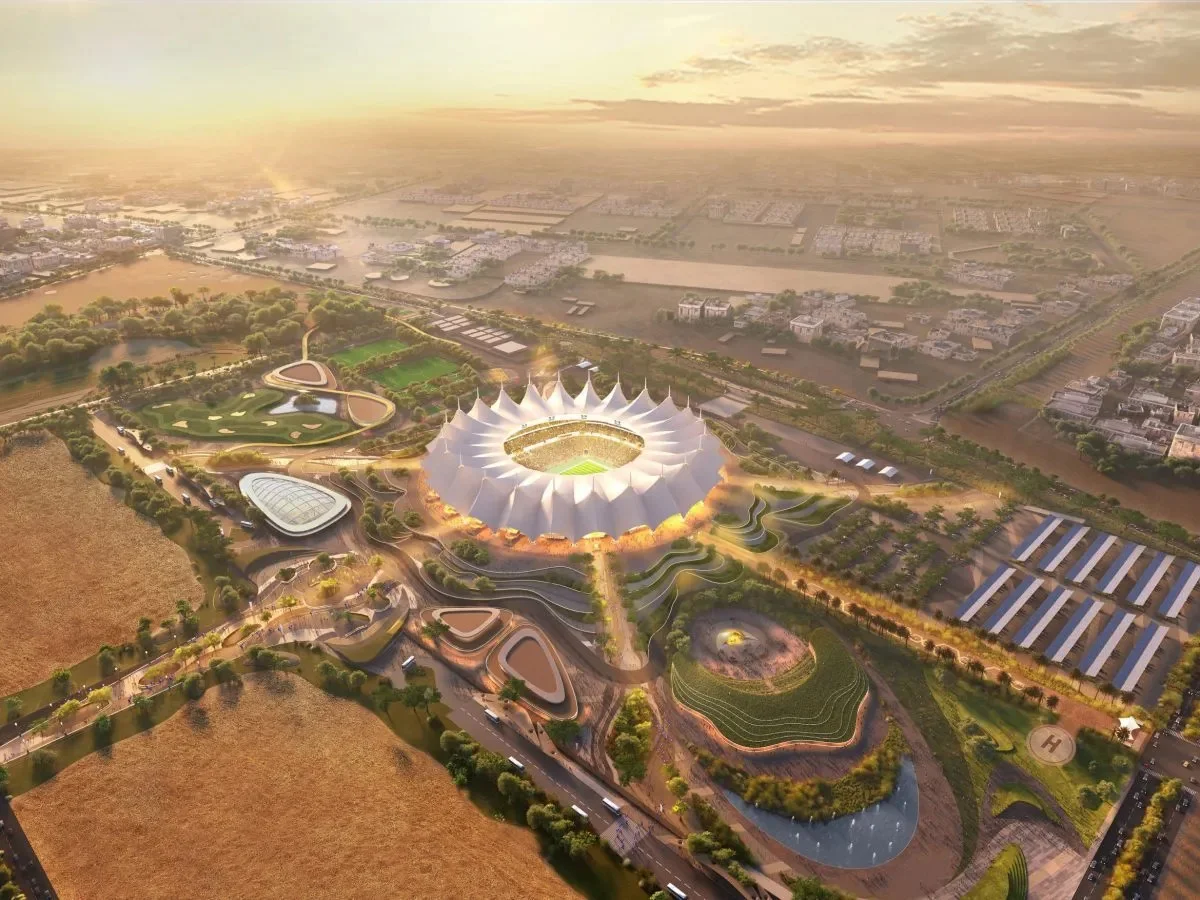
Global architecture and design firm Populous has unveiled an ambitious sustainability-focused redevelopment plan King Fahad Sports City Stadium in Riyadh, for the iconicpositioning the historic venue as a centerpiece of Saudi Arabia’s preparations for the FIFA World Cup 2034.
Originally opened in 1987, King Fahad Sports City Stadium holds a special place in Saudi sporting history as the country's first large-scale stadium and the long-time home of the Saudi Arabian national football team. Over the decades, the venue has hosted major football tournaments, international entertainment events, boxing matches, motorsport competitions, and concerts, becoming one of the region’s most recognizable sporting landmarks. According to Populous, the redevelopment aims to preserve this legacy while transforming the stadium into a world-class, future-ready venue that meets the demands of modern sport and entertainment.
Working alongside Saudi Arabia’s Ministry of Sport, Populous is implementing a strategy centered on adaptive reuse, renewable energy integration, enhanced spectator comfort, and long-term community development. The project will also help prepare the venue for the 2027 AFC Asian Cup and FIFA World Cup 2034.
Circular Economy Approach Through Reuse and Renewable Energy
One of the most significant aspects of the redevelopment is Populous’ commitment to reusing existing stadium components rather than demolishing and replacing them.
The stadium’s iconic roof canopy, which has reached the end of its operational lifespan, will not be discarded. Instead, its structural masts and cable systems will be repurposed into photovoltaic shading structures across parking areas. These solar-powered installations are expected to generate sufficient energy to meet all non-event-day operational requirements of the stadium, including electric vehicle charging infrastructure.
Additionally, original seating, sanitary fixtures, lamp posts, and portions of the stadium’s distinctive hexagonal façade will be carefully removed and repurposed for community initiatives and new landscape features across the wider site. The hexagonal cladding will also find a second life as part of the new energy centre and substation buildings. This circular-economy approach significantly reduces construction waste while preserving architectural elements that have become synonymous with the stadium’s identity.
Enhanced Fan Comfort Through Innovative Climate Solutions
Riyadh’s climate presents unique challenges for large-scale outdoor sporting venues, and Populous has introduced several innovative solutions aimed at improving spectator comfort while reducing energy consumption.
A new displacement cooling strategy has been developed following extensive thermal studies of the stadium bowl. The design includes semi-automatic deployable terrace covers that shield seating areas from direct sunlight during the day, preventing excessive heat absorption by concrete surfaces. According to Populous, the system can reduce concrete temperatures by up to eight degrees Celsius before spectators arrive.
By lowering residual heat within the stadium bowl, the venue can reduce reliance on energy-intensive cooling systems while delivering a more comfortable matchday experience for fans. Complementing these measures will be a new 36,000-square-metre cable-net roof canopy designed to provide extensive natural shade throughout the seating bowl and surrounding podium areas.
Community-Centric Development Beyond Matchdays
Beyond the stadium itself, the project aims to create a year-round sports and entertainment destination for Riyadh residents. To increase capacity, Populous will excavate approximately ten metres beneath the existing stadium footprint to create a new lower seating tier. Rather than transporting the excavated material off-site, the soil will be reused to shape a new landscaped sports park surrounding the venue.
The expanded precinct will include:
- A football academy
- Sports and recreation facilities
- Amphitheatre spaces
- Dedicated fan zones
- Five-a-side football pitches
- A footgolf course
- Commercial and retail spaces
More than 400 existing trees will also be carefully relocated and replanted throughout the new development, reinforcing the project's environmental objectives.
The masterplan reflects a growing global trend in stadium design, where venues evolve into mixed-use destinations that remain active and economically sustainable even when sporting events are not taking place.
Sustainability Must Be Embedded, Not Added Later: Siddharth Soni
Speaking previously to Sportscape Magazine, Siddharth Soni highlighted that sustainability in modern stadiums must go beyond environmental certifications and be embedded into the design process from the outset.
Soni further emphasized the importance of designing venues that can operate efficiently on both event and non-event days.
His observations align closely with the philosophy driving the King Fahad redevelopment, where sustainability is being integrated through adaptive reuse, energy efficiency, community programming, and long-term operational planning.
Sportscape feels that as Saudi Arabia accelerates preparations for FIFA World Cup 2034, the redevelopment of King Fahad Sports City Stadium signals a broader shift in how mega-event infrastructure is being delivered. Rather than relying solely on new construction, projects are increasingly focused on extending the life of existing venues through adaptive reuse and sustainable design. If successfully implemented, King Fahad could become a benchmark for future World Cup stadium renovations- demonstrating that preserving heritage and achieving sustainability goals can go hand in hand while creating year-round value for local communities.
Written by

Anushka Raghav is an Editor at Sportscape Magazine, where she covers the intersection of sports business, governance, policy, technology, and infrastructure. Having written over 200 news stories and editorial features, she focuses on the ideas, institutions,…