
Robo Athletes Powered by Sport AI Spark Global Sports Revolution
Sports Analytics and Sport AI are reshaping global athletics as AI-powered robotic sports systems trigger debates around automation, performance technology, and the future of human competition.
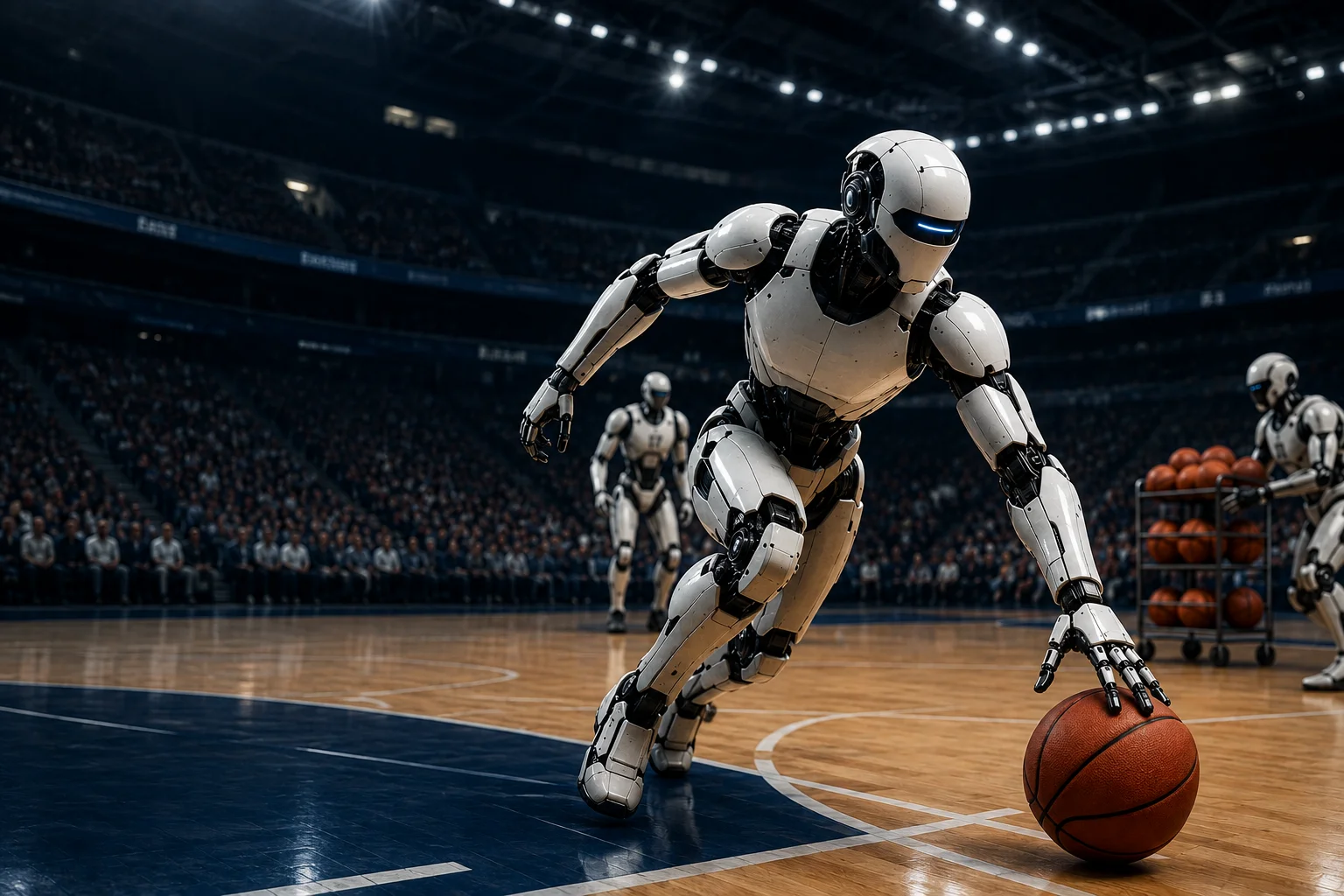
A new wave of AI-powered robotic athletics is rapidly transforming the global sports technology industry, with developers now testing emotionless autonomous machines capable of delivering precision-based sporting performances without fatigue, pressure, or psychological breakdowns. The development is intensifying conversations around the future of Sports Analytics and the growing influence of Sport AI in professional training ecosystems.
According to a recent report published by AI CERTs, robotics-led “Emotionless AI Sports” systems are now being positioned as 24/7 training partners for professional teams, academies, and sports performance centers. The report highlights that venture analysts expect robotic ball-picking and sports-assistance technologies to cross USD 115 million in sales by 2026 amid rising investments in AI-driven athletic infrastructure.
The broader sports-tech economy is simultaneously witnessing explosive expansion. IBM recently stated that artificial intelligence is reshaping the global USD 2.3 trillion sports economy through data modelling, player performance tracking, injury prediction systems, and automated decision-making technologies.
The latest generation of Sport AI systems are designed to process massive volumes of real-time player movement data, biomechanical analysis, tactical simulations, and performance metrics without emotional bias. Industry experts believe this could significantly alter how athletes train, recover, and strategize across elite sporting environments
Several federations and innovation labs are already developing frameworks around robotic sports participation. RoboCup and other AI-athletics initiatives are reportedly drafting autonomy regulations, fail-safe conditions, and operational guidelines for future mixed human-machine competitions.
At the same time, Sports Analytics has become one of the fastest-growing verticals within global sports business infrastructure. AI-powered systems are increasingly being used for skeletal tracking, offside automation, injury prevention analysis, recruitment intelligence, and real-time officiating support. FIFA and UEFA have already implemented semi-automated tracking technologies across elite football competitions.
The expansion of AI integration is also changing athlete scouting and roster management. According to Mastercard’s latest sports technology report, university and professional teams are now experimenting with AI agents capable of scanning transfer data, injury histories, public records, and tactical profiles in near real time to assist coaches and management staff.
Critics argue that fully autonomous athletic environments could reduce the emotional unpredictability that defines human competition. Questions around liability, fairness, safety standards, and the cultural value of sports are also becoming central to the debate. The AI CERTs report notes that several stakeholders fear robotic participation could eventually dilute traditional fan engagement and athlete storytelling.
Sportscape feels that the rise of Sport AI is no longer a futuristic concept but an active transformation reshaping global sports infrastructure in real time. While Sports Analytics can elevate precision, injury prevention, and athlete development, the emotional unpredictability of human competition remains the true heartbeat of sport.
Written by

Anushka Raghav is an Editor at Sportscape Magazine, where she covers the intersection of sports business, governance, policy, technology, and infrastructure. Having written over 200 news stories and editorial features, she focuses on the ideas, institutions,…