
Timber Stadium Revolution Gains Momentum as FSC-Backed Sports Infrastructure Redefines Sustainability
Timber stadium projects backed by the Forest Stewardship Council are reshaping sustainable sports infrastructure with low-carbon innovation.
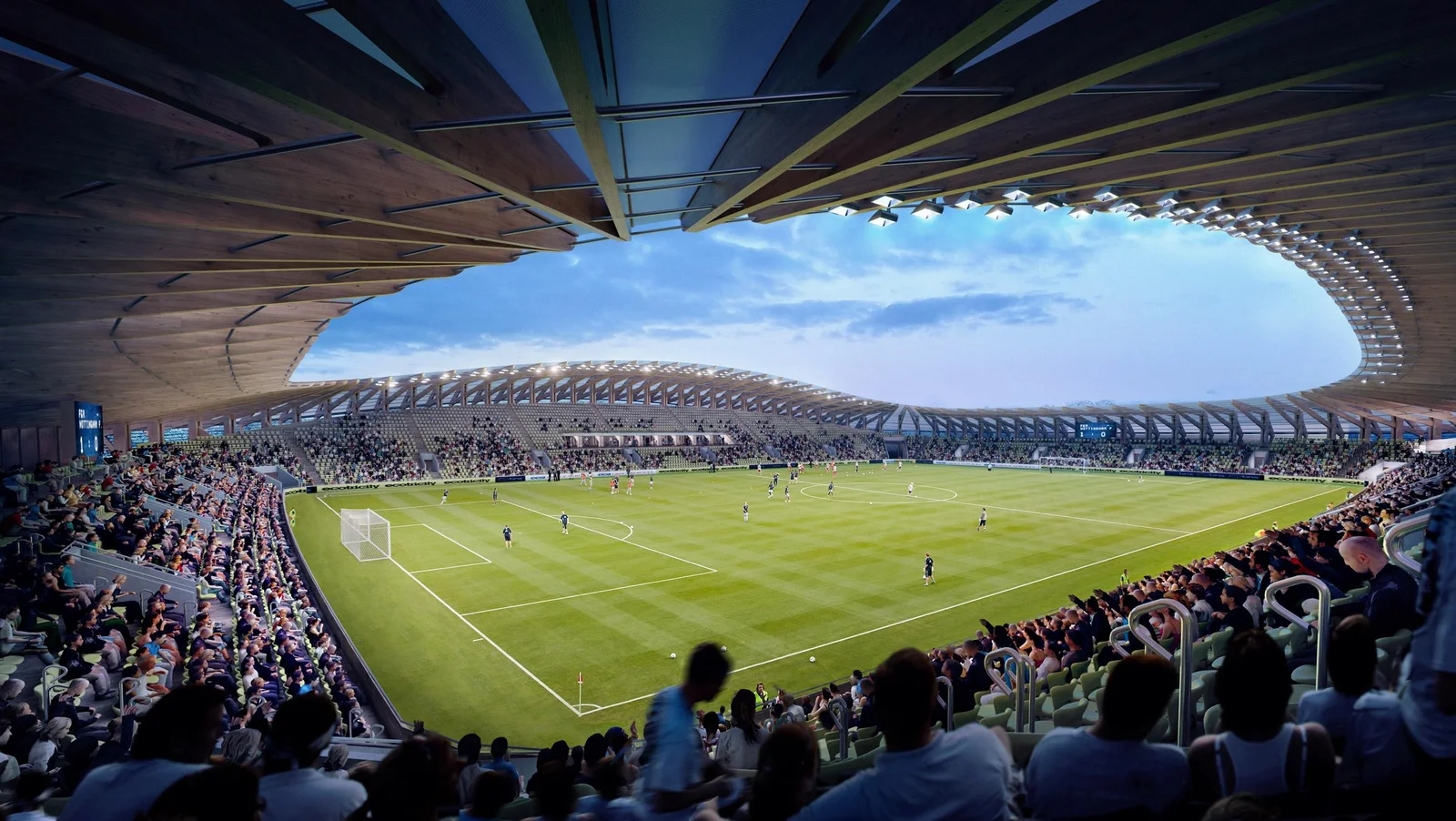
A major shift toward sustainable sports infrastructure is accelerating globally after the official opening of Africa’s first FSC-certified timber stadium in Maseru, Lesotho. The groundbreaking venue, known as the FSC Stadium of Life, has rapidly become a global example of how low-carbon construction and environmentally responsible design could reshape the future of stadium development worldwide.
The timber stadium project was developed through a collaboration involving the Forest Stewardship Council (FSC), Rise International, Kick4Life FC, and certification body DNV. Built using 8,584 sustainably sourced eucalyptus poles from FSC-certified plantations in South Africa, the venue significantly reduced reliance on concrete while promoting renewable construction materials.
The Forest Stewardship Council confirmed that the project represents Africa’s first FSC-certified sports venue and one of the continent’s most ambitious environmentally focused sports infrastructure initiatives. FSC officials stated that the certification guarantees responsible sourcing, environmental stewardship, and long-term community sustainability standards throughout the stadium’s construction process.
Architect Pedro Clarke described the timber stadium as part of a broader global movement toward bio-based construction materials capable of lowering carbon emissions across large-scale infrastructure projects. Experts involved in the development noted that timber structures can function as long-term carbon storage systems while also reducing the environmental impact associated with steel and concrete-heavy stadium construction.
The project also integrates broader ecological and social features beyond football infrastructure. A dedicated “Biodiversity Stand” showcases plant species from Lesotho’s ten districts, while an outdoor amphitheatre called the “Theatre of Life” has been designed for education programmes, cultural activities, and environmental awareness campaigns.
The emergence of the timber stadium concept arrives as sports organisations globally face growing pressure to improve environmental sustainability ahead of future mega-events including the FIFA World Cup 2026 and the Olympic Games. Multiple stadium projects across Europe and Australia are also increasingly incorporating timber-based construction models. Australia’s proposed Macquarie Point Stadium and England’s Eco Park stadium project are both being promoted as next-generation low-carbon sports venues.
Industry analysts believe the Forest Stewardship Council’s growing involvement in sports infrastructure could influence future procurement standards for stadium construction worldwide. As governments, leagues, and tournament organisers intensify climate commitments, sustainable timber engineering is increasingly being viewed as a commercially viable alternative for modern venue development.
The FSC Stadium of Life project also carries strong community-development objectives. Beyond football operations, the facility is expected to support youth employment, climate education, entrepreneurship programmes, and regional social-impact initiatives through the work of Kick4Life FC and its associated development programmes.
Sportscape feels that the rise of the timber stadium model reflects a major transformation in how global sports infrastructure is being designed, where sustainability credentials are becoming as strategically important as commercial capacity and fan experience.
Written by