
From Martini to Matcha: How India’s Wellness Economy Is Rewriting the Growth Story
India’s wellness economy is booming—from gyms and matcha to wellness tourism and digital health. Explore how preventive health is reshaping lifestyles and growth.
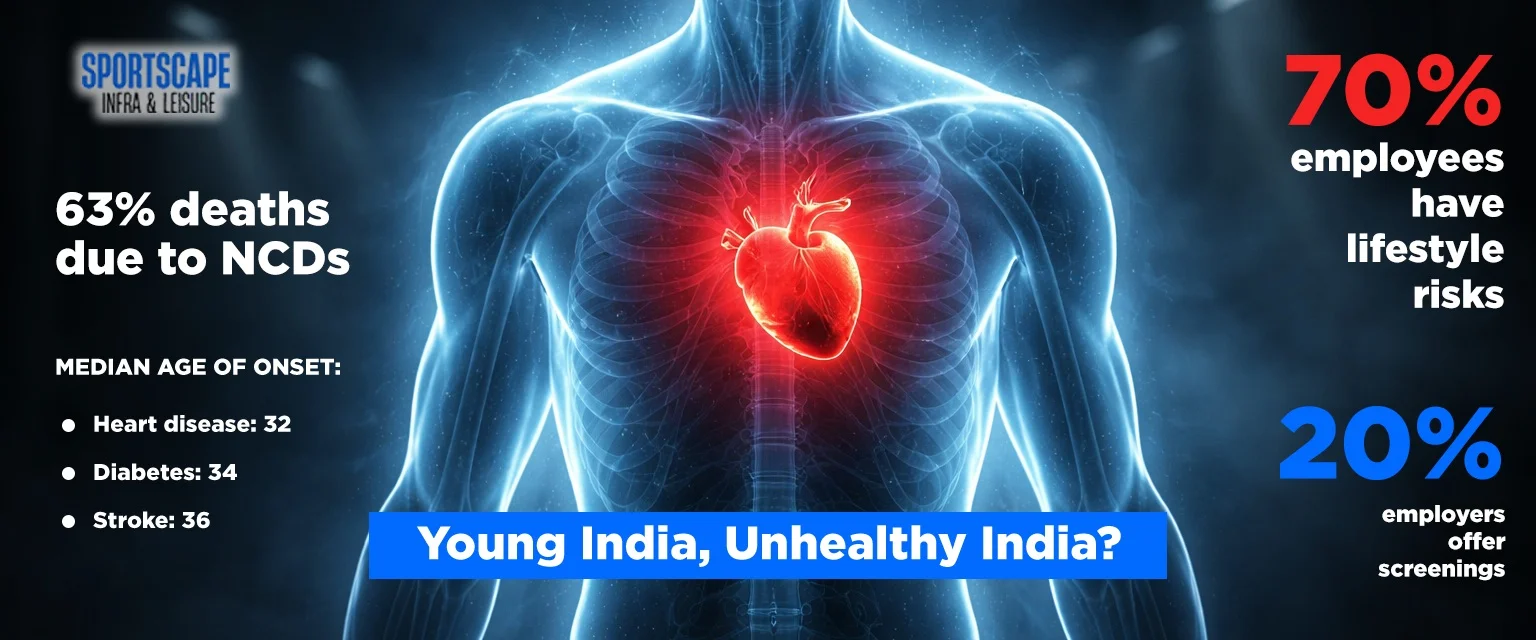
You know when a pilate girl is as cool as a gym bro, skimmed almond milk and matcha drinks are a lifestyle flex, and wellness centres are evolving as the new hangout zones, wellness education has arrived. This was a much-awaited transition as the current situation of the country has put India into sharp focus. A recent report by MediBuddy, a prominent healthcare provider, and CII reveals that 70% of employees are carrying at least one lifestyle-related health risk, while only 20% of employers provide routine health screenings. The gap between risk and preventive action is also telling a concerning story.
Non-communicable diseases (NCDs) account for 63% of deaths in India, with heart disease, diabetes, and stroke affecting people as early as their 30s. Despite this, preventive infrastructure remains weak, and OPD insurance penetration is below 0.1%, compared to over 85% in the US and 95% in Singapore. India’s healthcare system is still largely focused on hospitalisation rather than prevention, leading people to seek treatment only when conditions worsen, highlighting the urgent need for greater awareness around wellness and preventive care.
What’s the most focused prospect for survival and progress in a typical Indian family? A stable job, buying a car, and sending kids to good schools. Right? Wellness and self-care have always been an “out-of-context” topic in any family discussion. But times have changed now. Since COVID hit India with more than 70% suspected cases, the consumption and lifestyle pattern post covid has shifted over the years. The COVID-19 pandemic acted as a wake-up call, pushing health and immunity to the forefront of everyday life. Post-pandemic, India has witnessed a clear shift from reactive healthcare to preventive wellness. People are becoming more conscious of their lifestyle choices, be it diet, sleep, or physical activity. Immunity-boosting foods, regular health check-ups, and fitness routines are no longer niche habits but increasingly mainstream behaviors.
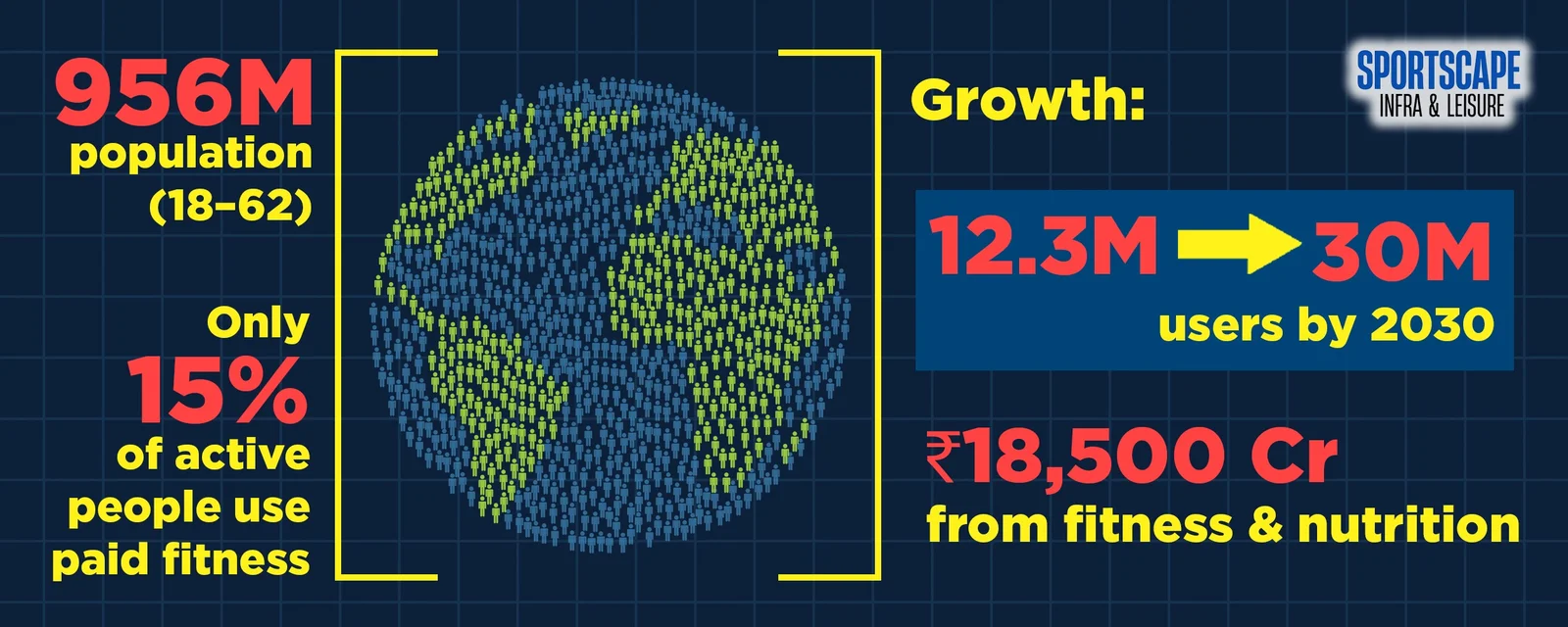
This shift is also reflected in consumption patterns. There has been a surge in demand for gyms, boutique fitness studios, yoga centres, and wellness retreats. Digital fitness platforms, home workouts, and wearable health devices have gained significant traction, especially among younger, urban populations. As per estimates, 12.3 million (0.8% of the population) people are actively participating in paid fitness activities like the gym and fitness studios. This estimate is expected to rise by 2030 to almost 30 million (1.7%).
We get it. The awareness is still rising, and the advancement is slow, but there is another side of this story-the one that signals contribution to the economy.
Wellness Economy
For years, self-care has always been limited to the “elite” segments in Indian society. Out of the 956 million population aged 18-62, just 15% of those who are physically active participate in paid fitness activities. But today value gyms are dominating, contributing 78% of memberships and 80% of facilities. However, boutique studios are the fastest-growing segment, with nearly 19% annual growth expected through 2030. What’s interesting here is the contrast between preventive healthcare coverage and screening remaining limited; on the other hand, consumer spending on wellness is accelerating. And though it's broadly gyms and fitness centres, this isn’t a niche industry anymore.
For instance, the demand for organic and functional foods has surged, with consumers opting for protein-rich diets, cold-pressed juices, millet-based products, and clean-label brands. The popularity of wearable fitness devices and health-tracking apps has grown, as people increasingly monitor steps, sleep, heart rate, and overall activity levels.
The rise of home fitness ecosystems, from online workout subscriptions to smart fitness equipment, shows how convenience is driving adoption beyond traditional gym spaces. Similarly, wellness tourism is gaining traction, with more Indians opting for yoga retreats, meditation camps, and Ayurvedic detox programs as part of their travel plans.
It has transformed into a broad, interconnected ecosystem consisting of turfs, community play spaces, wellness resorts for mental well-being, nutrition & preventive health (clean eating, supplements, diagnostics), walkable cities, green spaces, and sustainable sports infrastructure. When you put all these pieces together, the revenue generated through these fields collectively is termed the wellness economy. In simple terms, whenever consumers consciously spend on improving their physical, mental, or emotional well-being, they’re fueling the wellness economy. And now the sector is booming more than ever before.
India’s wellness economy is already valued at around ₹65,000 crore (approximately US$8.5 billion), with strong growth projected through 2028. Fitness and sports nutrition lead the market, contributing roughly ₹18,500 crore. Urban millennials and Gen Z consumers are driving gym memberships, boutique fitness studios, marathon participation, and a surge in protein, performance supplements or simply just staying away from intoxicated drinks.
The Indian match tea market is expected to reach $96.4 million by 2033 from $41.9 million in 2024. Even these numbers cannot limit Indian matcha tea’s global reach. India accounted for 4.6% of the global matcha tea market in 2024. Besides just looking at what’s on their plate, people are lacing up their shoes and showing up in a more active way.
From gym membership to community service
India’s fitness story is just getting started, with gym memberships and fitness studios anchoring the way. Even the numbers make that clear.
India’s fitness economy is set to more than double from ₹16,200 crore in 2024 to ₹37,700 crore by 2030, reflecting a strong 15% CAGR and sustained consumer commitment to healthier lifestyles. Membership growth mirrors this momentum, with the number of fitness facility members expected to nearly double by the end of the decade. Even gym penetration is projected to cross 1.7% by 2030, still modest by global standards, but a meaningful cultural shift in a country of India’s scale.
According to a Deloitte survey, value gyms currently dominate the market. They account for 56% of total industry revenue, 78% of the membership base, and 80% of all fitness facilities as of 2024. Affordable pricing, accessible locations, and standardized equipment have made them the go-to option for a large section of the population. But there’s an interesting twist in the tale.
Boutique fitness studios, those specialized, experience-driven spaces offering formats like HIIT, Yoga, MMA, and Pilates, are emerging as the fastest-growing segment. With a projected CAGR of 18.8% through 2030, they’re riding the wave of consumers who are looking for more than just access to equipment. They want community, coaching, personalization, and results.
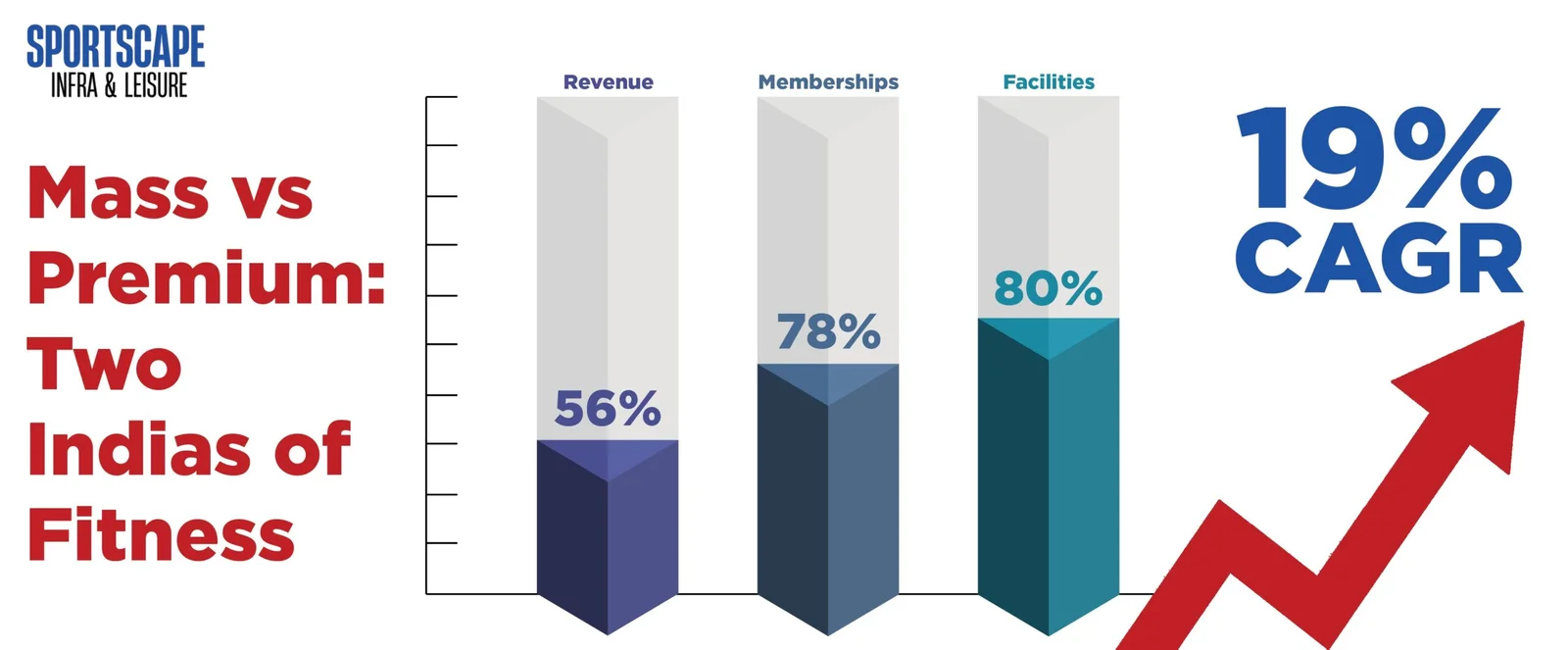
In many ways, the market is evolving in two parallel directions: value gyms are democratizing fitness, while boutique studios are premiumizing it. Together, they’re reshaping how India works out, and redefining fitness from being a trend to becoming a long-term lifestyle movement. But on the other hand, there’s a third powerful wave that’s quietly gaining momentum- wellness tourism.
Wellness Tourism
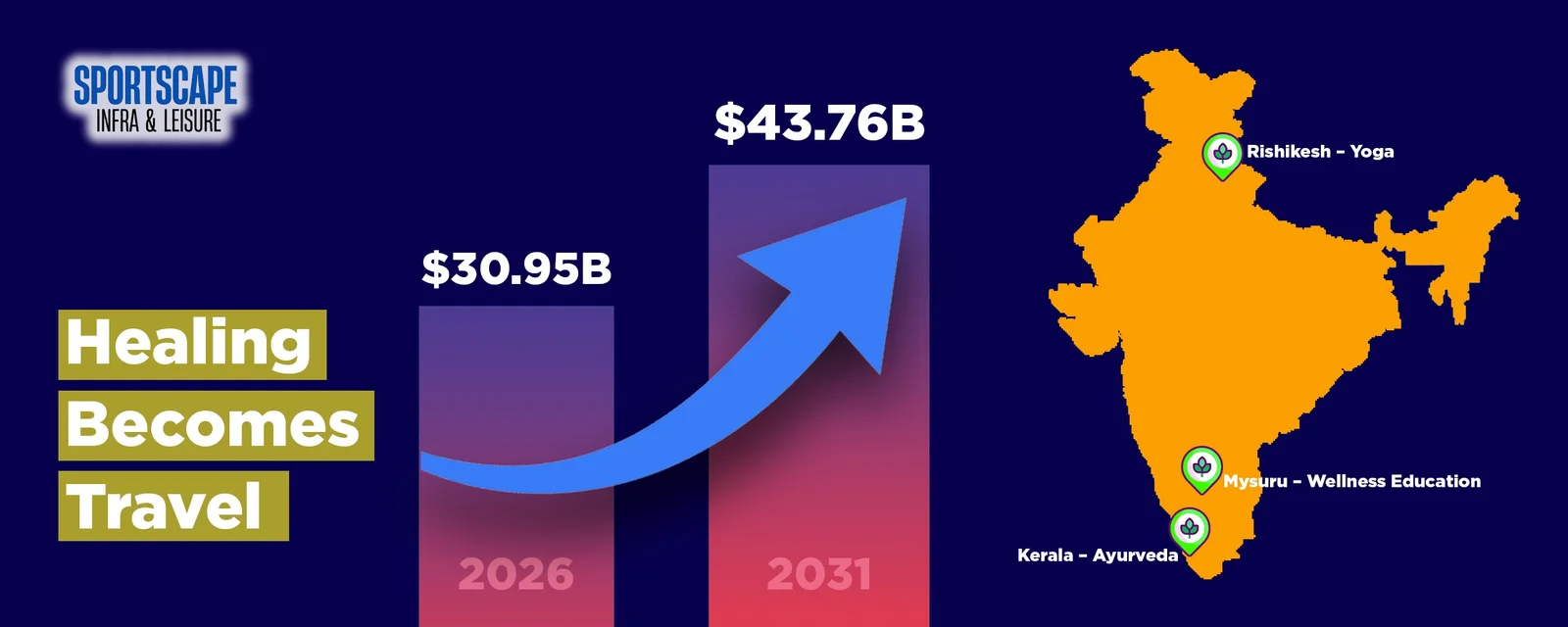
When we say wellness, what comes to your mind? International students flock to Rishikesh to study a yoga course or the thriving yoga ecosystem in Mysuru. Right? But don’t you feel that we should just move on and stop obsessing over a “foreigner” wearing a ‘Rudrakash’ and donning the ‘Om’ kurta? Ever since movies like Dear Zindagi and Queen sparked conversations around mental wellness and solo travel as a form of self-love, something has shifted in India. People now don’t take trips alone for just sightseeing, but for self-discovery. It has started to feel less indulgent and more intentional. People are beginning to prioritize their well-being for healing, mindfulness breaks, and personal growth. What was once seen as unconventional is now increasingly aspirational. India is redefining what travel really looks and even the numbers reflect this growing appetite.
The Indian wellness tourism market is estimated at USD 30.95 billion in 2026 and is projected to reach USD 43.76 billion by 2031, growing at a healthy 7.18% CAGR. That kind of growth tells a bigger story; wellness is no longer an add-on to a holiday itinerary. Travellers, both domestic and international, are now planning entire trips around Ayurveda therapies, yoga retreats, naturopathy programs, and mental wellness experiences. Even the Union Budget 2026-27 makes clear: wellness is no longer a side conversation, it’s a serious economic strategy too.
Building on the Union Budget 2025–26’s strong “Heal in India” push, the government backed the sector with a dedicated USD 2.2 billion (₹20,000 crore) allocation. That’s not just symbolic support. It firmly positions Ayurveda, yoga, and naturopathy as export-ready services within India’s growing service economy. In simple terms, India isn’t just promoting wellness for its own citizens; it’s offering it to the world. There is also a practical layer to this momentum.
Visa facilitation is becoming smoother with the rollout of the e-Ayush visa, making it easier for international visitors to travel specifically for wellness treatments and holistic programs. At the same time, GST changes effective from September 22, 2025, have reduced out-of-pocket costs for multi-day wellness programs and insurance premiums. This makes retreats and wellness packages more affordable, especially for consumers in Tier-2 cities who are increasingly driving demand. The story becomes even more compelling if we zoom in to the sub-economy components as well.
Take the spa market, for instance. Valued at around USD 2.22 billion in 2025, it’s expected to nearly double to about USD 4.93 billion by 2034, growing at a strong 9.3% CAGR. That’s not just growth, that’s momentum. And behind those numbers lies a rich, layered narrative. From authentic Ayurvedic therapies rooted in centuries-old traditions to ultra-luxury resort spas offering curated wellness journeys, India’s spa ecosystem is as diverse as it is dynamic. What’s more interesting? Even the boardrooms and digital frontiers are climbing this wellness Everest.
Other growth ignitors and future of Wellness in India
Corporate wellness is no longer a feel-good HR initiative; it’s becoming part of the core business strategy. The corporate wellness market, valued at USD 1.6 billion in 2023, is projected to cross USD 2.5 billion by 2030. Companies are investing in mental health programs, stress management workshops, yoga sessions, and holistic employee well-being because productivity and wellness are now deeply linked. Another powerful growth driver lies beyond the meeting halls: Digital wellness.
Wellness is now living on our phones, our smartwatches, and even in our daily notifications. From meditation and sleep-tracking apps to AI-powered fitness coaching and virtual yoga classes, digital platforms are making well-being more personalised and more accessible than ever before. It’s no longer about choosing between a gym and a retreat; it’s about ecosystems that combine both, especially beyond the metros.
Rural India and Tier-2 and Tier-3 cities are emerging as major demand centers, thanks largely to mobile-first wellness products and affordable digital platforms. With rising disposable incomes and better internet penetration, wellness is becoming aspirational and attainable, far beyond urban hubs.
Karan Bhargava, founder & CEO of sehatUP, notes that wellness and preventive care are gaining prominence as more people recognise the importance of shifting from a reactive to a proactive healthcare approach. This shift emphasises healthy lifestyles and early disease detection. “The private sector is expected to play a crucial role in this transformation, with investments in modern hospitals, clinics, and diagnostic centres equipped with advanced medical technology. Public-private partnerships are also anticipated to improve healthcare access and infrastructure, especially in underprivileged areas,” he says.
The future of India’s wellness economy isn’t just about scale; it’s about synergy, where ancient practices meet cutting-edge technology, and where physical spaces blend seamlessly with digital ones.
Written by