
The Man Who Dared to Believe: Ranjit Bajaj and India’s Football Awakening
Inside the relentless vision of Ranjit Bajaj, the architect behind Minerva’s historic triumph, as he challenges the system, champions grassroots reform, and reimagines India’s path to global football glory.
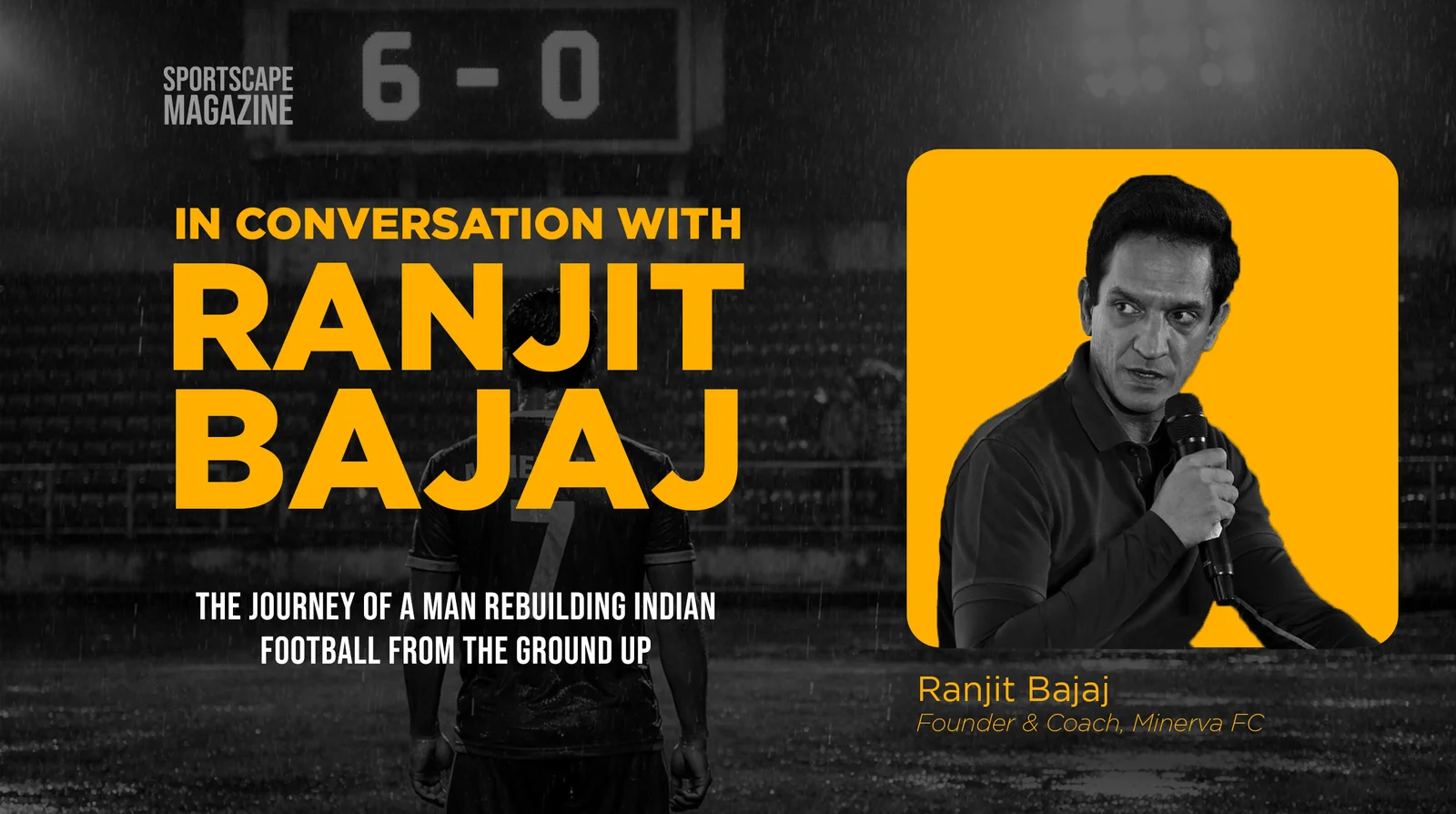
The stunning 6–0 victory of Minerva Academy over Liverpool’s youth side in Spain felt nothing short of a miracle, an almost unbelievable moment that defied logic, odds, and decades of doubt surrounding Indian football. Just weeks before the tournament, uncertainty loomed over whether the team would even make the trip. Yet, against all expectations, a group of young Indian footballers walked onto a European pitch and didn’t just compete, they dismantled one of the most storied football institutions in the world.
At the heart of this triumph lies Minerva Academy FC, an institution built on the philosophy of identifying and nurturing talent from the grassroots. Established with a vision to revolutionize Indian football, the academy operates as a fully residential program, offering young athletes world-class training, education, nutrition, and sports science support, all under one roof. Minerva has evolved into one of Asia’s top football academies, producing over 250 international players across age groups
Driving this ambitious vision is Ranjit Bajaj, a former national-level footballer turned maverick reformer in Indian football. Known for his unfiltered views and relentless pursuit of excellence, Bajaj has spent over a decade challenging the status quo of the sport in India. From selling his club to reinvest in grassroots development to personally funding scholarships for hundreds of young players, his journey is one of conviction, risk, and purpose.
In this exclusive conversation, Bajaj opens up about the making of this historic win, the deep-rooted challenges in Indian football, and his bold roadmap to take India to the FIFA World Cup.
Sportscape: You’ve just returned after a stunning 6–0 victory over Liverpool’s youth side, a feat made even more remarkable considering the team was crowdfunded and supported through personal financial risk, including loans. Just three weeks before the tournament, there was uncertainty about whether you would even make it to Spain. Before we dive deeper, can you tell us- who is Ranjit Bajaj, what is Minerva Academy FC, and what are you ultimately trying to achieve for Indian football?
Ranjit Bajaj: To answer your first question- who is Ranjit Bajaj, I am simply an Indian. That is my identity. But the reason behind what I do comes from a deeper place. I have played football for India at the under-19 and under-21 levels, and also at the senior level for my state. Like many others, I had dreams that remained unfulfilled, not because of a lack of talent, but because of a lack of structure, support, and opportunity.
There is a long-standing perception, both globally and within India, that we are not capable of competing at the highest level in football. I set out to challenge that belief. I strongly believe that Indians are as good as anyone in the world, if given the same training, infrastructure, and support systems.
In 2015, I started building what would become Minerva Academy FC. Minerva Academy FC has its roots going back to 1955 as an armed forces academy, started by my grandfather, then carried forward by my mother, and now by me. At my core, I am a teacher, shaping the future of those who go on to serve the nation.
That is where my passion comes from. My DNA is rooted in the armed forces. The reason we are able to sit here and have this conversation is that those individuals are standing at our borders, often in extreme conditions, protecting the country.
Within five years, Minerva had won every possible title in Indian football across age groups, including the senior national league. But I soon realized that winning domestic titles only brings happiness to a limited group, fans, players, and families. I wanted to do something that could inspire an entire nation.
So in 2020, I sold my club, Punjab FC, and reinvested everything into the academy. My goal was to build not just the best academy in India, but one of the best in the world. Today, we are among the top academies in Asia, but the larger mission remains to prove to Indians that we can compete and dominate globally.
The MIC cup victory was not just about winning a match. It was about giving 1.5 billion people belief. All people need is a glimpse of hope, and that is what we are trying to provide. We have identified the gaps: lack of early training, lack of exposure, and lack of structured development. Our plan is long-term.
Sportscape: So, identifying talent early, that’s really the core of what you’re trying to achieve?
Ranjit Bajaj: Absolutely. Unless we identify and nurture talent early, it becomes too late. We have to support players before they become champions, not after. Once someone has already made it, they don’t need that foundational support anymore, they’ve reached there on their own. The real responsibility is to back those who are still on the journey, because without the right support at the right time, many of them may simply give up on the sport.
Selection & Training at the Academy
Sportscape: We’ve seen that the numbers at Minerva Academy FC are staggering. How does the selection process actually work, and how do you select the right talent?
Ranjit Bajaj: We don’t really “select” from applications; we conduct trials. Let me explain. If a player is in a tier-one city and is genuinely good, chances are someone will spot him. There are enough opportunities there, so talent doesn’t usually go unnoticed. But our focus is on tier two, tier three, and tier four cities, the farthest corners of India, where talent often gets missed.
When we go to places like Imphal or similar regions, we see around 3,000 kids turning up for a single trial. This year alone, we conducted trials for about 1.8 lakh boys. Out of those, only about 30 players were selected. That’s the strength of our country, people often see population as a problem, but I see it as our biggest advantage.
I also looked at countries like Cape Verde, places many people have never even heard of and they have qualified for the World Cup. Iceland has done it too, despite having a tiny population. So why not India? Our numbers are actually our biggest strength.
As for the selection process, we go much deeper than just technical ability. The first round is based on how the player performs on the field. But once they reach the final stage, we evaluate much more. We conduct psychometric analysis to understand their mental makeup, whether they are consistent or just a one-time performer. We assess physical attributes like fast-twitch muscle response. We even study specific blood markers that indicate athletic potential at higher levels.
What we are doing goes beyond what many top academies in the world are doing. When you are selecting 10 or 20 players out of every one lakh, they are already exceptionally talented. Then you provide them with world-class training, the best facilities, sports science, and nutrition, naturally, the outcome will be world-class players.
Also, It is completely misguided to believe that we can perform well at the junior level but somehow fail at the senior level. That simply does not happen. The real issue is that we are not providing the right training and exposure at the right time. Once we identified this gap, the path became clear. My goal is to take India to the World Cup by 2034, and this is not just an idea, it is a structured 15-year plan with clear accountability.
What is even more encouraging is that the younger batches, who have started training with us as early as six years old, are already significantly better. That is because I have had more time to work with them at a crucial age. Skill development is most effective between the ages of 6 to 14, you can shape a player completely during that period in a way that is simply not possible later. That is why I am confident that these results will keep coming. Because ultimately, results are a product of processes. If the processes are right, the results will always be consistent.
Ranjit Bajaj on Why Indian Football Is Falling Behind
Sportscape: You’ve often spoken about taking a highly structured, long-term, and holistic approach to developing players, with plans stretching all the way to 2030. But looking at the broader Indian football ecosystem over the last 13 years, across infrastructure, policies, and funding, have you seen any real improvement?
Ranjit Bajaj: It has actually gotten worse. Around 13 years ago, things were still better in some ways. India had structured youth teams at the under-14, under-15, and under-16 levels, but now those pathways are either inconsistent or missing. It simply doesn’t make sense to expect strong senior teams when the foundation is weak.
Even arguments around genetics or physique don’t hold, because nations like Japan, who are physically similar or smaller, are competing at the highest level. The issue is systemic. We have one of the largest populations in the world, massive participation numbers, and we perform well across multiple sports, so football should not be an exception.
The challenges seem to stem largely from governance gaps and inconsistencies at the federation level. While several other sports bodies in India have found ways to achieve a degree of international success, football has yet to see similar progress and continues to trail behind globally. Given India’s emergence as one of the world’s largest economies, with a rapidly expanding middle class, there is a strong case for aspiring to much higher standards in sport and aiming to compete among the top nations.
Passion Without Pathways in Indian Football
Sportscape: Football viewership in India has exploded, especially among the younger generation. From Champions League nights to kids in smaller towns wearing Lionel Messi and Cristiano Ronaldo jerseys, it’s clear the passion exists. But why isn’t this translating onto the field?
Ranjit Bajaj: That’s exactly the paradox. There are around 350 million football fans in India, and that number surprised even me. But these fans are still Indians first, they love to watch and support the best in the world. The moment Indian football reaches a higher standard, the same fans will rally behind it.
The market is already there. People celebrate global football because it represents excellence. If the Indian team begins to perform at a high level, the shift will happen naturally.
Indian Football’s Much-Needed Structural Reform
Sportscape: What, according to you, is the single biggest barrier preventing Indian footballers from translating potential into performance on the global stage?
Ranjit Bajaj: The biggest barrier is the lack of a platform. How can you judge players or say they are not good enough if you don’t even give them the opportunity to compete? Players across the world get exposure at the highest levels from a very young age, but our kids are denied that. When clubs like Liverpool travel with multiple youth teams, under-12, under-14, under-16, under-18, it shows how seriously they take exposure.
Even Brazil’s national junior teams have participated in international tournaments consistently because they understand how critical that experience is. Ideally, it should be the Indian national teams getting this exposure, not a private academy like Minerva.
This is not my job; it is the federation’s responsibility. Over the last five years, if a single club has managed more European tours than the Indian national team, that itself highlights the gap. For other countries, this exposure is routine, but for us, everything feels new, and when something is new, you can’t expect to win immediately. What stood out for me was the mindset of my players.
Before facing Liverpool, they showed no fear. They weren’t overwhelmed by the name; instead, they saw it as an opportunity to prove themselves and make a statement for India.
Sportscape: You’ve been very vocal about your expectations from the government and governing bodies. If you had to clearly outline it, what exactly do you need from them to improve Indian football?
Ranjit Bajaj: The core issue is that we have fundamentally misunderstood how to support sports in India. In society, we provide reservations and support systems to uplift those who need it, and rightly so. But in sports, we’ve done the opposite. We only support athletes who are already close to winning medals. But those athletes don’t need as much help anymore, they’ve already reached that level.
The real need is to support those who haven’t made it yet, especially at the grassroots. Football is not like cricket, where only a handful of countries compete. It’s played by over 200 countries globally. If we only invest in players who are already successful, we will never build a pipeline of champions.
The logic is simple: if our under-14, under-16, and under-18 teams are not performing internationally, how can we suddenly expect the senior team to excel and qualify for the World Cup? It doesn’t work like that.
Opposition, Apathy, and the Cost of Speaking Up
Sportscape: You’ve been extremely vocal about the gaps in Indian football, and with that often comes resistance. You’ve faced strong opposition and even threats at multiple points. Can you tell us a bit about that experience?
Ranjit Bajaj: Oh yes, absolutely. I don’t understand why we as Indians tend to pull down our own or constantly doubt our own people. In many countries, when someone succeeds, the entire nation rallies behind them because it reflects positively on everyone. But here, the mindset often becomes, why has he done it and why haven’t I?
I’m not talking about the fans; the fans have been incredibly supportive, which is why I was able to raise funds and make things happen. I’m talking about the people in positions of power. They don’t seem to understand that I am not their competition. I am part of the same ecosystem. But instead, they treat me like a rival and make things unnecessarily difficult.
From day one, I have faced opposition, not because I intended to make anyone look bad, but because when you are doing something impactful, it naturally highlights what others are not doing. And that’s uncomfortable for them.
The reaction, instead of support, becomes resistance. It’s hard to believe, but my own football federation has not congratulated me even once, not a single time. Not even a basic acknowledgement, not even a single social media post. That shows the level of apathy.
When this is the attitude from the very system that is supposed to support the sport, you are left with no choice but to turn to the people of the country for backing. And the reality is, what I’ve done is not something only I could have done, they could have done it too.
Rethinking the Impact of High-Profile Football Events in India
Sportscape: You’ve been quite vocal about the recent “GOAT Tour” featuring Lionel Messi. It was a massive spectacle, drew huge crowds, and gave young fans a once-in-a-lifetime experience. What are your thoughts on it?
Ranjit Bajaj: I loved it. I absolutely loved it. We were invited to the Delhi leg, and I was genuinely grateful for that. They wanted to honour the team because we had done well against an Argentinian side, we beat a very strong team, reportedly national champions, in a world youth final. That gave me a great opportunity to connect the dots, especially knowing that Messi himself had played in the same tournament back in 2001 and 2003.
Now, let’s be clear, there are only two “gods” in football: Lionel Messi and Cristiano Ronaldo. For my players, meeting someone like Messi was one of the greatest moments of their lives. Experiences like that stay with you forever, they stay with me forever too. And it’s important because it shows young players what is possible, what they can aspire to if they perform at the highest level.
But at the same time, we need to look at the bigger picture. The kind of money spent to bring Messi in, he takes that money back, and rightly so, he’s earned it. But what about us? What about building more players? The annual budget of the All India Football Federation is around ₹50 crore, and events like this can cost multiple times what it takes to send an Indian team abroad for proper exposure. For the cost of one such event, you could fund multiple international tours, train players, and build long-term systems.
If you invest that kind of money into the right systems, into grassroots and development, I can guarantee you, we can produce “10 Messis.”. Now, when I say produce “10 Messis,” I don’t mean replicating him exactly. Players like Messi come once in a generation, like a Sachin Tendulkar in cricket. What I mean is producing Indian players who are capable of playing at that same elite level. Right now, how many Indians are doing that? Zero. And that’s not because we lack talent, it’s because we lack the system to nurture it.
Bajaj’s Blueprint for Building a National Football Machine
Sportscape: If you were given control over a significant fund, say the kind of budget we’ve been discussing, how would you allocate it? What would your ideal roadmap or “mind map” look like for Indian football?
Ranjit Bajaj: It’s actually very simple. With that kind of funding, I wouldn’t just be building a team from a few lakh players, I would be building a team from 1.4 billion people. Right now, with limited resources, I can only reach a few states and conduct trials in select locations. But with proper funding, the first goal would be to ensure that we do not miss out on any talent across the country.
We need to go to the farthest corners of India and identify players at the age of six or seven. That’s critical. Early identification is everything. From there, we already have a structured 10-year plan in place. Currently, I’m training around 200 kids at my academy, this would scale up to 2,000 kids, all on full scholarship. That becomes a proper national program, where you’re genuinely doing justice to the talent pool of the country.
Take global exposure as an example. At tournaments like the Gothia Cup in Sweden, the largest youth football tournament in the world, you have around 2,000 teams participating. That’s about 100,000 kids, plus another 100,000 staff. Countries like England send 120 teams, Germany sends 130, the USA sends 140, but India sends just one team.
Why? It’s not because we lack talent. I’m not doing anything extraordinary or revolutionary. This is not rocket science. Indians are just as capable as anyone else; we simply need the right training, infrastructure, and exposure.
Sportscape: That historic win feels like it has set a lot in motion, not just for your team, but for grassroots players and teams across the country. Would you say this moment goes beyond just your victory?
Ranjit Bajaj: It absolutely does. This is not just a win for my team or me, it’s a win for the entire country. Everyone who supported us wasn’t supporting Minerva as a club; they were supporting India. That’s the larger picture people need to understand. This moment is an example of how things can work if done the right way.
What we need now is to invest properly in grassroots football. But when we say “grassroots,” people often misunderstand it as just going into villages or increasing participation. That’s not enough. Grassroots has to mean excellence at the grassroots level. It has to be about identifying the very best talent early, training them at the highest standards, and then consistently exposing them to top international competition.
Sportscape: When we talk about grassroots development, can you draw a comparison between how it works internationally and what we’re doing in India right now?
Ranjit Bajaj: I’ll explain it simply. Different countries may have different structures, but at the core, both rich and poor countries have the same foundation, kids playing on the streets. Just like you see cricket being played everywhere in India, football is played the same way globally. In fact, football is a poor man’s game. You just need one ball and two bricks for goalposts, and you can play anywhere.
There’s no “baby football,” in rest of the india except Northeast, even no structured leagues for very young kids. If a child hasn’t played football till the age of 14 or 15, you cannot suddenly train them to compete at the highest level. By that age, internationally, players are already representing top clubs and countries. Look at someone like Lamine Yamal, he played for Spain and Barcelona at 15.
If you don’t trust your youth and don’t give them opportunities early, they will never reach that level. The future of Indian football lies in grassroots, not in spending massive amounts on senior teams. Right now, we are spending crores on seniors, but they are not the future. The future is the kids, and unless we invest in them at the right time, we are not going to get where we want to be.
The Promise of Women’s Football and the Structural Failures Holding It Back
Sportscape: Have you ever considered introducing a girls’ football team, especially with the rise of women’s sports in India?
Ranjit Bajaj: Yes, of course. My wife has actually been after me for a long time to do this. Let me tell you something, I’m very proud to say that out of the 250 internationals we’ve produced, three are girls. And here’s the incredible part, we have trained only three girls so far, and all three of them have become internationals. One is a senior international, one has played at the under-17 level, and one at under-15.
So even though we are not actively into girls’ football yet, I can confidently say that the girls will make India proud before the boys do. Despite the system, they are already ranked higher and are much closer to the World Cup. You can take it in writing from me, they will reach the World Cup before the men. They need even more support than the men.
Now coming to the difficult part, why haven’t I fully entered girls’ football yet? About five years ago, I was seriously thinking about it. I knew I could build something dominant, even target an under-17 World Cup. But at that time, Indian football was in a terrible state. We were almost banned by FIFA, and the Supreme Court had put a Committee of Administrators in place to run things. I was asked to assist them during that period.
That's when I witnessed one of the saddest moments of my life. A national under-17 coach had sexually molested a minor girl from his team. I immediately demanded he be arrested, or I would go to the media, this could not be covered up. What shocked me even more: he is still coaching today. How can I send my daughter into that system? I can protect girls when they're with me, but what happens when they enter a national setup where such people exist? We introduced a rule that only women should coach girls' teams. People said there weren't enough women coaches, but then how is it acceptable for male coaches to be in sensitive spaces like dressing rooms? That rule was reversed within a year.
If a 15-year-old girl gathers the courage to complain and nothing happens, we're not just failing her, we're encouraging the problem.
We have serious structural issues. Unless leadership ensures safety from the top, nothing will change. I fought for eight years in the Supreme Court for reforms, a new constitution now includes conflict-of-interest rules, the POSH Act, and proper complaint systems. But rules only matter if they're upheld.
We even conducted inspections and ensured multiple notices were put up with helpline numbers. But the shocking part? The head of the complaints committee at one point was someone who had himself been accused. That’s the level of the problem. Until these systems are properly implemented and safety is guaranteed, I cannot risk putting young girls into that environment.
Breaking the Academic Bias in India
Sportscape: From this conversation, it’s clear that grassroots development in Indian football has long been misunderstood. There needs to be a systematic shift, starting from nurturing talent at a very young age to adopting a more holistic approach to training. But beyond systems, there’s also a perception issue. Many still don’t see football as a serious career option. How do you address that?
Ranjit Bajaj: I’ll give you a very simple example. Parents today still believe that academics is the only path. They interfere, they advise, they try to control the direction of their children’s careers. Now look at this, the topper from IIT Madras this year got a package of ₹4.3 crore. Now compare that to football. The highest-paid player from Minerva, who is currently playing for East Bengal FC, is Anwar Ali. He’s just 22 years old and is earning ₹4.8 crore. So tell me- how is football not a valid life choice? How is it not a serious career?
If you look at the ecosystem today, there are around 100 Indian footballers earning more than ₹1 crore annually. Another 500 players are earning between ₹5 lakh and ₹1 crore. Why wouldn’t someone consider this? And the most important point, how many people are actually playing football professionally in India? At the senior level, maybe 5,000 to 10,000. That’s it. So the opportunity is massive. It’s a huge, underexplored market where more people can come in and succeed.
From Roadies to Records to Rebuilding Indian Football: The Making of Ranjit Bajaj
Sportscape: Not many people know this, but you were part of MTV Roadies and have even set an Asian record for the highest-altitude swim. From being an adventurer and a rebel to now rebuilding Indian football, how does this journey come together?
Ranjit Bajaj: I would probably need 20 days to explain that because these are all different chapters of my life. I am who I am today because of who I was back then. Like you mentioned, Roadies, that was the first-ever reality show in India. The only reason I went there was because they said if you win, you’ll get a bike. I thought, great, I’m in. It involved riding from Chennai to Chail, about 4,400 kilometers on a bike. It was a fantastic experience.
But being there, constantly around cameras 24/7, I realized very quickly that this is not something I want to do. I didn’t want to be in the media space. Then came the mountaineering phase. I’ve always been a mountaineer. I was at Everest Base Camp, attempting a climb near Everest Mount Pumori. We couldn’t summit it, but nearby there was a glacial lake at around 5,500 meters, roughly 17,500–18,000 feet. No one had really swum in it because it was frozen.
Now, I’m not even a good swimmer. I actually dislike swimming, especially in cold water. But someone had set a record there, nine seconds in that freezing lake. The conditions are extreme, you can barely breathe because of low oxygen, there’s no medical help nearby, and if something goes wrong, no one can save you. But when I saw someone else do it, I thought, if he can do it, why can’t I? So I went in and did it for 11 seconds. That became a new record, Asia Book of Records, Limca Book of Records, India Book of Records. And that moment changed everything for me. It made me realize that belief is everything. If one person can do something, there’s no reason you can't, provided you’re willing to put in the effort. That’s exactly how I look at football now. If teams like Liverpool can reach that level, why can’t we?
Sportscape: That’s clearly something you live by now, an incredible mindset. Thank you so much, sir, for this conversation. We truly had a great time and are grateful that you joined us.
Ranjit Bajaj: Thank you so much for having me. It’s been my pleasure, and we’ll keep doing our bit.
What Ranjit Bajaj and his boys at Minerva Academy FC achieved wasn’t just a win, it was a statement. A crowdfunded team, built on belief, discipline, and relentless grassroots work, went up against global giants and dismantled the aura of European dominance with a stunning 6–0 victory over Liverpool FC. It was the kind of result that doesn’t just shock scorelines, it shifts mindsets.
This wasn’t luck. It was the outcome of a system built right from the ground up early talent identification, holistic training, world-class exposure, and an unwavering belief that Indian players are second to none.
And perhaps, that’s the larger takeaway. When visionaries like Bajaj exist, those willing to challenge broken systems, invest personally, and build pathways where none exist, the narrative begins to change. Governmental inertia can be questioned, infrastructure gaps can be addressed, and most importantly, real talent, raw, unfiltered, and often overlooked, can finally rise.
Because if nurtured the right way, there is no reason why India cannot stand tall, gold at every podium, not as a dream, but as a reality waiting to be built.
Written by

Anushka Raghav is an Editor at Sportscape Magazine, where she covers the intersection of sports business, governance, policy, technology, and infrastructure. Having written over 200 news stories and editorial features, she focuses on the ideas, institutions,…